Dumbbells are the single best tool for building a bigger chest. They give you a deeper stretch, a harder squeeze, and they force each side of your body to pull its own weight. No more letting your dominant arm do the heavy lifting while the other side coasts.
This guide covers the 8 best dumbbell chest exercises, explains how to do each one properly, and gives you two complete workout routines you can follow today. One for the gym with a bench, one for home with just the floor.
If you want a ready-made plan built around your equipment and goals, the Free Workout Planner can generate one in minutes. But first, let's break down what actually works.
TL;DR
TL;DR
- 8 dumbbell exercises that hit the upper, mid, and lower chest from every angle
- Two complete routines: a gym version (with bench) and a home/floor version (no bench needed)
- Each exercise includes muscles worked, why it matters, and coaching cues
- Dumbbells offer a greater range of motion and better muscle balance than barbells
- You can build a big chest with dumbbells alone if you train smart and progress over time
- Use the Free Workout Planner to build a personalized chest day around your setup
Anatomy of the Chest
Your chest is not one flat slab of muscle. The pectoralis major has three distinct fiber regions, and understanding them changes how you train.
Upper chest (clavicular head). These fibers run from your collarbone down to the upper arm. They are best targeted by incline pressing and incline fly movements. A bench angle of 30 to 45 degrees shifts the work here. This is the area most people underdevelop, and it is the part that creates fullness near your collarbones.
Mid chest (sternal head). The largest portion of the pec. These fibers run horizontally from the sternum to the upper arm. Flat pressing and flat fly movements hit this area hardest. This is where most of your chest mass comes from.
Lower chest (costal head). The fibers that run from the lower ribs upward to the arm. Decline angles and movements where your arms travel downward emphasize this area. Dips and decline presses target it, but certain dumbbell movements work well too.
The key takeaway is simple. Changing the angle changes which fibers do the most work. A complete dumbbell chest workout needs flat, incline, and a few movements that cross the midline or hit the chest from unique positions. The 8 exercises below cover all three regions.
For a broader look at chest training with all equipment types, check out our guide on The 15 Most Effective Chest Exercises. For cable alternatives, check our cable chest workout.
8 Best Dumbbell Chest Exercises
1. Dumbbell Bench Press
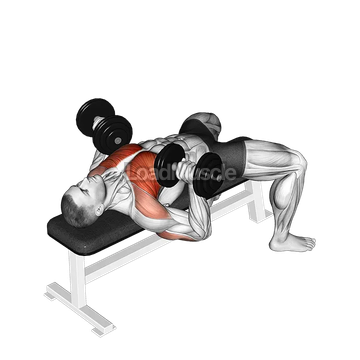
Primary muscles: Mid chest, front delts, triceps
Why it matters: The Dumbbell Bench Press is the foundation of any dumbbell chest workout. It allows a deeper stretch at the bottom than a barbell because there is no bar stopping your range of motion. Each arm works independently, which means your stronger side cannot compensate for the weaker one. If you only do one dumbbell chest exercise, this is the one.
Coaching cues:
- Lie on the bench with your feet flat on the floor and your shoulder blades squeezed together behind you.
- Lower the dumbbells until you feel a deep stretch across your chest, keeping elbows at roughly 45 degrees from your torso.
- Press up and slightly inward, stopping just before the dumbbells touch at the top.
- Control the descent for at least 2 seconds on every rep. No dropping.
2. Dumbbell Incline Press
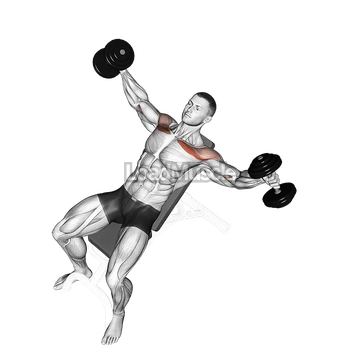
Primary muscles: Upper chest, front delts, triceps
Why it matters: The Dumbbell Incline Bench Press shifts the emphasis to the upper chest fibers that flat pressing misses. If your upper chest looks flat compared to your mid and lower pecs, this exercise fixes that. It is probably the most important accessory press for chest aesthetics.
Coaching cues:
- Set the bench to 30 to 45 degrees. Going steeper than 45 turns it into a shoulder press.
- Pull your shoulder blades back into the pad and keep your chest lifted throughout the set.
- Press the dumbbells up and slightly toward each other, finishing with control instead of clanking the weights together.
- Lower until your upper arms are roughly parallel to the floor, then drive back up.
3. Dumbbell Fly
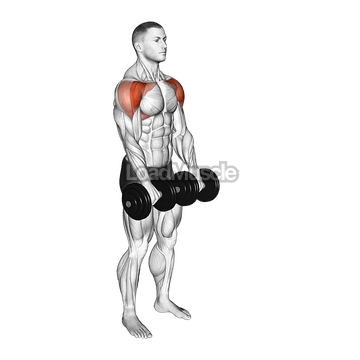
Primary muscles: Mid chest (isolation)
Why it matters: The Dumbbell Fly removes the triceps from the equation and forces the pecs to do nearly all of the work. The wide arc creates an intense stretch under load, which is one of the strongest signals for muscle growth. This is your "feel the chest" exercise.
Coaching cues:
- Keep a slight bend in your elbows and lock that angle in place for the entire set. Your arms should not straighten or bend further during the movement.
- Lower the dumbbells in a wide arc until you feel a stretch across the chest, not a pinch in the shoulders.
- Bring the weights back up like you are hugging a large tree, squeezing the chest hard at the top.
- Use a lighter weight than you think you need. Ego loading on flys leads to shoulder problems.
4. Dumbbell Incline Fly
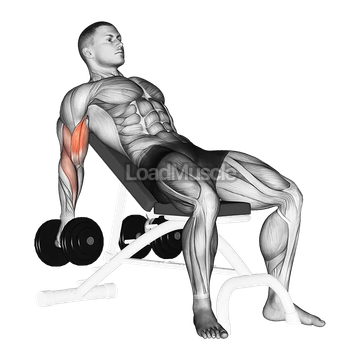
Primary muscles: Upper chest (isolation)
Why it matters: The Dumbbell Incline Fly is the isolation counterpart to the incline press. It targets the upper chest fibers through a full stretch and squeeze with minimal triceps involvement. If you want to bring up a lagging upper chest, pairing incline presses with incline flys is one of the most effective strategies.
Coaching cues:
- Set the bench to 30 to 45 degrees, the same angle you would use for incline presses.
- Maintain a soft elbow bend and keep your wrists aligned over your elbows.
- Lower slowly until you feel a deep stretch in the upper chest, then sweep the dumbbells back together.
- Pause at the top for a one-second squeeze before starting the next rep.
5. Dumbbell Pullover
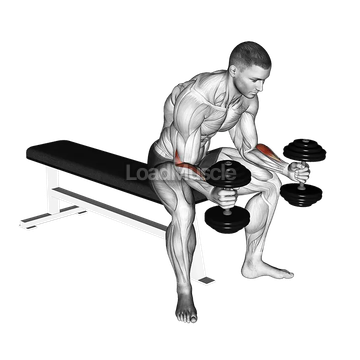
Primary muscles: Chest, lats, serratus anterior
Why it matters: The Dumbbell Pullover is the only dumbbell exercise that stretches the chest along its length rather than across its width. That unique line of pull hits the pecs differently from any press or fly, and it also works the serratus and the lats. Old-school bodybuilders swore by this for expanding the ribcage and building a deeper chest.
Coaching cues:
- Lie on the bench with your head near the edge. Hold one dumbbell with both hands above your chest, arms extended with a slight elbow bend.
- Lower the weight in a wide arc behind your head until you feel a deep stretch across the chest and lats.
- Pull the dumbbell back to the starting position using your chest, not your arms. Think about squeezing from your armpits.
- Keep your hips down and your core braced. Do not let your lower back arch excessively as the weight goes overhead.
6. Close Grip Dumbbell Press
Primary muscles: Inner chest, triceps
Why it matters: This variation of the Dumbbell Bench Press brings the dumbbells together throughout the entire range of motion. By keeping the weights pressed against each other, you create constant tension on the inner chest fibers that standard presses do not fully reach. It is also a great triceps builder.
Coaching cues:
- Hold two dumbbells together above your chest with a neutral grip (palms facing each other). Press them into each other the entire time.
- Lower the weights to your chest while maintaining that inward pressure. You should feel your inner chest working hard just to keep the dumbbells together.
- Press back up without letting the dumbbells separate.
- Use a moderate weight. The constant squeeze makes this harder than it looks.
7. Dumbbell Floor Press
Primary muscles: Mid chest, triceps
Why it matters: The floor press is the go-to chest exercise when you do not have a bench. Your elbows stop at the floor, which shortens the range of motion and eliminates the deep stretch. That is actually useful. It removes shoulder stress at the bottom and puts more emphasis on the lockout, making it an excellent triceps and mid-range chest builder. If you train at home without a bench, this is your primary press.
Coaching cues:
- Lie flat on the floor with your knees bent and feet flat. Hold dumbbells at chest level.
- Lower the weights until your upper arms gently touch the floor. Pause for a brief moment, do not bounce.
- Press back up with force, focusing on squeezing the chest through the top half of the movement.
- Keep your lower back in contact with the floor and do not bridge your hips up to create momentum.
8. Svend Press
Primary muscles: Inner chest
Why it matters: The Svend press is a forgotten chest exercise that uses very light weight for a massive contraction. You press two weight plates or one light dumbbell between your palms and extend your arms straight out from your chest. The constant squeezing effort targets the inner chest fibers that most exercises miss. It makes an excellent finisher or warm-up.
Coaching cues:
- Hold a light dumbbell between your palms at chest level. Press your hands together as hard as you can.
- Extend your arms straight out in front of you while maintaining that inward squeezing pressure the entire time.
- Bring the weight back to your chest and repeat. Each rep should be slow and deliberate.
- If you cannot feel your inner chest burning after 10 reps, squeeze harder. The weight should be secondary to the contraction.
Dumbbell Chest Workout Routine
Here are two complete routines. Pick the one that matches your equipment. Both follow the same principles: start with a heavy compound press, add isolation work, and finish with a high-rep movement to flush blood into the muscle.
Warm up before both routines with 5 minutes of light movement (arm circles, band pull-aparts, push-ups) and 1 to 2 warm-up sets of your first exercise at about 50 percent of your working weight.
Gym Version (With Bench)
This routine uses a flat and incline bench. It covers the full chest from every angle in about 40 to 50 minutes.
| Exercise | Sets x Reps | Rest |
|---|---|---|
| Dumbbell Bench Press | 4 x 8-10 | 90s |
| Dumbbell Incline Press | 3 x 10-12 | 90s |
| Dumbbell Fly | 3 x 12-15 | 60s |
| Dumbbell Incline Fly | 3 x 12-15 | 60s |
| Dumbbell Pullover | 2 x 12-15 | 60s |
Total volume: 15 sets for chest. That is in the ideal range for hypertrophy when training chest once or twice per week.
Session notes:
- The dumbbell bench press is your heaviest exercise. Use a weight that makes the last 2 reps of each set genuinely difficult.
- Incline press comes second while you are still relatively fresh. Your upper chest needs heavy enough stimulus to grow.
- Flys are your isolation work. Drop the ego and use controlled reps. Nobody cares how much you fly.
- The pullover is your finisher. Use a weight you can control for a deep stretch on every rep.
Home/Floor Version (No Bench)
No bench, no problem. This routine uses the floor and a few exercise swaps to hit the same muscle groups.
| Exercise | Sets x Reps | Rest |
|---|---|---|
| Dumbbell Floor Press | 4 x 8-10 | 90s |
| Close Grip Dumbbell Press (floor) | 3 x 10-12 | 90s |
| Dumbbell Fly (floor) | 3 x 12-15 | 60s |
| Dumbbell Pullover (floor) | 3 x 12-15 | 60s |
| Svend Press | 2 x 15-20 | 45s |
Total volume: 15 sets. Same as the gym version.
Session notes:
- Floor presses limit the range of motion slightly, so compensate by squeezing harder at the top and controlling every rep for 2 to 3 seconds on the way down.
- Close grip press on the floor adds inner chest and triceps emphasis, filling the role that incline pressing plays in the gym version.
- Floor flys have a shorter range of motion because the floor stops your elbows. Focus on the squeeze at the top of each rep.
- The Svend press finisher will torch your inner chest with zero equipment beyond a single dumbbell.
Progression for both routines: Use the double progression method. Start at the low end of the rep range. Add 1 rep per set each week. When you can hit the top of the rep range on all sets with clean form, increase the weight by 2 to 5 lbs and start back at the low end. For more detail on how to keep progressing, read the full Progressive Overload Guide.
Dumbbell vs Barbell for Chest
This is one of the most common questions in any gym. Here is an honest comparison.
Range of motion. Dumbbells win. There is no bar across your chest limiting the stretch at the bottom. You can lower the dumbbells deeper, which creates more muscle fiber recruitment and a stronger growth stimulus.
Maximum load. Barbell wins. You can press more total weight with a barbell because both arms push on a single fixed bar. If your goal is raw pressing strength or powerlifting numbers, the barbell is the better tool.
Muscle balance. Dumbbells win. Each arm handles its own load. If your right side is stronger, it cannot compensate for the left. Over months, this evens out imbalances that barbell pressing can create or hide.
Shoulder health. Dumbbells win for most people. The free arm path lets you rotate your grip and find the angle that feels best for your individual joint structure. Barbell pressing locks your hands in a fixed position, which bothers some lifters' shoulders over time.
Stabilizer demand. Dumbbells win. Controlling two independent weights requires more work from your rotator cuffs, core, and smaller stabilizing muscles. This builds more resilient joints.
Convenience for home training. Dumbbells win by a mile. A pair of adjustable dumbbells takes up almost no space. A barbell setup needs a rack, bench, and plates.
The bottom line: You do not have to pick one. If you have both, use barbells for your main heavy strength sets and dumbbells for hypertrophy and accessory work. Want to add barbell pressing? See our bench press form guide for proper technique. If you only have dumbbells, you are not at a disadvantage for building muscle. You just need to be more deliberate about progressive overload since dumbbell jumps tend to be larger.
For more on how to structure your training around muscle growth, read our Hypertrophy Training Guide.
FAQ
Can you build a big chest with only dumbbells?
Yes. Your chest muscles respond to tension, stretch, and progressive overload. They do not know or care whether that stimulus comes from a dumbbell, barbell, or cable machine. Studies show that dumbbell pressing activates the pecs at least as well as barbell pressing, and in some cases better, due to the greater range of motion. If you train consistently and progressively increase the challenge, dumbbells alone will build a big chest.
How heavy should my dumbbells be for chest?
For most beginners, 15 to 30 lb dumbbells (7 to 14 kg) per hand will cover chest pressing for the first several months. Intermediates typically press 30 to 50 lbs (14 to 23 kg) per hand for working sets. The right weight is whatever allows you to complete the prescribed reps while the last 2 to 3 reps feel genuinely hard. If you can finish every set without effort, go heavier.
How often should I train chest per week?
Most people do best training chest twice per week with at least 48 hours between sessions. This gives you enough frequency to accumulate the 10 to 20 weekly sets that research links to optimal chest growth, while still allowing recovery. If you are a beginner, once per week can work for a while, but you will progress faster with two sessions.
Is the floor press a good substitute for the bench press?
It is a solid alternative, not a perfect replacement. The floor press limits the range of motion because your elbows stop at the ground. You lose the deep stretch that drives the most chest growth. However, the floor press still builds strong chest and triceps, and it is easier on the shoulders. If you do not have a bench, use floor presses as your main press and add floor flys and pullovers to compensate for the reduced range of motion.
What is the best exercise order for a dumbbell chest workout?
Start with your heaviest compound press (bench press or floor press) while you are fresh and can handle the most weight. Follow with a secondary press at a different angle (incline or close grip). Then move to isolation work like flys. Finish with lighter movements like pullovers or the Svend press. This order matches the exercise selection in both routines above.
Should I do push-ups alongside dumbbell chest work?
Push-ups are a great addition, especially as a warm-up or a burnout finisher at the end of your session. They complement dumbbell work well because the angle and resistance profile are different. After your dumbbell pressing and fly work, 2 to 3 sets of push-ups to failure can squeeze out extra volume without needing more weight. For a full dumbbell and bodyweight program, check out the Dumbbell Only Workout: Build Muscle at Home guide.
Plan Your Chest Day
You now have 8 exercises, two complete routines, and the knowledge to train your chest effectively with nothing but dumbbells. The only thing left is to put it into action.
Build a custom plan. The Free Workout Planner generates a personalized chest workout based on your equipment, goals, and training level. Tell it you have dumbbells and it builds your plan around exactly what you have. No guesswork.
Browse pre-built routines. The Workout Routines library has dumbbell-friendly chest and push day templates you can start following right now.
Download the app. The LoadMuscle app tracks your weights, reps, and sets, shows you exercise animations, and keeps your chest day progress visible over time. It is the easiest way to stay consistent and see real results.
Explore more exercises. The full exercise library has video demos and instructions for every chest movement and hundreds more.
If you want a complete dumbbell program that covers every muscle group, not just chest, read the Full Body Dumbbell Workout guide. It includes a 3-day plan with all the sets, reps, and progression you need.
Pick a routine. Start this week. Dumbbells are enough to build the chest you want. Your consistency is what makes it happen.