If the thought of walking into a gym makes your stomach tighten, you are not broken. You are normal. Gym anxiety affects roughly 50% of people who consider starting a gym membership, according to multiple fitness industry surveys. Half of all potential gym-goers feel intimidated by the environment before they even step inside.
The crowded weight floor, the confusing machines, the people who seem to know exactly what they are doing — it all feels like a club you were not invited to join. But here is the truth that nobody tells you: almost everyone felt this way at the beginning. Every confident gym regular was once a nervous beginner walking through those doors for the first time.
This guide gives you 12 practical strategies to overcome gym anxiety, plus basic gym etiquette so you never feel like the person who does not belong.
TL;DR
- Gym anxiety is extremely common — about 50% of people experience it. You are not alone.
- The top causes: fear of judgment, not knowing what to do, equipment intimidation, and body image concerns.
- The single best fix: Walk in with a plan. Knowing exactly what exercises to do, in what order, eliminates most anxiety. Use the free workout planner to build your plan before you go.
- Other proven strategies: go during off-peak hours, wear headphones, start with familiar equipment, and remember that nobody is watching you — they are focused on their own workout.
- For a complete beginner workout to follow, read our beginner gym workout plan.
You Are Not Alone (Gym Anxiety Statistics)
Gym anxiety (sometimes called "gymtimidation") is so common that it is a recognized barrier to physical activity in public health research.
- A 2019 survey by FitRated found that 50% of Americans feel intimidated by working out at a gym.
- Among women, the number rises to 65% who report feeling uncomfortable in the weight room specifically.
- A UK-based study found that 1 in 4 gym members avoid certain areas of the gym (usually the free weights section) due to anxiety.
- The International Health, Racquet & Sportsclub Association (IHRSA) reports that gym intimidation is the second most common reason people avoid joining a gym, after cost.
These are not fringe statistics. Gym anxiety is a mainstream experience that affects beginners, intermediate lifters returning after a break, and even experienced athletes trying a new gym.
The good news: it gets better. Every study on gym anxiety shows that it decreases dramatically after the first 2-4 weeks of consistent attendance. The anxiety is temporary. The benefits of training are permanent.
What Causes Gym Anxiety?
Understanding the root causes helps you address them directly.
Fear of Judgment
The most common cause. You worry that other people are watching you, judging your body, your exercise choices, or your strength level. You imagine experienced lifters looking at you with contempt or amusement.
The reality: Study after study shows that gym-goers are overwhelmingly focused on themselves. They are counting reps, watching their form in the mirror, or scrolling between sets. The vast majority of gym regulars are genuinely supportive of beginners — they remember being new themselves.
Not Knowing What to Do
Walking into a gym without a plan is like walking into a kitchen without a recipe. You stand there looking around, feeling lost, pretending to know what you are doing while internally panicking about which machine to use and for how long.
The fix: This is the most solvable cause of gym anxiety. Have a plan before you walk in. Know exactly which exercises you will do, in what order, and for how many sets and reps. The free workout planner builds a complete gym session for you based on your experience level and equipment.
Equipment Intimidation
Cable machines with multiple attachments, squat racks with safety pins, plate-loaded machines with adjustable seats — gym equipment can look like medieval torture devices if you have never used them before.
The fix: Start with equipment you recognize (dumbbells, basic machines with instructions) and expand gradually. Most machines have instruction placards on them. You can also look up any exercise in a workout app with video demonstrations before your session.
Body Image Concerns
Some people avoid the gym because they feel their body does not "look the way it should" for a gym environment. This is reinforced by social media fitness content that makes gyms look like places where only fit people are welcome.
The reality: Gyms are for getting in shape, not for being in shape already. Every body type belongs in a gym. The person benching 300 pounds started somewhere, and most of them respect anyone who shows up and puts in the work, regardless of where they are starting from.
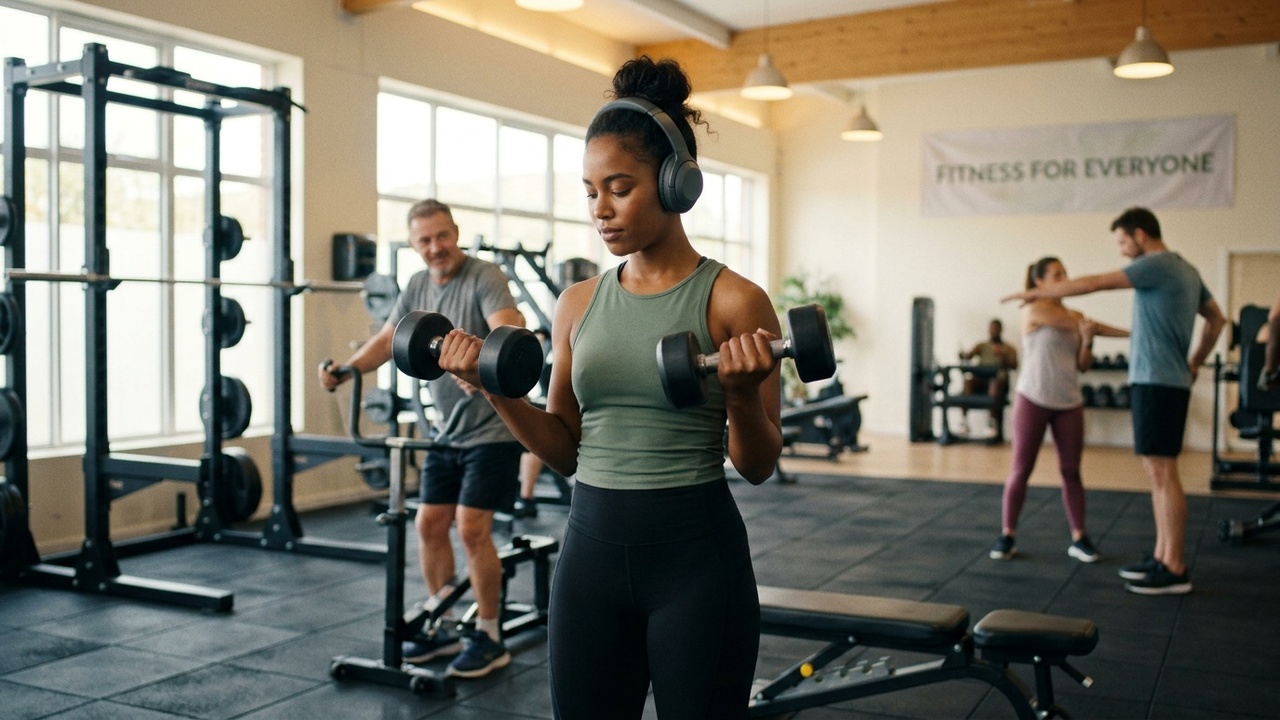
12 Strategies to Beat Gym Anxiety
1. Go During Off-Peak Hours
Most gyms are busiest from 5-7 PM on weekdays and mid-morning on weekends. Going during off-peak hours (early morning, mid-afternoon, or late evening) means fewer people, more available equipment, and less pressure.
Many gyms share their busy times on Google Maps. Check before your first visit and pick a low-traffic time slot.
2. Have a Plan Before You Walk In
This is the most impactful strategy on this list. When you have a written plan — exercises, sets, reps, rest periods — you walk in with purpose. You do not wander. You do not look lost. You go to the first exercise, execute it, and move to the next.
Use the free workout planner to generate a session before you go. Having a plan on your phone gives you something to reference between sets, which also removes the "what should I do now?" anxiety.
3. Start with Familiar Equipment
You do not need to use the barbell squat rack on day one. Start with machines, dumbbells, or equipment you recognize. Machines have fixed movement paths and usually include instructions. Dumbbells are intuitive. Build confidence with familiar tools before exploring new ones.
4. Wear Headphones
Headphones create a personal bubble. They signal to others that you are focused and do not want to chat (which reduces social anxiety), and music or podcasts give you something to focus on besides your surroundings.
Make a workout playlist before your first visit. Having your own soundtrack makes the gym feel more like your space.
5. Bring a Friend
Training with a friend reduces anxiety significantly. You have someone to talk to between sets, someone to share the unfamiliarity with, and someone who makes the gym feel less like foreign territory.
If none of your friends go to the gym, consider a group fitness class as a starting point. The social environment of a class is structured, which removes the "what do I do?" barrier.
6. Start with a Home Workout Phase
If the gym feels too overwhelming to start, build a foundation at home first. Bodyweight exercises, resistance bands, or a pair of dumbbells let you build fitness, learn movement patterns, and develop confidence before stepping into a gym.
Even 2-4 weeks of home training can make a significant difference in how comfortable you feel at the gym. Read our guide on how to start working out for home-friendly beginner routines.
7. Use an App for Guidance
A workout app on your phone serves as a portable coach. It tells you what to do, shows you how to do it, and tracks your progress. You are never standing in the gym wondering what comes next.
Load Muscle includes video demonstrations for over 4,000 exercises, so you can quickly check form on any movement before performing it. Download the app to have a complete gym guide in your pocket.
8. Learn Basic Gym Etiquette
A lot of gym anxiety comes from fear of doing something wrong socially — using a machine incorrectly, standing in someone's way, or breaking an unwritten rule. Learning basic etiquette (covered below) removes this uncertainty entirely.
9. Remember: Nobody Is Watching You
This is a fact, not a feel-good platitude. Experienced gym-goers are focused on their own training. Between sets, they are resting, checking their phone, or mentally preparing for the next set. They are not analyzing your form from across the room.
If anything, most experienced lifters respect beginners. They know how hard it is to start, and they remember their own first day.
10. Set Small, Achievable Goals
Do not aim to "get fit." Aim to "go to the gym three times this week." Do not aim to "squat 100 kg." Aim to "learn how to use the squat rack today."
Small goals create small wins. Small wins build confidence. Confidence reduces anxiety. It is a positive feedback loop that starts with showing up.
11. Take a Gym Tour First
Most gyms offer a free tour when you sign up. Take it. Ask the staff to show you where everything is, how the key machines work, and where the water fountain and locker rooms are. Knowing the layout eliminates the "lost in a strange place" feeling.
If a formal tour is not available, visit the gym during a quiet time and walk around before your first workout. Familiarity breeds comfort.
12. Reframe Your Mindset
You are not going to the gym to perform for an audience. You are going to invest in your health, strength, and confidence. Every person in that gym — from the bodybuilder to the person on the treadmill — is there for the same reason: to be better than they were yesterday.
You belong in the gym. Not because of how you look or how much you can lift, but because you decided to show up. That decision is the hardest part, and you already made it.
Gym Etiquette Basics for Beginners
Knowing these unwritten rules eliminates the social anxiety of "doing something wrong."
Rerack Your Weights
When you finish using dumbbells, put them back on the rack. When you finish with a barbell, strip the plates off. This is the single most important rule in any gym. Leaving weights on equipment is the fastest way to annoy everyone around you.
Wipe Down Equipment
Use the spray bottles and paper towels (or wipes) provided by the gym to wipe down benches, seats, and handles after you use them. This is basic hygiene and common courtesy.
Share Equipment During Busy Hours
If someone asks to "work in" (alternate sets with you on a machine or rack), the standard response is yes. They will use the equipment during your rest periods. This is normal gym culture, not an imposition.
Respect Personal Space
Do not stand directly in front of someone using the mirror. Do not curl in the squat rack. Do not set up your exercise so close to someone that you are in their movement path. Basic spatial awareness goes a long way.
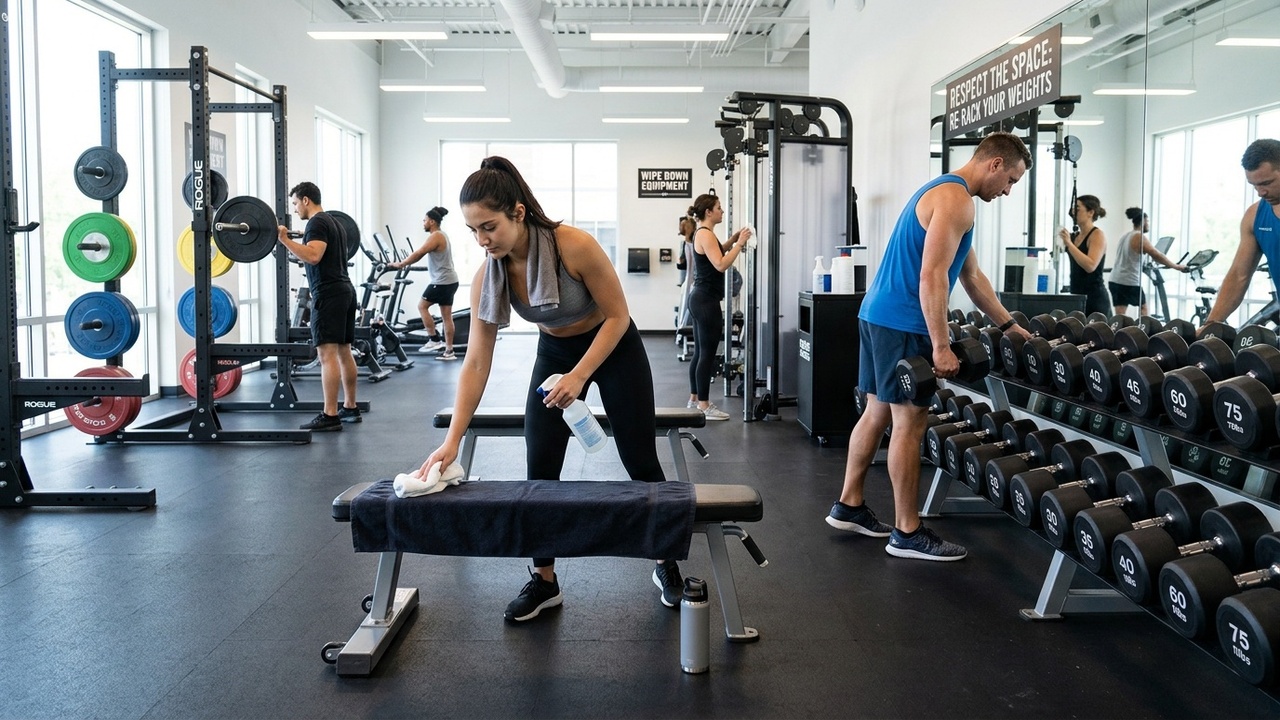
How a Workout App Helps with Gym Anxiety
The connection between gym anxiety and "not knowing what to do" is well documented. A workout app directly addresses this by giving you a plan, exercise demonstrations, and a structured workflow.
With Load Muscle, you walk into the gym with:
- A complete workout plan generated by AI based on your goals, equipment, and experience
- Video demonstrations for every exercise, so you know exactly how to perform each movement
- A step-by-step flow — the app tells you what to do next, eliminating decision paralysis
- Progress tracking that shows you improving over time, reinforcing your confidence
For beginner-specific plans, check out our free workout plans for beginners. Or generate a personalized plan with the free workout planner — you will walk in knowing exactly what to do, which is the most powerful anxiety reducer available.
FAQ
Is it normal to feel anxious at the gym?
Completely normal. Surveys show that approximately 50% of people experience gym anxiety, with even higher rates among women and beginners. The anxiety typically decreases significantly after 2-4 weeks of consistent gym attendance. Knowing that half of all gym-goers have felt the same way should be reassuring — you are not alone.
How do I stop feeling judged at the gym?
The most effective strategy is accepting that people are not watching you — research confirms this. Gym-goers are focused on their own workouts. Additionally, having a plan (so you move with purpose), wearing headphones (to create a personal bubble), and going during off-peak hours all reduce the feeling of being observed.
What should I do on my first day at the gym?
Have a simple plan ready before you go. Start with 3-4 familiar exercises (machines or dumbbells), perform 3 sets of 10-12 reps each, and focus on getting comfortable in the environment. Do not try to do everything on day one. Use the free workout planner to generate a beginner-appropriate session.
Will people laugh at me for lifting light weights?
No. Experienced lifters respect anyone who shows up and trains with good form, regardless of the weight on the bar. Everyone started with light weights. The person benching 300 pounds once benched just the empty bar. Lifting light weight with proper form is far more impressive to knowledgeable lifters than ego-lifting heavy weight with terrible technique.
Should I hire a personal trainer for my first gym visit?
A personal trainer can help reduce anxiety by guiding you through the gym and teaching you equipment. Even 1-3 sessions can provide enough confidence to continue on your own. However, it is not necessary — a good workout plan from an app, combined with the strategies in this guide, gives most beginners enough structure to start independently.
How long does gym anxiety last?
For most people, significant gym anxiety decreases after 2-4 weeks of consistent attendance (3+ visits per week). By the end of the first month, the gym starts feeling familiar, you recognize faces, you know where things are, and the anxiety fades into routine. The first visit is the hardest — it gets easier every time after that.
If starting at home feels easier, our home workout routines let you build strength and confidence before you ever step into a gym.