What you eat before and after training directly affects how you perform in the gym and how well you recover afterward. The right pre workout meal provides energy, protects muscle tissue, and sharpens focus. The right post-workout meal kickstarts recovery, replenishes glycogen, and supports muscle protein synthesis. Get both wrong, and you leave gains on the table regardless of how hard you train.
This guide covers the science behind workout nutrition, practical meal timing strategies, and 20 ready-to-use meal ideas so you never have to guess what to eat around your training sessions.
This is general information and not a substitute for professional medical or dietary advice. Consult a registered dietitian or healthcare professional for personalized guidance.
TL;DR
- Your pre workout meal should contain carbohydrates for energy and moderate protein. Eat a full meal 2-3 hours before training or a smaller snack 30-60 minutes before.
- Your post-workout meal should prioritize protein (25-40 g) and carbohydrates to replenish glycogen and trigger muscle repair.
- The "anabolic window" is wider than most people think. Eating within 1-2 hours post-workout is sufficient for most lifters.
- Hydration matters as much as food. Even mild dehydration (2% bodyweight) reduces strength and endurance.
- Meal timing is secondary to total daily intake. Hit your daily calories and macros first, then optimize timing.
- Build your training program with the free workout planner and pair it with proper nutrition.
Why Workout Nutrition Matters
Your body treats exercise as a controlled stressor. During resistance training, you deplete muscle glycogen, create micro-tears in muscle fibers, and elevate cortisol. What you eat before and after training determines how effectively your body handles each of these demands.
Before training, your primary goals are fuel and readiness. Carbohydrates top off glycogen stores so your muscles have immediate energy for high-intensity contractions. Protein provides circulating amino acids that reduce muscle breakdown during the session. A small amount of fat slows digestion enough to provide sustained energy without causing stomach discomfort.
After training, priorities shift to repair and replenishment. Protein triggers muscle protein synthesis (MPS), the process that repairs and grows muscle tissue. Carbohydrates replenish glycogen stores and create an insulin response that helps shuttle nutrients into muscle cells. The combination of protein and carbs post-workout is more effective for recovery than either macronutrient alone.
Research published in the Journal of the International Society of Sports Nutrition confirms that peri-workout nutrition (the meals surrounding your training) can improve body composition, performance, and recovery when total daily intake is adequate. However, the most important factor remains your overall daily caloric and macronutrient intake. Timing is the fine-tuning, not the foundation.
For a deeper understanding of how protein drives muscle growth, read our guide on protein for muscle growth.
Pre-Workout Nutrition
What to Eat Before a Workout
A good pre workout meal combines three elements:
- Carbohydrates for energy. Glycogen is the primary fuel source during moderate- to high-intensity resistance training. Without adequate carbs, you fatigue faster, lift less weight, and produce less training volume.
- Protein for amino acid availability. Having amino acids circulating in your bloodstream during training reduces muscle protein breakdown and gives your body the building blocks it needs for repair even before the session ends.
- Moderate fat (optional, timing dependent). Fat slows digestion, which is beneficial 2-3 hours before training but can cause discomfort if eaten too close to your session.
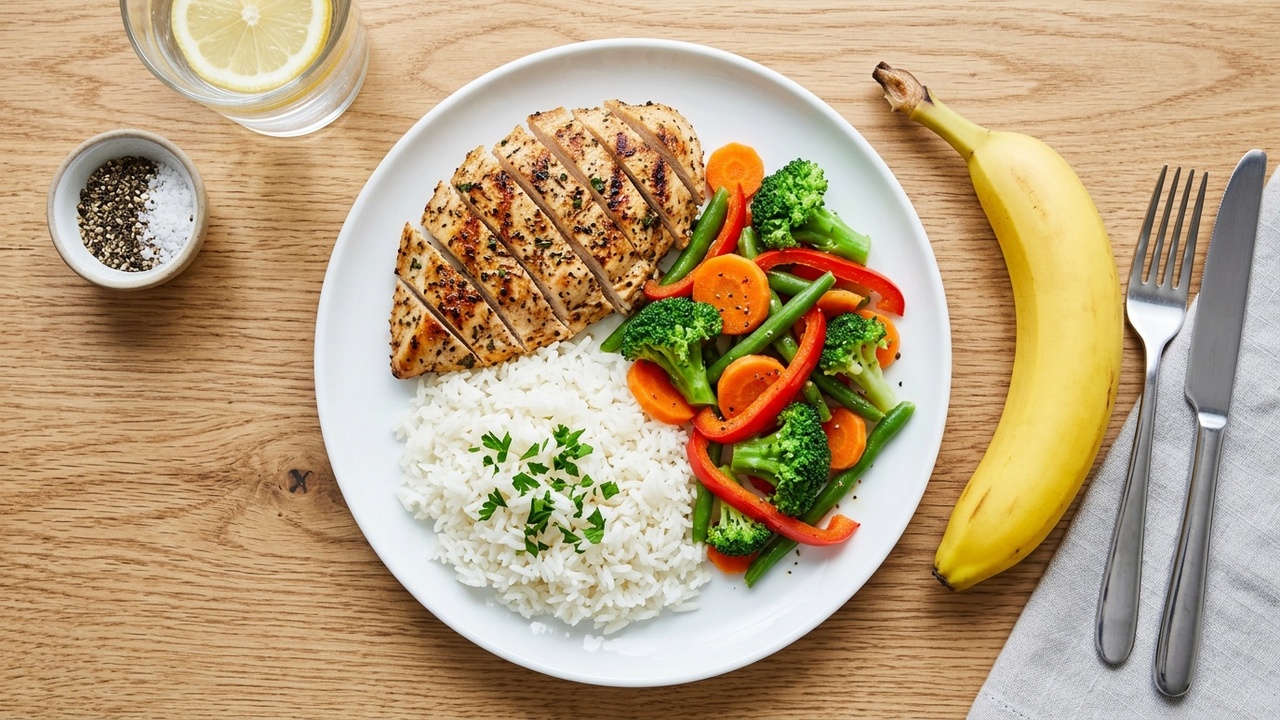
Foods to prioritize: oats, rice, potatoes, bread, bananas, chicken, turkey, eggs, Greek yogurt, and lean beef. Foods to limit close to training: high-fiber vegetables, large amounts of fat, and anything that causes individual digestive discomfort.
Macronutrient Breakdown
A practical pre-workout macronutrient target for most lifters:
- Carbohydrates: 0.5-1 g per kg of bodyweight (e.g., 40-80 g for an 80 kg person)
- Protein: 20-30 g
- Fat: 5-15 g (reduce or eliminate if eating within 60 minutes of training)
These numbers scale with body size and training intensity. A 60-minute hypertrophy session requires more glycogen than a 30-minute strength session with long rest periods. Adjust carbohydrate intake based on how demanding your workout will be.
For structured programs that match your training intensity to your goals, use the free workout planner to generate a plan tailored to your experience level and available equipment.
Meal Timing (2-3 Hours vs 30-60 Minutes)
2-3 hours before training is the ideal window for a full pre workout meal. This gives your body enough time to digest a complete meal containing protein, carbs, and fat. Blood sugar is stable, glycogen stores are topped off, and you avoid the heaviness that comes from training on a full stomach.
Example: Chicken breast, white rice, and a small side salad eaten 2.5 hours before a 5 PM session.
30-60 minutes before training is the window for a lighter snack. At this point, you want fast-digesting carbohydrates and a small amount of protein. Skip the fat and fiber -- they slow digestion and can cause discomfort during heavy compound lifts.
Example: A banana with a scoop of whey protein, or a rice cake with honey and a few slices of turkey.
If you train first thing in the morning, eating a full meal 2-3 hours before is impractical. In this case, a small snack 20-30 minutes before (a banana, a handful of dried fruit, or a sports drink) provides enough glucose to improve performance compared to training completely fasted. Alternatively, you can train fasted -- see the section on fasted training below.
10 Quick Pre-Workout Meal Ideas
Full meals (2-3 hours before):
- Chicken breast with white rice and steamed broccoli (40 g protein, 60 g carbs, 8 g fat)
- Oatmeal with whey protein, banana slices, and a tablespoon of peanut butter (35 g protein, 65 g carbs, 14 g fat)
- Turkey and avocado wrap with a whole-wheat tortilla (30 g protein, 45 g carbs, 15 g fat)
- Scrambled eggs (3 whole) with toast and fruit (25 g protein, 40 g carbs, 18 g fat)
- Lean beef stir-fry with noodles and vegetables (35 g protein, 55 g carbs, 12 g fat)
Quick snacks (30-60 minutes before):
- Banana with a scoop of whey protein mixed in water (28 g protein, 30 g carbs, 2 g fat)
- Rice cakes (2) with honey and a few slices of deli turkey (15 g protein, 35 g carbs, 3 g fat)
- Greek yogurt (200 g) with granola (20 g protein, 35 g carbs, 6 g fat)
- Toast with jam and a hard-boiled egg (12 g protein, 30 g carbs, 7 g fat)
- Applesauce pouch with a protein bar (25 g protein, 40 g carbs, 8 g fat)
Choose the option that fits your schedule and sits well in your stomach. Individual tolerance varies significantly -- some people train well on a full meal an hour before, while others need a 3-hour gap to avoid nausea.
Post-Workout Nutrition
What to Eat After a Workout
After training, your body is primed for nutrient uptake. Muscle protein synthesis rates are elevated, glycogen synthase (the enzyme responsible for glycogen storage) is more active, and insulin sensitivity in muscle tissue is increased. Your post workout meal should take advantage of this state.
The two priorities after training:
- Protein to trigger muscle protein synthesis. Research consistently shows that 20-40 g of high-quality protein post-workout maximally stimulates MPS. Larger individuals and those performing full-body or high-volume sessions benefit from the higher end of this range.
- Carbohydrates to replenish glycogen. Training depletes muscle glycogen, and replenishing it quickly matters most if you train again within 24 hours. For once-daily training, total daily carb intake matters more than post-workout timing.
Fat is not harmful post-workout, despite the common claim that it "slows protein absorption." Research shows that adding fat to a post-workout meal does not meaningfully reduce MPS rates. Eat fat if it is part of your meal -- do not avoid it.
Understanding how your body builds muscle helps you make better nutrition decisions. Our guide on the science of building muscle covers the full process from training stimulus to protein synthesis.
The Anabolic Window: Myth or Reality?
The "anabolic window" -- the idea that you must consume protein within 30 minutes of training or lose your gains -- has been significantly overstated.
The reality, based on a 2013 meta-analysis by Schoenfeld, Aragon, and Krieger in the Journal of the International Society of Sports Nutrition:
- The post-workout "window" for protein consumption is likely 1-2 hours, not 30 minutes.
- The window matters most if you trained fasted or if your last meal was more than 3-4 hours before training. In these cases, getting protein relatively quickly post-workout is more important.
- If you ate a protein-rich pre workout meal 1-2 hours before training, amino acids are still circulating during and after your session. The urgency to eat immediately post-workout is lower.
- Total daily protein intake is a stronger predictor of muscle growth than precise post-workout timing.
Practical takeaway: eat a protein-rich meal within 1-2 hours of finishing your workout. If you trained fasted, prioritize eating sooner rather than later. Do not stress about hitting an exact 30-minute cutoff.
Macronutrient Ratios Post-Workout
A practical post-workout macronutrient target:
- Protein: 25-40 g (0.3-0.5 g per kg bodyweight)
- Carbohydrates: 0.5-1.0 g per kg bodyweight (40-80 g for an 80 kg person)
- Fat: No specific restriction. Include as part of a balanced meal.
The protein-to-carb ratio post-workout should be roughly 1:2 to 1:3. This ratio optimizes both MPS and glycogen replenishment. For someone weighing 80 kg, this means approximately 30-40 g protein and 60-80 g carbs.
If your primary goal is fat loss and you are eating in a calorie deficit, you can reduce post-workout carbs while keeping protein high. Glycogen replenishment is less urgent when total daily intake is controlled.
10 Easy Post-Workout Meal Ideas
Quick options (within 30-60 minutes):
- Whey protein shake with a banana and oat milk (30 g protein, 45 g carbs, 5 g fat)
- Chocolate milk (500 ml) with a scoop of protein powder (38 g protein, 50 g carbs, 10 g fat)
- Greek yogurt (300 g) with berries, honey, and granola (25 g protein, 55 g carbs, 8 g fat)
- Protein bar with a piece of fruit (25 g protein, 40 g carbs, 10 g fat)
- Rice cakes with cottage cheese and sliced banana (22 g protein, 45 g carbs, 5 g fat)
Full meals (within 1-2 hours):
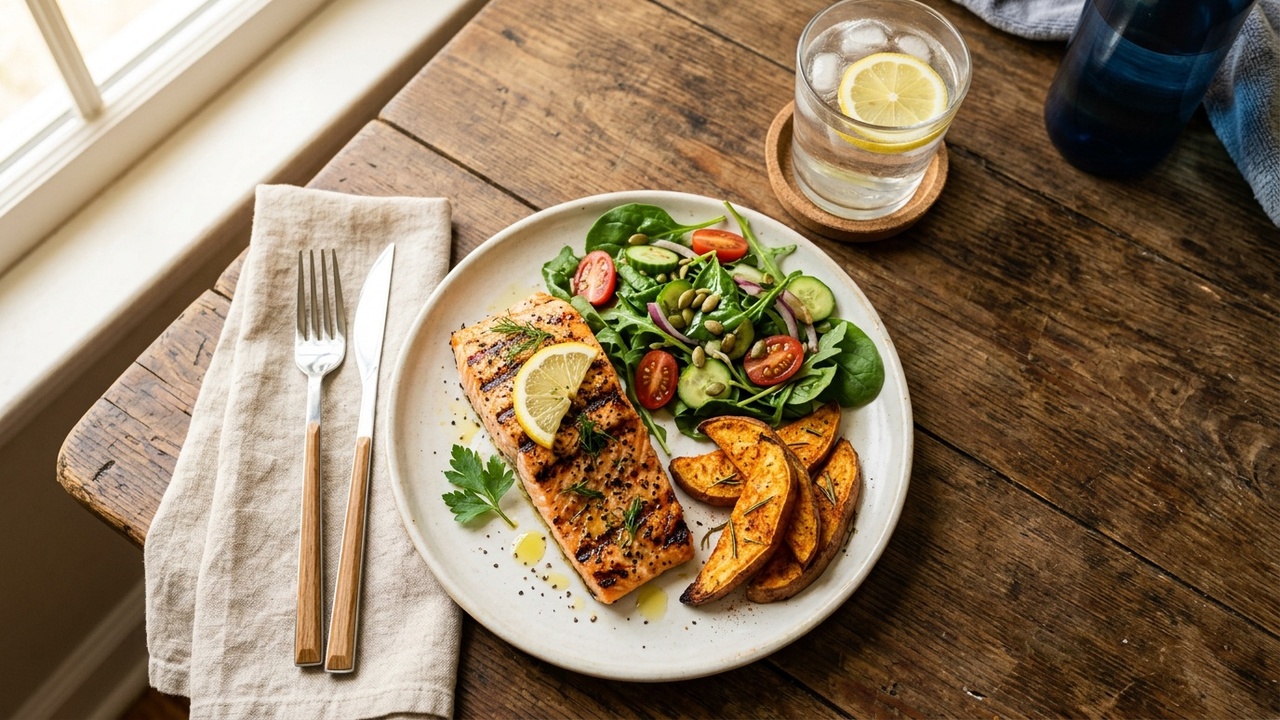
- Grilled salmon with sweet potato and steamed vegetables (35 g protein, 55 g carbs, 16 g fat)
- Chicken breast with pasta and marinara sauce (40 g protein, 70 g carbs, 10 g fat)
- Lean ground beef tacos with corn tortillas, rice, and beans (38 g protein, 65 g carbs, 14 g fat)
- Egg white omelet with toast, avocado, and fruit (30 g protein, 50 g carbs, 15 g fat)
- Tuna salad sandwich on whole-wheat bread with a side of fruit (32 g protein, 48 g carbs, 12 g fat)
Pick meals you enjoy and can prepare consistently. The best post-workout meal is the one you actually eat regularly, not the theoretically optimal one you skip because it is inconvenient.
Pre-Workout Supplements: Are They Necessary?
Pre-workout supplements are a multi-billion-dollar industry, but most of the benefits come from a handful of well-studied ingredients:
Caffeine (200-400 mg, 30-60 minutes before training): The most effective legal performance enhancer. Caffeine improves strength, endurance, focus, and reduces perceived effort. Coffee works just as well as a pre-workout powder for caffeine delivery.
Creatine monohydrate (3-5 g daily): Increases phosphocreatine stores, improving performance on short, high-intensity efforts like heavy sets. Timing does not matter much -- daily consistency is what counts. Taking it pre or post-workout is fine.
Citrulline malate (6-8 g, 30-60 minutes before): May improve blood flow and reduce fatigue during high-rep training. The evidence is moderate but generally positive.
Beta-alanine (3-6 g daily): Buffers lactic acid accumulation. Most beneficial for exercises lasting 60-240 seconds (higher rep sets, circuit training). Daily dosing is required for effect -- the timing is irrelevant.
Most other pre-workout ingredients (proprietary blends, "pump matrices," BCAAs in a pre-workout context) have weak or no evidence supporting their effectiveness. A cup of coffee, 5 g of creatine, and a proper pre workout meal will outperform the vast majority of commercial pre-workout products.
For training programs that maximize the benefit of proper nutrition, the free workout planner creates structured routines based on your goals and experience level.
Fasted Training: Pros and Cons
Fasted training means exercising without eating for 8-12+ hours beforehand, typically first thing in the morning. It is a common practice, but the evidence for and against it is nuanced.
Potential benefits:
- Convenience. No meal prep, no digestion wait time. You wake up and train.
- Fat oxidation. Fasted cardio increases the rate of fat oxidation during exercise. However, this does not necessarily translate to greater fat loss over 24 hours when total caloric intake is equal.
- Personal preference. Some people feel lighter, more alert, and less nauseous training without food.
Potential drawbacks:
- Reduced performance. Most research shows that fasted training reduces strength, power, and total training volume compared to fed training. If your workout demands high performance (heavy squats, deadlifts, or high-volume sessions), eating beforehand is likely beneficial.
- Increased muscle breakdown. Training without circulating amino acids increases muscle protein breakdown during the session. This can be partially offset by eating protein immediately after training.
- Lower energy. Glycogen-depleted muscles fatigue faster, particularly during sessions lasting longer than 45 minutes.
The verdict: Fasted training is acceptable for low- to moderate-intensity sessions (walking, light cardio, easy strength sessions). For high-intensity resistance training, eating a pre workout meal -- even a small one -- generally produces better performance and muscle retention outcomes. Recovery is equally important, so make sure you understand how to manage rest days and recovery alongside your nutrition.
Nutrition for Different Goals
Your workout nutrition should align with your overall goal. The core principles remain the same, but the emphasis shifts.
Eating for Muscle Gain
When bulking or in a caloric surplus:
- Pre-workout: Prioritize a larger carbohydrate intake (1-1.5 g per kg bodyweight) to fuel high-volume training. Include 25-30 g protein. Fat is fine in this meal since total calories are higher.
- Post-workout: Eat a substantial meal with 30-40 g protein and 60-100 g carbohydrates. This is the easiest meal of the day to add calories without feeling overly full, since post-exercise appetite suppression is common.
- Daily total: Aim for 1.6-2.2 g protein per kg bodyweight and a caloric surplus of 200-400 calories above maintenance.
High training volume during a bulk demands more glycogen. Do not skimp on carbs around your training if muscle gain is the priority. Learn more about the mechanisms behind hypertrophy in our guide on the science of building muscle.
Eating for Fat Loss
When cutting or in a caloric deficit:
- Pre-workout: Keep carbs moderate (0.3-0.5 g per kg bodyweight) and protein at 25-30 g. You have fewer total calories to allocate, so make every gram count. Prioritize fast-digesting carbs if eating close to training.
- Post-workout: Protein becomes even more important during a deficit -- it preserves muscle when calories are low. Aim for 30-40 g protein. Carbs can be reduced but should not be eliminated. Even 30-40 g post-workout helps with recovery and mood.
- Daily total: Keep protein high (2.0-2.4 g per kg bodyweight), reduce carbs and fats to create the deficit. For a full guide on training and eating in a deficit, read calorie deficit and exercise.
If you are trying to lose fat while maintaining muscle, our body recomposition guide covers the complete strategy for achieving both simultaneously.
Eating for Maintenance
When maintaining body weight and composition:
- Pre-workout: Standard recommendations apply -- 0.5-1 g carbs per kg, 20-30 g protein, moderate fat.
- Post-workout: 25-35 g protein, 40-70 g carbs. No special adjustments needed.
- Daily total: Match caloric intake to expenditure. Protein at 1.6-2.0 g per kg bodyweight is sufficient for maintaining muscle mass.
Maintenance phases are the easiest to manage nutritionally. Meal timing becomes less critical when you are not optimizing for surplus or deficit. Focus on consistency and food quality.
Hydration Before, During, and After Training
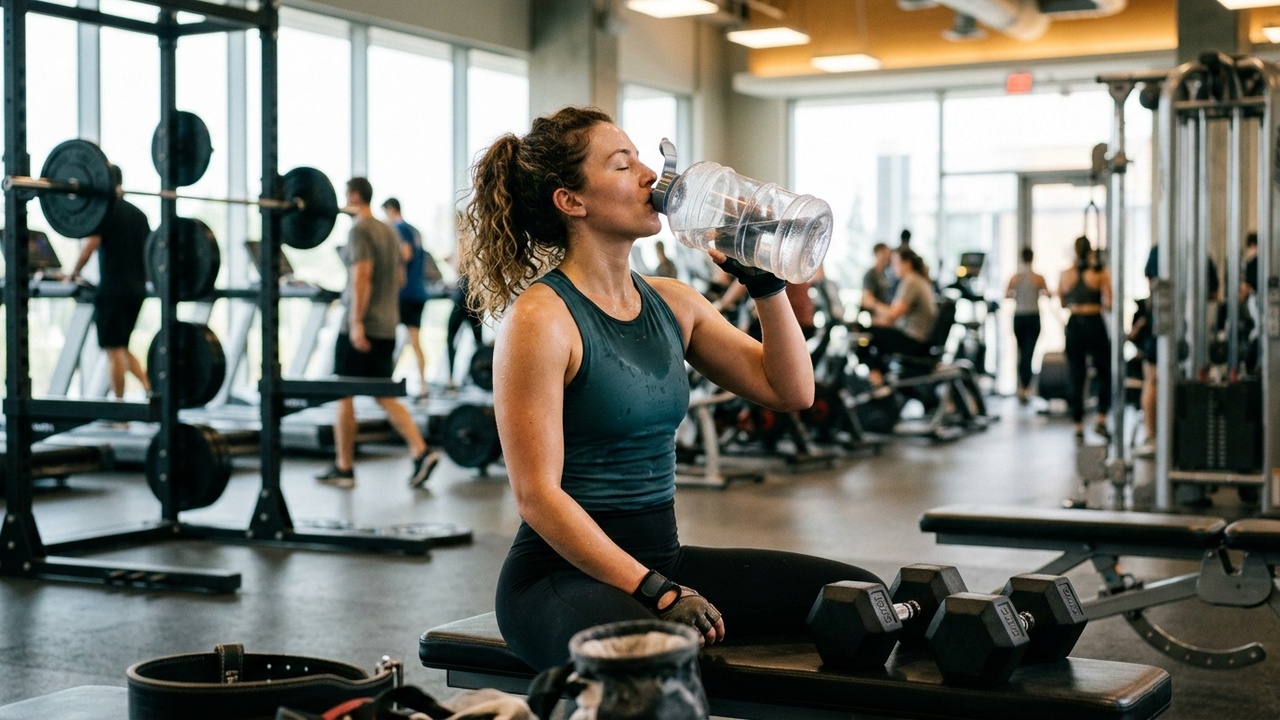
Hydration is the most overlooked aspect of workout nutrition. Even mild dehydration (a 2% loss of bodyweight from fluid) reduces strength by up to 6%, power output by up to 10%, and endurance capacity by up to 20%. Cognitive function and perceived effort are also negatively affected.
Before training:
- Drink 400-600 ml of water in the 2-3 hours before exercise.
- Drink another 200-300 ml in the 15-30 minutes before starting.
- Check urine color as a hydration indicator: pale yellow means adequately hydrated, dark yellow means you need more fluid.
During training:
- Sip 150-250 ml of water every 15-20 minutes during your session.
- For sessions longer than 60 minutes or in hot environments, consider adding electrolytes (sodium, potassium, magnesium) to your water. A pinch of salt and a splash of fruit juice in your water bottle is a simple, effective solution.
- Do not wait until you feel thirsty. Thirst is a lagging indicator of dehydration.
After training:
- Weigh yourself before and after training. For every kilogram lost, drink 1.25-1.5 liters of fluid.
- Include sodium in your post-workout meal or drink to improve fluid retention.
- Rehydration is especially important if you train twice a day or in the morning before work.
Water, coffee, tea, and sports drinks all count toward hydration. Alcohol does not -- it is a diuretic and impairs recovery. Avoid alcohol for at least several hours after training.
FAQ
Do I need to eat before every workout?
For most people, eating before a workout improves performance and reduces muscle breakdown. However, light cardio sessions and short (under 30 minutes) strength sessions can be done fasted without significant drawbacks. If your session involves heavy compound lifts or lasts longer than 45 minutes, a pre workout meal is strongly recommended.
What if I feel nauseous eating before training?
Nausea usually results from eating too much, too close to your session, or eating high-fat and high-fiber foods that digest slowly. Try a small, easily digested snack 30-45 minutes before training -- a banana, rice cakes, or a few sips of a protein shake. If solid food is a problem, liquid calories (smoothies, protein shakes) are easier on the stomach.
Is a protein shake enough as a post-workout meal?
A protein shake alone provides protein but lacks carbohydrates and micronutrients. Adding a banana, oats, or other carb source to your shake makes it a more complete post-workout option. Ideally, follow up with a full meal within 1-2 hours for optimal recovery and glycogen replenishment.
How much protein do I actually need around my workout?
Research supports 20-40 g of protein both pre- and post-workout for maximizing muscle protein synthesis. Larger individuals (over 85 kg) and those doing full-body or high-volume sessions should aim for the higher end. Total daily protein intake (1.6-2.2 g per kg bodyweight) matters more than any single meal's protein content. Our protein for muscle growth guide covers this in detail.
Can I just eat my regular meals and skip "workout-specific" nutrition?
Yes, if your regular meals happen to fall within the right windows. If you eat a balanced meal containing protein and carbs 1-3 hours before training and another within 1-2 hours after, you are already following the principles of workout nutrition without any special planning. The meal ideas in this guide are simply practical applications of those principles.
Does meal timing matter more than total daily intake?
No. Total daily caloric and macronutrient intake is the primary driver of body composition changes. Meal timing is a secondary optimization. If you hit your daily protein, carb, and fat targets, you will see results regardless of whether you time your meals perfectly around training. That said, proper peri-workout nutrition can provide a small but meaningful edge, especially for advanced lifters.
Nutrition supports training — it does not replace it. Pair these meal strategies with a structured plan from our free workout routines.