Most people think traps start and end with shrugs. That is why most people have flat, underdeveloped upper backs.
The best trap exercises hit all three regions of the trapezius - upper, middle, and lower - with movements that go well beyond just shrugging a bar up and down. If you want traps that look thick from the front, fill out a t-shirt from behind, and actually help you lift heavier, you need more variety than most programs give you.
This guide covers 10 exercises, the anatomy behind them, a ready-to-use trap workout routine, and the training frequency that gets the best results.
TL;DR
- The trapezius has three regions (upper, middle, lower) and each needs different movements.
- Shrugs alone are not enough. Add face pulls, Y-raises, and carries for complete trap development.
- Train traps 2-3x per week. They recover fast and respond well to frequency.
- Use the Free Workout Planner to build a plan that includes trap work on the right days.
- Browse all trap movements in the exercise library.
Trap Muscle Anatomy
The trapezius is a large, diamond-shaped muscle that runs from the base of your skull down to the middle of your spine and out to each shoulder. It is not one simple muscle - it has three distinct fiber regions, and each one does a different job.
Upper Traps
The upper fibers run from your neck to the outer edge of your collarbone and shoulder. Their main job is elevating your shoulder blades - the shrugging motion. These are what most people train, and what gives you that thick neck-to-shoulder look.
Middle Traps
The middle fibers sit between your shoulder blades. They retract the scapulae, pulling your shoulder blades together. Strong middle traps improve posture and support heavy rowing movements. If your back workouts feel weak at the squeeze, your middle traps probably need more work.
Lower Traps
The lower fibers run diagonally from mid-spine up to the shoulder blade. They handle scapular depression and upward rotation - pulling your shoulder blades down and stabilizing them during overhead pressing. Weak lower traps are a common cause of shoulder issues and poor overhead performance.
10 Best Trap Exercises
Each exercise below includes the primary trap region it targets, why it belongs in your program, and the coaching cues you need to get the most out of every rep.
1. Barbell Shrug
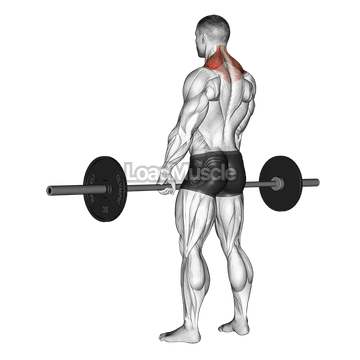
Primary Focus: Upper Traps
Why it matters: The barbell shrug lets you load the upper traps heavier than almost any other isolation movement. It is the most direct way to build mass in the upper trap region, and you can progress it for years with simple weight increases.
Coaching Cues
- Stand tall with the bar at arm's length, shoulder-width grip.
- Shrug straight up toward your ears - do not roll your shoulders.
- Hold the top position for a full second before lowering under control.
- Keep your arms straight the entire time. This is not a biceps exercise.
2. Dumbbell Shrug
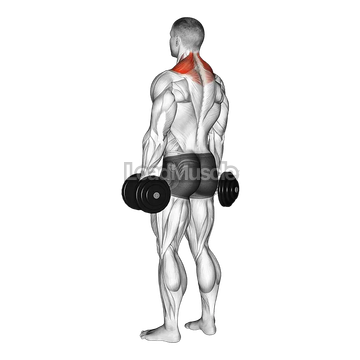
Primary Focus: Upper Traps
Why it matters: Dumbbells let each side work independently, which helps correct left-right imbalances. The slightly greater range of motion compared to a barbell also means more stretch at the bottom and a harder contraction at the top.
Coaching Cues
- Hold one dumbbell in each hand at your sides, palms facing your body.
- Drive your shoulders straight up as high as possible without bending your elbows.
- Squeeze at the top for 1-2 seconds before lowering slowly.
- Avoid using momentum or bouncing the weight.
3. Farmer's Walk
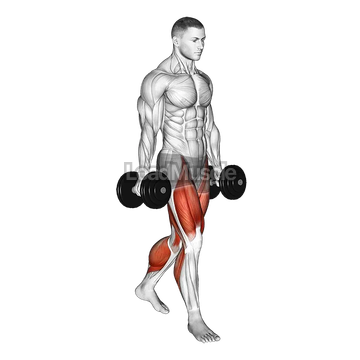
Primary Focus: Upper Traps, Grip, Core
Why it matters: The farmer's walk keeps your traps under sustained tension for much longer than any set of shrugs. That time-under-tension drives serious growth. It also hammers your grip, core stability, and overall work capacity - making it one of the most functional exercises you can do.
Coaching Cues
- Pick up a heavy dumbbell or kettlebell in each hand and stand tall.
- Keep your shoulders pulled back and slightly elevated - do not let them droop forward.
- Walk with short, controlled steps for 30-40 meters or 30-45 seconds.
- Breathe steadily and avoid leaning to one side.
4. Face Pull
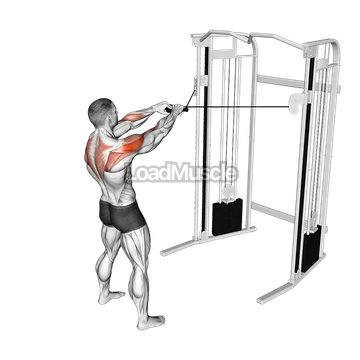
Primary Focus: Middle Traps, Rear Delts
Why it matters: Face pulls target the middle traps and rear delts with a motion most programs completely neglect. They are one of the best exercises for improving posture, balancing out heavy pressing, and keeping your shoulders healthy long-term.
Coaching Cues
- Set a cable at upper-chest height with a rope attachment.
- Pull the rope toward your face, splitting the ends past your ears.
- Squeeze your shoulder blades together hard at the end of each rep.
- Use a controlled tempo - this is not a power movement.
5. Rack Pull
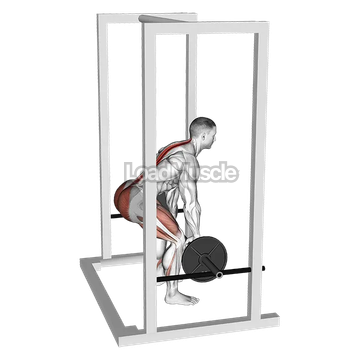
Primary Focus: Upper Traps, Entire Back
Why it matters: Rack pulls let you handle very heavy loads through the top portion of a deadlift, where the traps work hardest to keep your shoulders packed and the bar locked out. They build raw trap thickness and overall back density that carries over directly to your deadlift and rows.
Coaching Cues
- Set the bar in a rack at just below knee height.
- Grip the bar just outside your legs and drive your hips forward to lock out.
- At the top, squeeze your traps and hold for a beat before lowering.
- Keep your chest up and back flat throughout the pull.
6. Upright Row
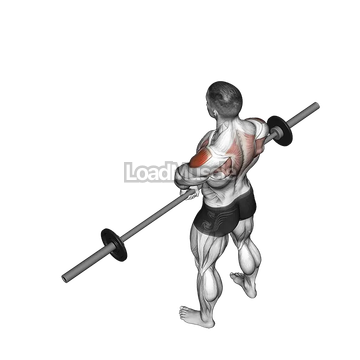
Primary Focus: Upper Traps, Side Delts
Why it matters: The upright row hits both the upper traps and lateral delts in one movement. Using a wider grip shifts more of the load onto the traps while reducing shoulder impingement risk. It is a solid compound option for shoulder days that doubles as trap work.
Coaching Cues
- Use a shoulder-width or slightly wider grip on the barbell.
- Pull the bar up along your body until your elbows reach shoulder height.
- Lead with your elbows, not your hands.
- Lower slowly and avoid swinging the weight up with your hips.
7. Cable Shrug
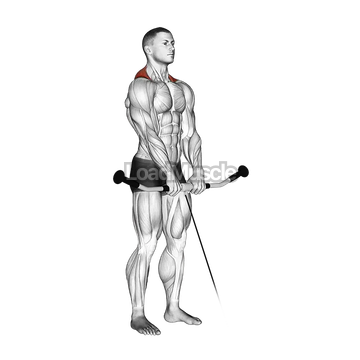
Primary Focus: Upper Traps
Why it matters: Cables provide constant tension through the entire range of motion, unlike free weights where tension drops at the top and bottom. This means your traps never get a break during the set, which drives more metabolic stress and a stronger growth stimulus per rep.
Coaching Cues
- Stand between the low pulleys or face the cable stack with a straight bar attachment.
- Shrug straight up without leaning forward or backward.
- Hold the contraction at the top for 1-2 seconds.
- Use a slow eccentric (2-3 seconds on the way down) to maximize time under tension.
8. Overhead Shrug
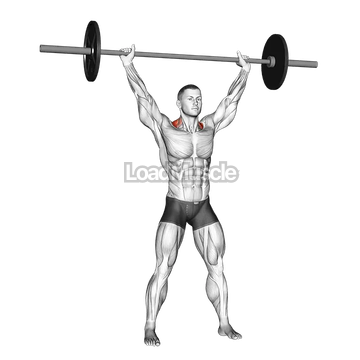
Primary Focus: Lower Traps
Why it matters: Most people never train the lower traps directly, and overhead shrugs are one of the best ways to fix that. By shrugging with the bar overhead, you train scapular upward rotation and depression strength - which directly improves overhead press stability and shoulder health.
Coaching Cues
- Press or snatch a light barbell overhead with a wide grip and locked elbows.
- Without bending your arms, shrug your shoulders up toward your ears and then push them back down.
- Focus on the "push away" at the top - actively drive the bar toward the ceiling.
- Start light. This exercise is harder than it looks and requires good shoulder mobility.
9. Y-Raise
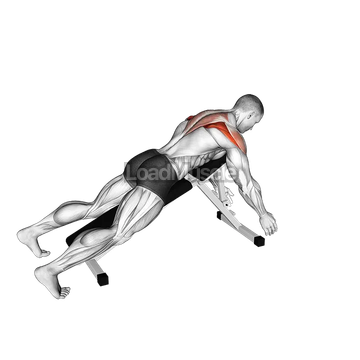
Primary Focus: Lower Traps
Why it matters: The Y-raise isolates the lower traps through a full range of scapular upward rotation. It is a go-to exercise in rehab and prehab settings because it strengthens the exact muscles that keep your shoulder blades stable during pressing and overhead work. Do not skip this one just because the weight is light.
Coaching Cues
- Lie face-down on an incline bench set to about 30-45 degrees.
- Hold light dumbbells and raise your arms into a Y-shape, thumbs pointing toward the ceiling.
- Squeeze your lower traps at the top and hold for a beat.
- Lower slowly. If you need to swing the weights up, they are too heavy.
10. Prone Trap Raise
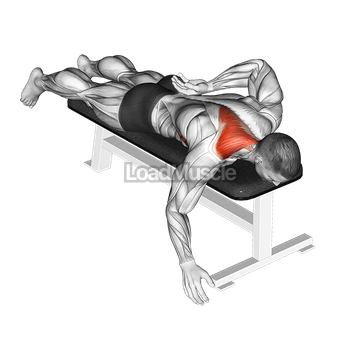
Primary Focus: Middle and Lower Traps
Why it matters: This single-arm variation lets you focus on one side at a time, making it excellent for fixing asymmetries and building a stronger mind-muscle connection with the often-neglected lower and middle trap fibers. It is also a great warm-up drill before heavy pulling days.
Coaching Cues
- Lie face-down on a flat or low-incline bench with one arm hanging straight down.
- Raise the dumbbell at roughly a 45-degree angle between straight out and straight overhead.
- Keep the movement controlled - no momentum.
- Squeeze the trap at the top for 2 seconds before lowering.
Trap Workout Routine
Here is a complete trap workout you can run as a standalone session or tack onto the end of a back or shoulder workout. It covers all three trap regions and should take about 25-30 minutes.
| Exercise | Sets x Reps | Rest |
|---|---|---|
| Barbell Shrug | 4 x 8-10 | 90 sec |
| Face Pull | 3 x 12-15 | 60 sec |
| Rack Pull | 3 x 5-6 | 2 min |
| Y-Raise | 3 x 12-15 | 60 sec |
| Farmer's Walk | 3 x 30-40m | 90 sec |
| Prone Trap Raise | 2 x 12 each side | 60 sec |
Notes on programming:
- Start with the heaviest compound movement (rack pulls) if you are fresh at the start of a session, or barbell shrugs if traps are added at the end of another workout.
- Keep the Y-raises and prone trap raises light and controlled. These are precision movements, not ego lifts.
- Progress by adding reps within the prescribed range first, then increase weight when you hit the top of the range for all sets.
If you want a full weekly plan that slots trap work into the right days alongside your other training, use the Free Workout Planner to build one in minutes.
How Often to Train Traps
Traps recover faster than most muscle groups. Their fiber composition and the relatively short range of motion on most trap exercises mean they can handle more frequent training without breaking down.
The sweet spot is 2-3 sessions per week.
Here is how to structure that:
- 2x per week: Hit one heavy session (shrugs, rack pulls) and one lighter session (face pulls, Y-raises, prone trap raises). This works well for most people. Combine trap work with our dumbbell shoulder workout for complete deltoid and trap development.
- 3x per week: Add a third session built around carries and cable shrugs. This is ideal if trap development is a priority or if you are training upper body three or more days per week.
You do not need a dedicated "trap day." Instead, add 2-3 trap exercises at the end of your back or shoulder sessions. The total weekly volume that works best for most lifters is 10-16 direct sets per week, spread across those 2-3 sessions.
If you are already doing heavy deadlifts, rows, and overhead presses, your traps are getting indirect work too. Factor that in and start at the lower end of the volume range.
FAQ
What are the best trap exercises for mass?
Barbell shrugs, rack pulls, and farmer's walks are the top three for building raw trap size. They allow the heaviest loading and the most mechanical tension, which are the primary drivers of muscle growth. Pair them with a lighter isolation movement like face pulls for complete development.
Can I build big traps without shrugs?
Yes. Rack pulls, farmer's walks, deadlifts, and upright rows all hit the upper traps hard without any shrugging motion. That said, shrugs are still the most direct and efficient way to isolate the upper traps, so skipping them entirely means you need to compensate with higher volume elsewhere.
Are upright rows bad for your shoulders?
Not inherently. The risk comes from using a narrow grip and pulling too high, which can cause shoulder impingement. Use a grip at shoulder width or slightly wider and stop pulling when your elbows reach shoulder height. If it still bothers you, replace it with face pulls or cable shrugs.
How many sets per week should I do for traps?
Most people see good results with 10-16 direct sets per week, split across 2-3 sessions. If you do a lot of heavy deadlifts and rows, you can stay on the lower end since those movements already recruit the traps heavily.
Should I train traps on back day or shoulder day?
Either works. Many lifters add upper trap work (shrugs, rack pulls) to back day and middle/lower trap work (face pulls, Y-raises) to shoulder day. This splits the volume across the week naturally. If you want a simple answer - add 2-3 trap exercises wherever they fit best in your current split.
Do heavy deadlifts build traps?
Yes. Heavy conventional and sumo deadlifts require significant isometric trap contraction to keep your shoulders packed and the bar close to your body. Many powerlifters develop impressive traps without ever doing a single shrug. However, adding direct trap work on top of deadlifts will produce faster and more complete development.
Add Traps to Your Plan
Building bigger traps is not complicated, but it does require more than just throwing in a few sets of shrugs at the end of your workout.
Hit all three regions - upper, middle, and lower - with the right exercises. Train them 2-3 times per week with enough volume to drive growth. Progress by adding reps first, then weight.
If you want a structured weekly plan that includes trap work alongside your other training, here is where to start:
- Free Workout Planner - Build a custom plan that fits your schedule, goals, and equipment.
- Strength Training Routines - Browse pre-built programs that include trap work alongside heavy compound lifts.
- Exercise Library - Browse every trap exercise with video demos and instructions.
- Download the App - Track your workouts and follow your plan from your phone.