Why Shoulder Training Matters
Broad, capped shoulders are the hallmark of a powerful physique. They create the illusion of a smaller waist (the "V-taper") and are involved in almost every upper body movement you do.
But the shoulder joint is also the most mobile and unstable joint in the body. This means you can't just throw heavy weights around without a plan. You need to target all three heads of the deltoid - anterior (front), lateral (side), and posterior (rear) - to build a complete, 3D look while keeping your joints healthy.
This guide covers the 10 most effective shoulder exercises to help you build mass, strength, and resilience, pulled directly from the LoadMuscle database. Strong shoulders also improve your bench press and rowing movements, so building them pays off across your entire upper body.
Shoulder Anatomy 101
Before we dive into the lifts, it helps to know what you're working:
- Anterior Deltoid (Front): Handles forward arm raising and pressing. Heavily worked in bench presses.
- Lateral Deltoid (Side): Responsible for lifting the arm to the side. This is what gives you width.
- Posterior Deltoid (Rear): Pulls the arm backward. Often neglected, leading to poor posture and shoulder pain.
The 10 Best Shoulder Exercises
1. Barbell Standing Wide Military Press
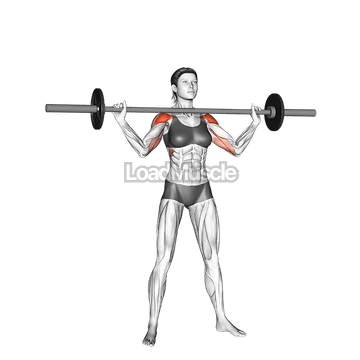
Primary Focus: Anterior Deltoid, Triceps, Core Stability Why it matters: The king of shoulder exercises. Standing overhead pressing builds raw strength and forces your core to stabilize the load.
Coaching Cues:
- Stand with feet shoulder-width apart, glutes squeezed.
- Grip the bar just outside your shoulders.
- Press the bar vertically in a straight line, moving your head slightly forward as the bar clears your forehead.
- Don't overarch your lower back.
Progression idea: Use 5x5 programming, adding 2.5kg/5lbs each week.
2. Dumbbell Seated Shoulder Press
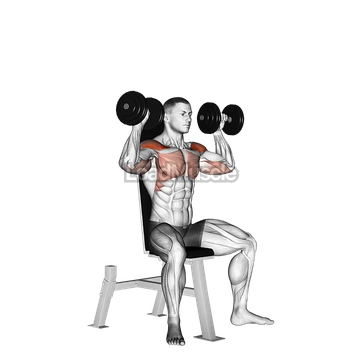
Primary Focus: Anterior and Lateral Deltoids
Why it matters: Dumbbells allow for a greater range of motion than a barbell and help correct muscle imbalances between your left and right sides.
Coaching Cues:
- Set the bench to a 90-degree or slightly reclined (80-degree) angle to protect the shoulders.
- Press the weights up and slightly inward, but don't clang them together.
- Lower the dumbbells until your elbows are at ear level or slightly below.
Progression idea: Increase reps from 8 to 12 before increasing the weight.
3. Dumbbell Lateral Raise
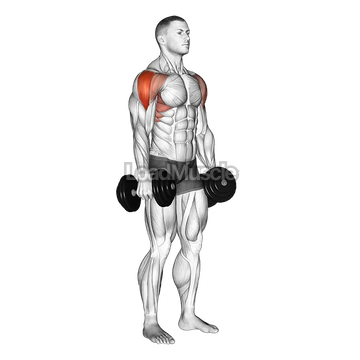
Primary Focus: Lateral Deltoid
Why it matters: If you want wider shoulders, this is non-negotiable. It isolates the side delt like no other movement.
Coaching Cues:
- Stand with a slight forward lean.
- Lead with your elbows, not your hands. Imagine pouring water out of a pitcher.
- Raise your arms until they are parallel to the floor.
- Control the descent; don't let gravity do the work.
Progression idea: Use a drop set: do 15 reps, grab lighter dumbbells, and do another 15.
4. Cable Standing Face Pull (with rope)
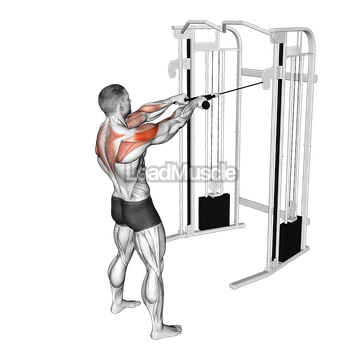
Primary Focus: Posterior Deltoid, Rotator Cuff, Upper Traps
Why it matters: Essential for shoulder health and posture. It counters all the pressing work by strengthening the rear delts and external rotators.
Coaching Cues:
- Set a cable pulley to face height.
- Use a rope attachment and pull the handles towards your forehead.
- Think about pulling your hands apart and squeezing your shoulder blades together.
Progression idea: Hold the peak contraction for 3 seconds on every rep.
5. Dumbbell Arnold Press
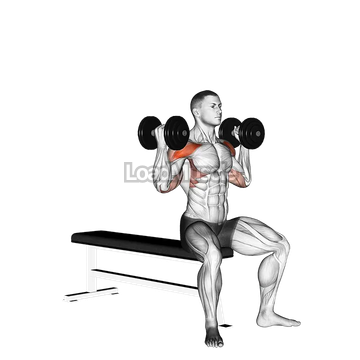
Primary Focus: Anterior, Lateral, and Posterior Deltoids
Why it matters: Named after Arnold Schwarzenegger, this rotational press hits all three heads of the deltoid through a long range of motion.
Coaching Cues:
- Start with dumbbells at shoulder height, palms facing you.
- As you press up, rotate your wrists so palms face forward at the top.
- Reverse the motion on the way down.
Progression idea: Perform these seated with no back support to engage the core more.
6. Lever Seated Reverse Fly
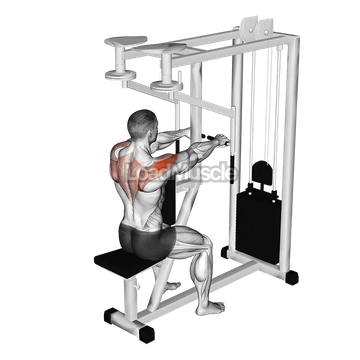
Primary Focus: Posterior Deltoid
Why it matters: A machine-based movement that isolates the rear delts without requiring as much stabilization as dumbbell variations.
Coaching Cues:
- Adjust the seat so your hands are at shoulder level.
- Keep a slight bend in your elbows.
- Push your arms back until they are in line with your body, squeezing the rear delts.
Progression idea: Use a slow eccentric (3 seconds) to maximize time under tension.
7. Cable Lateral Raise
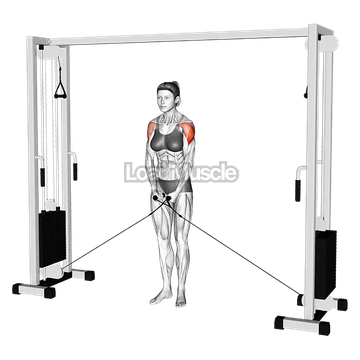
Primary Focus: Lateral Deltoid
Why it matters: Unlike dumbbells, cables provide constant tension throughout the entire range of motion, especially at the bottom where dumbbells offer zero resistance.
Coaching Cues:
- Set the pulley to the lowest position.
- Stand sideways to the machine and grab the handle with the far hand.
- Raise your arm out to the side, keeping constant tension.
Progression idea: Perform "behind the back" cable raises to increase the stretch.
8. Dumbbell Front Raise
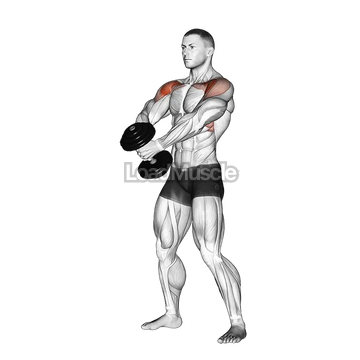
Primary Focus: Anterior Deltoid
Why it matters: While the front delts get hit hard in pressing, isolation work can help bring up lagging areas or pre-exhaust the muscle.
Coaching Cues:
- Hold dumbbells in front of your thighs.
- Lift one or both arms forward to shoulder height.
- Avoid swinging your torso to generate momentum.
Progression idea: Use a hammer grip (thumbs up) to target the front delt slightly differently.
9. Barbell Upright Row
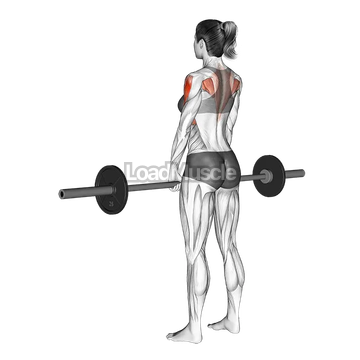
Primary Focus: Lateral Deltoid, Upper Traps
Why it matters: A powerful compound movement for the side delts and traps. Note: If you have shoulder impingement issues, proceed with caution or use dumbbells.
Coaching Cues:
- Use a wide grip (shoulder-width or wider) to emphasize delts over traps.
- Pull the bar up towards your chest, leading with your elbows.
- Stop when your elbows are at shoulder height.
Progression idea: Switch to a snatch-grip high pull for a more explosive variation.
10. Cable Leaning Lateral Raise
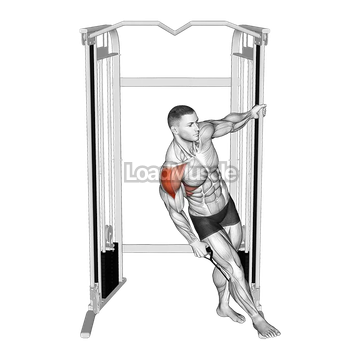
Primary Focus: Lateral Deltoid (Stretched Position)
Why it matters: A leaning one-arm cable lateral raise that increases the stretch on the side delt.
Coaching Cues:
- Hold a pole or machine frame with one hand and lean away from it.
- Hold the cable in the other hand and perform a lateral raise.
- The lean changes the resistance curve, overloading the bottom portion of the lift.
Progression idea: Perform 10 full reps followed by 10 partials from the bottom.
The 3D Shoulder Workout Formula
"3D shoulders" — delts that look full from the front, the side, and the back — come from one thing: training all three deltoid heads deliberately instead of letting pressing do all the work. Most lifters are front-delt dominant because every chest and shoulder press hammers the anterior head. The side and rear heads, which actually create width and roundness, get scraps.
A true 3D shoulder workout flips the usual ratio. Use this per-week guideline:
| Delt Head | Weekly Direct Sets | Key Movements |
|---|---|---|
| Front (anterior) | 0-4 direct | Overhead press variations (plus indirect volume from chest pressing) |
| Side (lateral) | 8-12 | Dumbbell, cable, and leaning lateral raises |
| Rear (posterior) | 6-10 | Face pulls, reverse flys, rear delt rows |
If your shoulders look flat from the side or hollow from behind, you do not need more pressing — you need more lateral raise and rear delt volume. Prioritize them early in your session while you are fresh, and treat presses as the strength base rather than the whole plan.
Sample 3D Shoulder Workout Routine
Combine these exercises into a comprehensive workout that hits all three heads.
| # | Demo | Exercise | Sets × Reps | Rest |
|---|---|---|---|---|
| 1 | 1. Barbell Standing Wide Military PressRest 2-3 min | 4 × 6-8 | 2-3 min | |
| 2 | 2. Dumbbell Lateral RaiseRest 60 sec | 3 × 12-15 | 60 sec | |
| 3 | 3. Cable Standing Face PullRest 60 sec | 3 × 15-20 | 60 sec | |
| 4 | 4. Dumbbell Arnold PressRest 90 sec | 3 × 8-10 | 90 sec |


Weekly Shoulder Programming Templates
How you program shoulders depends on your training split and experience level. Here are some guidelines. For more ready-made programs, browse the strength workout routines library.
| Level | Frequency | Sets Per Week | Rep Ranges | Notes |
|---|---|---|---|---|
| Beginner | 2x per week | 8-10 total | 8-12 | Focus on military press and lateral raises. Add face pulls for balance. |
| Intermediate | 2-3x per week | 12-16 total | 6-15 | Rotate pressing variations. Add cable work for constant tension. |
| Advanced | 3x per week | 16-20 total | 5-20 | Use intensity techniques (drop sets, partials) on isolation work. Vary rep ranges across sessions. |
How to Fit Shoulders Into Your Split
Push/Pull/Legs: Shoulders go on push day after chest pressing. Start with overhead press, then add 2-3 sets of lateral raises and 2-3 sets of face pulls. Your front delts already get significant work from bench press variations.
Upper/Lower: Add one pressing movement and one lateral raise variation to each upper day. That gives you solid frequency without dedicating an entire session to shoulders.
Dedicated Shoulder Day: Use the sample workout above. Start heavy with the military press, work through lateral and rear delt isolation, and finish with higher-rep pump work. This approach works well if shoulders are a priority. For a dumbbell-focused variant, check our dumbbell shoulder workout.
FAQ
How many shoulder exercises do I need per workout?
Three to four exercises is enough for most sessions. Start with one heavy press (military press or dumbbell press), add one lateral raise variation for width, and finish with one rear delt movement for balance. More is not always better - shoulder joints fatigue quickly, and pushing through sloppy reps does more harm than good.
Should I train shoulders on the same day as chest?
It depends on your split. In a push/pull/legs setup, shoulders and chest share the same day, and that works well because pressing movements hit both muscle groups. If you run an upper/lower split, you will hit shoulders on both upper days. Either approach is fine as long as your total weekly volume stays in the 12-16 set range for intermediate lifters.
How do I fix lagging rear delts?
Most people under-train their rear delts because they focus on pressing and lateral raises. Add face pulls or reverse flyes to every upper body session, not just shoulder day. Two to three sets of 15-20 reps with a slow squeeze at the top will make a noticeable difference within a few weeks. Your posture will improve too.
Is overhead pressing safe for my shoulders?
Overhead pressing is safe for most people when done with proper form. Keep your core tight, avoid excessive lower back arching, and press in a straight line over your head. If you have existing shoulder impingement, start with a neutral grip dumbbell press, which is easier on the joint. If pressing causes pain, see a physiotherapist before pushing through it.
How do I get wider shoulders?
Width comes from the lateral (side) deltoid. Lateral raises, cable lateral raises, and upright rows are the best exercises for building that wider look. Train them 3-4 times per week with moderate weight and higher reps (12-20). Heavy pressing builds overall mass, but it is the side delt isolation work that creates the V-taper illusion.
Build Your Shoulder Plan
Shoulder training requires balance. Too much pressing can lead to injury, while too much isolation might not build the mass you want. Hit all three heads of the deltoid, prioritize rear delt work that most people skip, and use progressive overload to keep making gains.
Use the Free Workout Planner to build a complete program that includes shoulder work balanced with your chest, back, and arm training. Or download the LoadMuscle app to track your shoulder exercises and see your pressing strength progress over time.
Browse the full Exercise Library for more shoulder exercise variations with video demos and coaching cues.