If you only have time for one type of exercise, make it a compound movement.
Compound exercises work multiple joints and muscle groups in a single rep. That means more muscle recruited, more calories burned, and more strength built per minute of training. Every successful strength program ever written is built around them.
This guide covers the 15 best compound exercises for building muscle, gaining strength, and losing fat. You will get form cues, primary muscles worked, and a complete 3-day compound-only workout plan you can start this week.
TL;DR
- Compound exercises train multiple muscle groups at once, making them the most efficient movements for building muscle and strength
- The 15 best compounds cover lower body, upper push, upper pull, and full body categories
- A compound-only workout plan is enough to build a strong, muscular physique
- Add isolation exercises only after you have your compound foundation locked in
- Use the free workout planner to build a compound-focused program tailored to your goals
- Apply progressive overload to every lift for continuous gains
What Are Compound Exercises?
A compound exercise is any movement that works two or more joints at the same time. A squat bends at the hip and the knee. A bench press moves at the shoulder and the elbow. A deadlift drives through the hip, knee, and ankle.
Because multiple joints are working, multiple muscle groups fire together. A single barbell squat hits your quads, glutes, hamstrings, core, and upper back. That is five muscle groups in one exercise.
This is why compound movements are the backbone of every proven strength program. Starting Strength, 5/3/1, GZCL, PPL splits, full body plans, they all revolve around the same compound lifts. The exercises change very little. Only the sets, reps, and load change as you advance. For a deep dive on how muscle growth actually works, read The Science of Building Muscle.
Compound vs Isolation Exercises
Isolation exercises work a single joint. Think bicep curls, leg extensions, and lateral raises. They have their place, but they are not the foundation of a good program. Here is how the two types compare.
| Feature | Compound Exercises | Isolation Exercises |
|---|---|---|
| Joints involved | 2 or more | 1 |
| Muscles worked per rep | Multiple groups | Single group |
| Load potential | Heavy | Light to moderate |
| Calorie burn | High | Low |
| Hormonal response | Greater testosterone and growth hormone release | Minimal |
| Functional carryover | High (mimics real-world movement) | Low |
| Time efficiency | Very high | Low |
| Best for | Building overall muscle and strength | Targeting weak points and small muscles |
| Examples | Squat, deadlift, bench press, row | Bicep curl, leg extension, lateral raise |
The takeaway is simple. Build your program around compounds first. Then pair compounds with the best isolation exercises for complete development. If you are short on time, a compound-only session will always beat an isolation-heavy one.
You can explore the full range of both types in the LoadMuscle exercise library.
15 Best Compound Exercises
These 15 movements cover every muscle group in your body. They are organized by category so you can build balanced workouts that hit lower body, upper push, upper pull, and full body patterns.
Lower Body Compounds
Your legs contain the largest muscles in your body. Training them with heavy compound lifts builds serious strength, burns the most calories, and creates a hormonal environment that supports muscle growth everywhere.
1. Barbell Squat
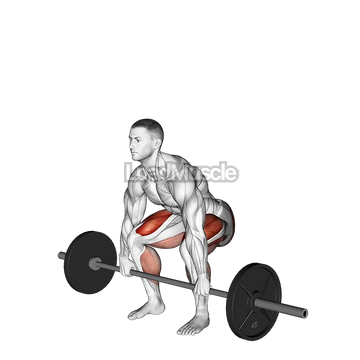
Primary muscles: Quadriceps, glutes, hamstrings, core, upper back.
The barbell squat is the king of all exercises. No other single movement loads your body as completely from head to toe. It builds leg size, hip strength, core stability, and total-body power. If you could only do one exercise for the rest of your life, this should be it.
Coaching cues:
- Set the bar across your upper traps. Grip just outside shoulder width
- Brace your core hard. Big breath into your belly before you descend
- Sit your hips back and down to at least parallel, keeping your chest up
- Drive through your full foot to stand, squeezing your glutes at the top
Learn correct technique in our squat form guide and check out the Barbell Workout Guide for a complete breakdown of barbell training.
2. Barbell Deadlift
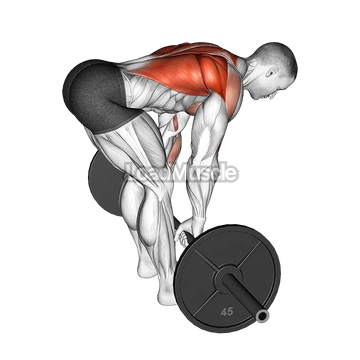
Primary muscles: Hamstrings, glutes, lower back (erectors), traps, lats, grip.
The barbell deadlift is the heaviest lift most people will ever perform. It trains the entire posterior chain in one pull, from your calves all the way up to your traps. Nothing else builds raw total-body strength like pulling heavy weight off the floor.
Coaching cues:
- Stand with feet hip-width apart, bar over mid-foot
- Hinge at the hips and grip the bar just outside your knees
- Drop your hips until your shins touch the bar, chest up, back flat
- Push the floor away with your legs while keeping the bar tight to your body
Check our deadlift form guide for a full technique breakdown and common mistake fixes.
3. Dumbbell Walking Lunges
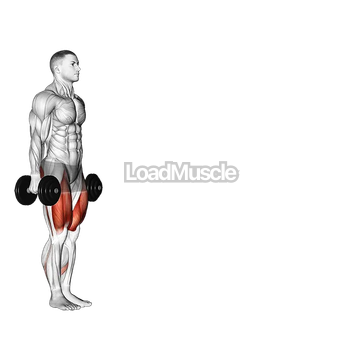
Primary muscles: Quadriceps, glutes, hamstrings, hip stabilizers.
Dumbbell walking lunges are one of the best unilateral compound exercises you can do. Training one leg at a time fixes imbalances, builds stability, and hammers your glutes and quads in a way that bilateral squats cannot fully replicate.
Coaching cues:
- Hold dumbbells at your sides with a neutral grip
- Step forward and lower your back knee toward the floor until both knees hit about 90 degrees
- Keep your torso upright, do not lean forward
- Drive off your front heel to step into the next rep
4. Barbell Hip Thrust
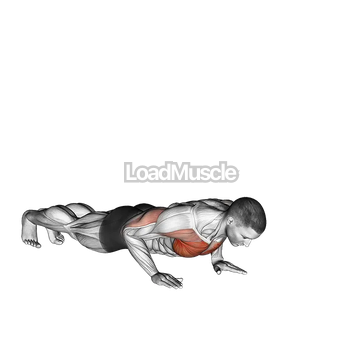
Primary muscles: Glutes, hamstrings, core.
The barbell hip thrust is the best exercise for isolating the glutes under heavy load while still being a compound movement. Research shows it produces higher glute activation than squats or deadlifts. If building your glutes is a priority, this is non-negotiable.
Coaching cues:
- Sit on the floor with your upper back against a bench, barbell across your hip crease
- Plant your feet flat, about hip-width apart, with shins roughly vertical at the top
- Drive through your heels and squeeze your glutes to lift the bar until your hips are fully extended
- Hold the top position for a one-count before lowering with control
5. Lever Seated Leg Press
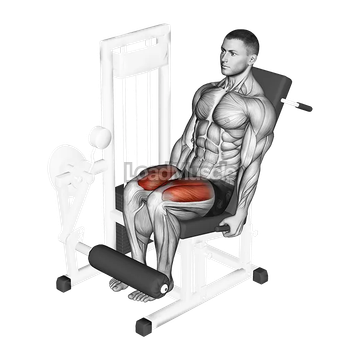
Primary muscles: Quadriceps, glutes, hamstrings.
The leg press lets you load your legs heavy without the spinal compression of a squat. It is a great secondary compound for building leg size, especially when your lower back is fatigued from squats and deadlifts. High foot placement shifts emphasis to glutes and hamstrings. Low foot placement hammers the quads.
Coaching cues:
- Sit with your back flat against the pad, feet shoulder-width apart on the platform
- Lower the sled until your knees reach about 90 degrees, keeping your lower back pressed into the seat
- Press through your full foot, do not let your heels lift
- Stop just short of lockout to keep tension on your quads
Upper Push Compounds
These movements build your chest, shoulders, and triceps. A strong press translates to everything from pushing heavy objects to stabilizing overhead loads.
6. Barbell Bench Press
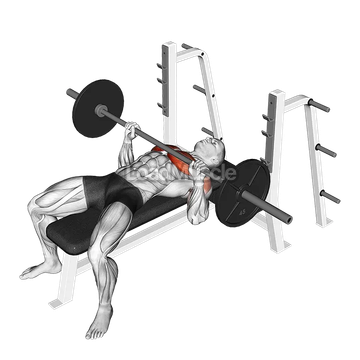
Primary muscles: Chest (pectorals), front delts, triceps.
The barbell bench press is the gold standard upper body push. It allows you to load your chest, shoulders, and triceps heavier than any other pressing movement. Flat bench builds the most overall chest mass. It is also the most commonly tested upper body lift in strength sports.
Coaching cues:
- Lie on the bench with eyes under the bar, feet planted flat on the floor
- Retract your shoulder blades and create a slight upper back arch for a stable base
- Lower the bar to your mid-chest with control, elbows at roughly 45 to 75 degrees
- Press the bar up and slightly back toward the rack position, locking out at the top
Master proper form with our bench press guide for a complete technique breakdown.
7. Dumbbell Standing Overhead Press
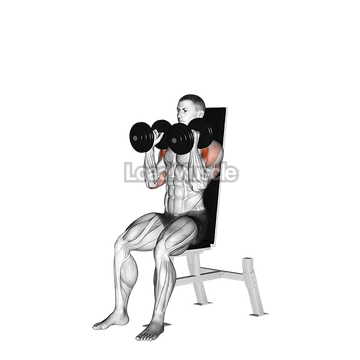
Primary muscles: Shoulders (all three heads), triceps, upper chest, core.
The dumbbell standing overhead press builds boulder shoulders and serious core stability. Standing with dumbbells forces each arm to work independently, which fixes imbalances and builds more stabilizer strength than the seated barbell version.
Coaching cues:
- Stand with feet shoulder-width apart, dumbbells at shoulder height with palms facing forward
- Brace your core hard to prevent your lower back from arching
- Press both dumbbells straight up until your arms are fully extended overhead
- Lower with control back to shoulder height, do not let the weights crash down
For a complete guide to building your shoulders, see The Ultimate Shoulder Workout.
8. Weighted Tricep Dips
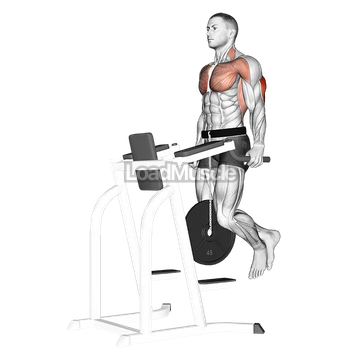
Primary muscles: Triceps, chest (lower pecs), front delts.
Weighted tricep dips are the upper body squat. They load your triceps, lower chest, and front delts through a large range of motion with serious weight potential. A slight forward lean shifts emphasis to the chest. Staying upright targets the triceps more.
Coaching cues:
- Grip the parallel bars with straight arms, shoulders down and back
- Lower yourself until your upper arms are at least parallel to the floor
- Keep your elbows tucked at about 45 degrees, not flared out wide
- Press back up to full lockout, squeezing your triceps at the top
Upper Pull Compounds
Pulling exercises build your back, biceps, and rear delts. A strong back is the foundation of a balanced, injury-resistant physique. Most people do not pull enough relative to how much they push.
9. Pull-Up
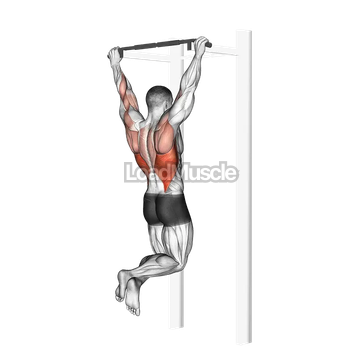
Primary muscles: Lats, upper back, biceps, forearms, core.
The pull-up is the best bodyweight compound exercise. It builds a wide, V-shaped back and serious relative strength. If you cannot do pull-ups yet, start with lat pulldowns or band-assisted variations and work your way up. If bodyweight is easy, add weight with a belt or dumbbell between your feet.
Coaching cues:
- Hang from the bar with a pronated (overhand) grip, slightly wider than shoulder width
- Initiate the pull by depressing your shoulder blades, then drive your elbows down toward your hips
- Pull until your chin clears the bar
- Lower yourself with control to a full dead hang, no half reps
10. Barbell Bent Over Row
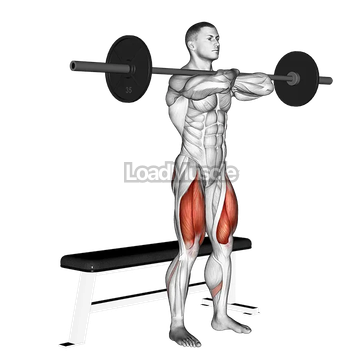
Primary muscles: Lats, rhomboids, rear delts, biceps, lower back.
The barbell bent over row is the most loadable back exercise after the deadlift. It builds thickness through your entire back, from your lats to your traps to your rear delts. A strong row also carries over directly to a stronger bench press and deadlift.
Coaching cues:
- Hinge at the hips with a slight knee bend, torso at roughly 45 degrees
- Grip the bar just outside your knees, overhand or underhand
- Pull the bar to your lower chest or upper abdomen, squeezing your shoulder blades together
- Lower the bar with control, maintaining your hip hinge position throughout
11. Cable Seated Row
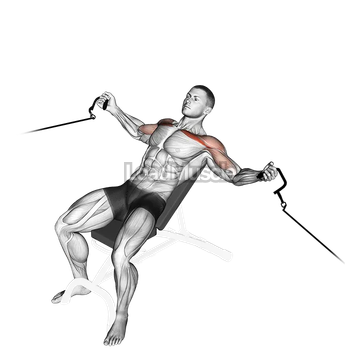
Primary muscles: Lats, rhomboids, mid-traps, biceps.
The cable seated row provides constant tension through the entire range of motion, which makes it excellent for building back thickness and mind-muscle connection. It is also easier on the lower back than barbell rows, making it a smart choice when your erectors are already fatigued.
Coaching cues:
- Sit with your feet on the platform, knees slightly bent, chest tall
- Grab the handle with both hands and start with arms fully extended
- Pull the handle to your lower chest, squeezing your shoulder blades together at the end
- Return to the start position with control, allowing a slight stretch in your lats
12. Cable Wide Grip Lat Pulldown
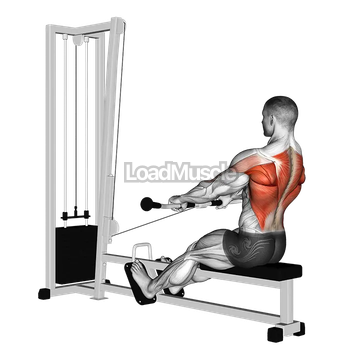
Primary muscles: Lats, teres major, biceps, rear delts.
The cable wide grip lat pulldown is the best machine-based lat builder and the primary alternative to pull-ups. The wide grip emphasizes lat width, while the seated position lets you control the load precisely. It is also an excellent exercise for higher rep sets that would be impractical with pull-ups.
Coaching cues:
- Sit with thighs locked under the pads, grip the bar wider than shoulder width
- Lean back slightly and pull the bar to your upper chest
- Focus on driving your elbows down and back, not just pulling with your hands
- Control the bar on the way up until your arms are fully extended and your lats are stretched
Browse more back exercises and pulling variations in the exercise library.
Full Body Compounds
These exercises work your entire body in a single movement. They build coordination, power, and conditioning that no isolation exercise can touch. Compounds are also essential for events like HYROX, and these movements form the foundation of functional fitness.
13. Clean and Press
Primary muscles: Quads, glutes, hamstrings, traps, shoulders, triceps, core.
The clean and press combines an explosive pull from the floor with an overhead press. It trains power, strength, and conditioning all in one. This is one of the most demanding exercises you can do, and one of the most rewarding. It builds a kind of athletic, full-body strength that transfers to virtually every sport and physical activity.
Coaching cues:
- Start with the bar on the floor, feet hip-width, grip just outside your knees
- Pull the bar explosively by extending your hips and knees, then catch it at your shoulders in a front rack position
- Brace your core and press the bar overhead to full lockout
- Lower the bar back to your shoulders, then to the floor with control
14. Farmer's Walk
Primary muscles: Traps, forearms, grip, core, glutes, calves, shoulders.
The farmer's walk is as simple as it gets. Pick up heavy weights and walk. Despite its simplicity, it is one of the most effective full-body exercises for building grip strength, core stability, and overall work capacity. It also torches calories because every muscle in your body is working to stabilize and move the load.
Coaching cues:
- Pick up heavy dumbbells or farmer's walk handles at your sides
- Stand tall with your shoulders pulled back and down, chest up
- Walk with short, controlled steps, keeping your core braced and the weights from swinging
- Aim for 30 to 40 meters per set, or 30 to 45 seconds of walking
15. Turkish Get-Up
Primary muscles: Shoulders, core, glutes, hip stabilizers, triceps, quads.
The Turkish get-up is a slow, controlled movement that takes you from lying on the floor to standing while holding a weight overhead. It builds shoulder stability, hip mobility, core strength, and body awareness like nothing else. It is also one of the best exercises for identifying and fixing weak links in your movement chain.
Coaching cues:
- Lie on your back holding a kettlebell or dumbbell at full arm extension above your shoulder
- Roll to your elbow, then your hand, then sweep your leg under to a half-kneeling position
- Stand up while keeping the weight locked out overhead with a straight arm
- Reverse the steps to return to the floor with control
Sample Compound-Only Workout Plan
This 3-day plan uses only compound exercises from the list above. Train on non-consecutive days (Monday/Wednesday/Friday works well). Each session takes about 55 to 70 minutes.
Warm up every session with 5 minutes of light cardio and 2 to 3 warm-up sets of your first exercise at lighter weight. For more on structuring full body sessions, see the Full Body Workout Plan Guide.
Day 1: Strength Focus
| Exercise | Sets x Reps | Rest |
|---|---|---|
| Barbell Squat | 4 x 5-7 | 3 min |
| Barbell Bench Press | 4 x 5-7 | 3 min |
| Barbell Bent Over Row | 4 x 6-8 | 2-3 min |
| Barbell Hip Thrust | 3 x 8-10 | 2 min |
| Weighted Tricep Dips | 3 x 6-8 | 2 min |
Session notes:
- Squat and bench press are your priority lifts. Give them full effort and long rest.
- Keep the rows strict. No excessive body English.
- Hip thrusts after squats will finish your glutes without needing high weight.
Day 2: Volume Focus
| Exercise | Sets x Reps | Rest |
|---|---|---|
| Barbell Deadlift | 3 x 5-6 | 3 min |
| Dumbbell Standing Overhead Press | 4 x 8-10 | 2 min |
| Pull-Up | 4 x AMRAP | 2-3 min |
| Dumbbell Walking Lunges | 3 x 10-12 per leg | 2 min |
| Cable Seated Row | 3 x 10-12 | 90 sec |
Session notes:
- Deadlift is your primary lift. Keep the reps low and the quality high.
- AMRAP on pull-ups means as many reps as possible with good form. Stop when your form breaks down.
- Walking lunges at the end will challenge your legs and your conditioning.
Day 3: Balanced Power
| Exercise | Sets x Reps | Rest |
|---|---|---|
| Lever Seated Leg Press | 4 x 10-12 | 2 min |
| Barbell Bench Press | 3 x 8-10 | 2 min |
| Cable Wide Grip Lat Pulldown | 4 x 10-12 | 90 sec |
| Barbell Hip Thrust | 3 x 10-12 | 90 sec |
| Farmer's Walk | 3 x 40 meters | 90 sec |
Session notes:
- Day 3 uses moderate weight and higher reps. Focus on controlled tempo and a strong squeeze at the top of every rep.
- Farmer's walks at the end build grip, core, and conditioning. Go as heavy as you can handle with good posture.
- If you are training for hypertrophy, keep rest periods strict and push close to failure on each set.
Progression
Apply progressive overload every week.
Step 1: Hit the top of the rep range on all sets. If the plan says 4 x 6-8 and you get 8 reps on all 4 sets, increase the weight next session.
Step 2: Add the smallest increment available. 5 lbs for barbell exercises, 2.5 to 5 lbs for dumbbell movements.
Step 3: After a weight increase, your reps will drop back to the bottom of the range. Work your way back up again.
This simple cycle is how you get stronger week after week, month after month. It works for beginners and intermediates alike. You can browse more structured programs in the workout routines library, including dedicated strength training routines built around the compound lifts in this guide.
When to Add Isolation Exercises
Compound exercises can build a complete physique on their own. But there are situations where adding isolation work makes sense.
After your compounds are done. Never replace a compound movement with an isolation exercise. Do your squats, presses, rows, and deadlifts first. Then, if you have time and energy left, add 2 to 3 isolation exercises at the end of your session.
For stubborn muscle groups. Some muscles are hard to fully develop with compounds alone. Rear delts, lateral delts, calves, and biceps often benefit from direct isolation work. If your arms are lagging despite heavy rows and pull-ups, adding a few sets of curls is a smart move.
For weak points that limit your compounds. If your lockout is weak on bench press, adding tricep isolation work can help. If your grip gives out on deadlifts before your back does, adding direct forearm work fills the gap.
For rehab and prehab. Isolation exercises let you strengthen a specific muscle or joint without loading the rest of your body. Face pulls for shoulder health, leg curls for hamstring balance, and rotator cuff work all fall into this category.
The rule is simple. Compounds first, isolations second. A program of 80% compounds and 20% isolations is a solid ratio for most lifters.
FAQ
Are compound exercises enough to build muscle?
Yes. A well-designed compound-only program can build a strong, muscular physique. Squats, deadlifts, presses, and rows hit every major muscle group. Many of the strongest and most muscular people in history were built primarily on compound lifts. Isolation exercises are helpful for fine-tuning, but they are not required.
What is the single best compound exercise?
If you had to pick one, the barbell squat wins. It loads more muscle mass than any other single exercise, including your quads, glutes, hamstrings, core, and upper back. It builds both strength and size, has a massive hormonal response, and carries over to almost every physical activity. The deadlift is a close second.
How many compound exercises should I do per workout?
4 to 6 compound exercises per session is the sweet spot for most people. That gives you enough volume to stimulate growth in all major muscle groups without sessions dragging past 75 minutes. The sample plan above uses 5 compounds per day, which is a practical starting point.
Are compound exercises better for fat loss?
Compound exercises burn significantly more calories per set than isolation exercises because they recruit more muscle mass. A heavy set of squats burns far more energy than a set of leg extensions. They also elevate your metabolism for longer after the workout. If fat loss is your goal, building your training around compounds is the most time-efficient approach. For a complete fat loss strategy, see our guide to body recomposition.
Can beginners do compound exercises?
Absolutely. Beginners should prioritize compound exercises from day one. Learning to squat, press, pull, and hinge builds a movement foundation that carries through your entire training career. Start with lighter weight, focus on form, and add load gradually. Compound movements are not "advanced." They are fundamental.
Should I do compound exercises first or last in my workout?
Always first. Compound exercises demand the most energy, coordination, and focus. Doing them when you are fresh means better form, heavier loads, and more productive sets. Save isolation and accessory work for the end of the session when fatigue is higher and the stakes are lower.
Build a Compound-Focused Plan
You now have the 15 best compound exercises, form cues for each one, and a complete 3-day plan to put them into action. The only thing left is to start.
If you want a program tailored specifically to your experience level, equipment, and goals, use the free workout planner. It builds a structured plan around compound movements with proper sets, reps, and progression built in.
Want to take your training further? Download the LoadMuscle app to track your workouts, log your progress, and access the full exercise library with detailed form guides for every movement on this list.
The best program is one you follow consistently. Pick your compounds, load the bar, and get to work.