The Secret to Big Arms
Everyone wants bigger arms, but most people go about it the wrong way. They focus on the "pump" rather than progressive overload, or they neglect the triceps, which make up 2/3 of your upper arm mass.
To build truly impressive arms, you need a mix of heavy compound movements (like close grip bench press and chin-ups) and strict isolation work to target the specific heads of the muscle. If you want to understand the science behind muscle growth, read The Science of Building Muscle.
Here are the best exercises to blow up your arms, organized by muscle group, with programming templates to fit any training split.
Best Tricep Exercises
The triceps have three heads: long, lateral, and medial. You need to hit all three.
1. Barbell Close Grip Bench Press
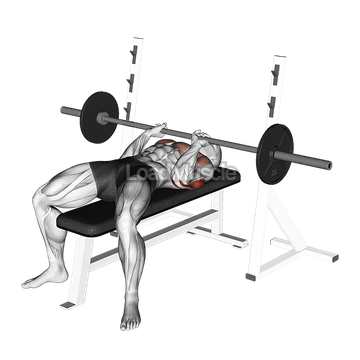
Primary Focus: All three heads (Mass Builder)
Why it matters: The heaviest lift you can do for triceps. It allows for massive overload and builds thickness in the entire upper arm.
Coaching Cues:
- Grip the bar shoulder-width apart (not too close, or you'll wreck your wrists).
- Tuck your elbows in as you lower the bar to your lower chest.
- Drive up explosively, locking out the triceps.
2. Barbell Lying Triceps Extension (Skull Crusher)
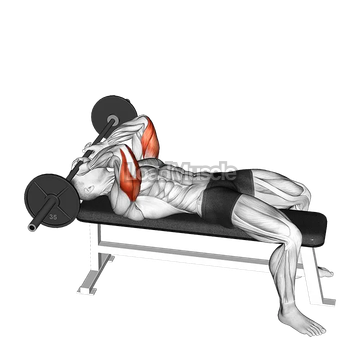
Primary Focus: Long Head, Lateral Head
Why it matters: A classic for a reason. It puts the triceps under a huge stretch.
Coaching Cues:
- Lie on a bench holding an EZ bar or barbell.
- Lower the bar towards your forehead (or slightly behind your head for more stretch).
- Keep your elbows pointing up; don't let them flare out too much.
- Extend your arms back to the starting position.
3. Weighted Tricep Dips
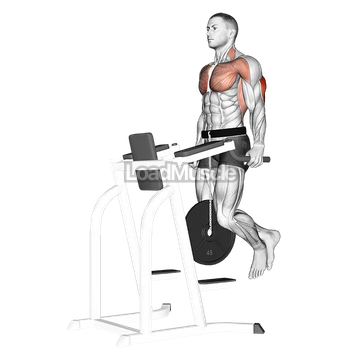
Primary Focus: All three heads
Why it matters: A bodyweight staple that can be loaded heavily. It hits the triceps and the chest, building a thick upper body.
Coaching Cues:
- Keep your torso upright to focus on triceps (leaning forward hits chest).
- Lower until your elbows are at 90 degrees.
- Push up to a full lockout.
4. Cable Standing One Arm Tricep Pushdown
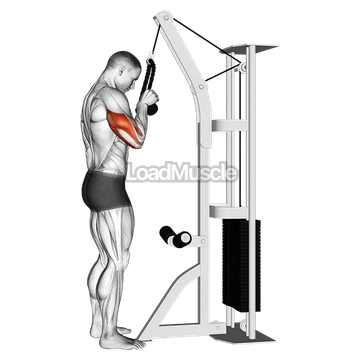
Primary Focus: Lateral Head (The "Horseshoe")
Why it matters: Isolating one arm at a time fixes imbalances and allows for a peak contraction that you can't get with heavy compounds.
Coaching Cues:
- Pin your elbow to your side.
- Extend your arm fully, squeezing the tricep hard at the bottom.
- Control the weight on the way up.
Best Bicep Exercises
The biceps have two heads: long (outer) and short (inner). You also need to train the brachialis (under the bicep) for width.
5. Barbell Curl
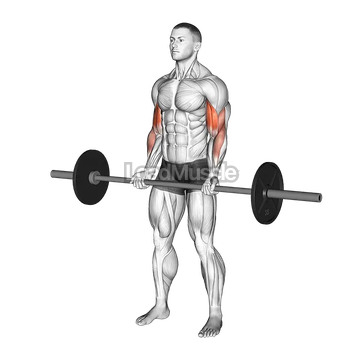
Primary Focus: Biceps (Overall Mass)
Why it matters: The gold standard for bicep mass. It allows you to lift the most weight.
Coaching Cues:
- Stand tall with a shoulder-width grip.
- Curl the bar up, keeping elbows at your sides.
- Don't swing your hips to cheat the weight up.
- Lower under control.
6. Chin Up
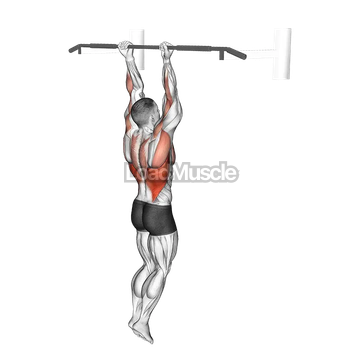
Primary Focus: Biceps, Lats
Why it matters: A compound movement that overloads the biceps with your entire body weight.
Coaching Cues:
- Take an underhand (supinated) grip, shoulder-width apart.
- Pull yourself up until your chin clears the bar.
- Focus on driving your elbows down.
7. Dumbbell Incline Curl
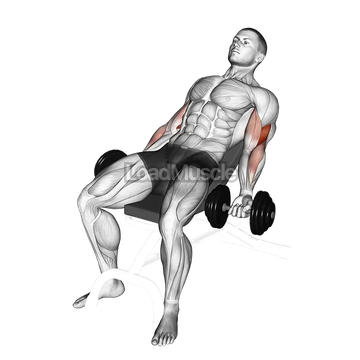
Primary Focus: Long Head (The Peak)
Why it matters: Sitting on an incline bench puts your arms behind your body, stretching the long head of the bicep. This stretch is key for growth.
Coaching Cues:
- Set bench to 45-60 degrees.
- Let your arms hang straight down behind you.
- Curl up without moving your elbows forward.
8. EZ Barbell Preacher Curl
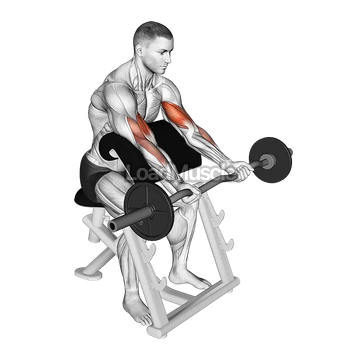
Primary Focus: Short Head (Inner Bicep)
Why it matters: The preacher bench eliminates momentum, forcing the biceps to work in isolation. It places maximum tension at the bottom of the rep.
Coaching Cues:
- Adjust the seat so your armpits rest over the pad.
- Lower the bar until your arms are fully extended.
- Curl up, squeezing hard at the top.
9. Dumbbell Seated Hammer Curl
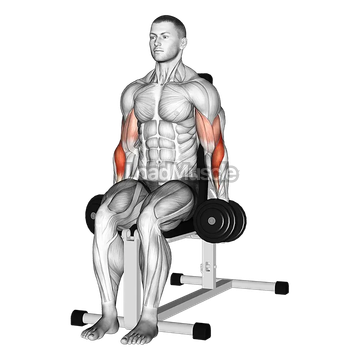
Primary Focus: Brachialis, Forearms
Why it matters: Targets the muscle underneath the bicep. Growing the brachialis pushes the bicep up, making your arm look thicker from the front.
Coaching Cues:
- Keep palms facing each other (neutral grip).
- Curl up towards your shoulder.
- Control the negative.
Cable and Dumbbell Arm Variations
The exercises above are the heavy hitters, but variety keeps your arms growing. Here are additional movements worth rotating in.
Tricep variations:
- Cable Tricep Pushdown (V-Bar): Great for the lateral head. Keep elbows locked at your sides and squeeze at the bottom. For more cable exercises, see 15 Best Cable Machine Exercises.
- Dumbbell Standing Tricep Extension: Targets the long head with an overhead stretch. Use one dumbbell with both hands.
- Cable overhead tricep extension: Similar to the dumbbell version but with constant tension from the cable.
Bicep variations:
- Dumbbell Lateral Raise won't grow your biceps, but cable curls will. Try single-arm cable curls for constant tension through the entire range of motion.
- Concentration curls: Sit on a bench, brace your elbow against your inner thigh, and curl with zero momentum. Pure isolation. For more isolation movement ideas, see our guide to the best isolation exercises.
- Reverse curls (overhand grip barbell or dumbbell curls): Hit the brachioradialis and forearms, adding thickness to the outer arm.
Arm Warm-Up Protocol
Cold muscles don't contract as hard, and jumping straight into heavy curls or skull crushers is a fast track to elbow tendinitis. Spend 5 minutes warming up before any arm work. This protocol primes the elbow joints, increases blood flow to the biceps and triceps, and activates the stabilizers that keep your shoulders healthy.
Band Work (2 minutes):
- Band pull-aparts: 2 x 15 reps. Hold a light resistance band at chest height and pull it apart by squeezing your shoulder blades together. This warms up the rear delts and upper back, which stabilize your arms during pressing and curling.
- Band tricep pushdowns: 2 x 15 reps. Loop the band over a door frame or pull-up bar. Perform light pushdowns focusing on a full lockout and controlled return. This sends blood into the triceps and warms the elbow joint.
- Band curls: 1 x 20 reps. Stand on the band and perform light curls. Use a slow, controlled tempo. The goal is to feel a gentle pump, not fatigue.
Light Dumbbell Work (2-3 minutes):
- Dumbbell hammer curls: 1 x 12 with the lightest dumbbells available. Focus on a full range of motion and squeezing at the top.
- Dumbbell overhead tricep extension: 1 x 12 with a light dumbbell. Move slowly through the full range to warm the long head of the tricep and the elbow joint.
- Wrist circles: 10 circles in each direction. This loosens the wrist and forearm, which take a beating during curls and pressing movements.
After this warm-up, your elbows should feel smooth and your arms should have a light pump. You are now ready for heavy work.
Superset Techniques for Arm Hypertrophy
Supersets are one of the most effective tools for arm growth. By pairing a bicep exercise with a tricep exercise back-to-back with no rest, you achieve three things: you increase total training volume in less time, you keep blood pooled in the upper arms (creating a massive pump and metabolic stress), and you allow each muscle to rest while the opposing muscle works.
Research on antagonist paired sets shows that alternating between opposing muscle groups can maintain or even increase force output compared to traditional straight sets, because the stretched muscle benefits from enhanced neural drive after the opposing muscle contracts. In practical terms, your curls may actually feel stronger when done immediately after a set of pushdowns.
How to structure supersets: Perform one set of a tricep exercise, immediately followed by one set of a bicep exercise (or vice versa). Rest 60-90 seconds after completing both exercises. Repeat for the prescribed number of sets.
Superset Pairing 1: EZ Bar Curl + Overhead Dumbbell Extension
- EZ Barbell Preacher Curl: 3 x 10-12
- Dumbbell Standing Tricep Extension: 3 x 10-12
- Rest 90 seconds between rounds.
Why this works: The preacher curl isolates the short head of the bicep with zero momentum. The overhead extension stretches the long head of the tricep, which is the largest head and the biggest contributor to arm size. Both exercises emphasize the stretched position, which is a key driver of hypertrophy.
Superset Pairing 2: Hammer Curl + V-Bar Pushdown
- Dumbbell Seated Hammer Curl: 3 x 12-15
- Cable Tricep Pushdown (V-Bar): 3 x 12-15
- Rest 60 seconds between rounds.
Why this works: Hammer curls hit the brachialis and forearms, adding width to the arm. V-bar pushdowns target the lateral head of the tricep, building the "horseshoe" shape. Both are lighter isolation movements that respond well to higher reps and shorter rest periods.
Superset Pairing 3: Incline Dumbbell Curl + Skull Crusher
- Dumbbell Incline Curl: 3 x 10-12
- Barbell Lying Triceps Extension: 3 x 10-12
- Rest 90 seconds between rounds.
Why this works: Incline curls place the bicep in a stretched position behind the body, targeting the long head (the "peak" of the bicep). Skull crushers stretch the tricep from the other end. Together, they create a brutally effective pairing that emphasizes the stretched position for both muscle groups.
Superset Pairing 4: Barbell Curl + Close-Grip Bench Press
- Barbell Curl: 3 x 8-10
- Barbell Close Grip Bench Press: 3 x 8-10
- Rest 2 minutes between rounds (these are heavier compounds).
Why this works: This is the heavy superset pairing for lifters who want to build raw arm strength alongside size. Barbell curls allow you to load the biceps with the most weight, and close-grip bench press is the heaviest tricep exercise you can do. Use this pairing at the start of your arm session when you are freshest.
Programming tip: You do not need to superset every exercise in your arm workout. Start with 1-2 heavy straight sets (like close-grip bench or weighted chin-ups) to build strength, then switch to 2-3 superset pairings for the isolation work. This gives you the best of both worlds: heavy overload for strength and high-volume supersets for hypertrophy.
Sample Arm Workout
Add this to the end of your upper body days or run it as a dedicated arm day.
| # | Demo | Exercise | Sets × Reps | Rest |
|---|---|---|---|---|
| 1 | Close Grip Bench PressRest 2 min | 3 × 6-8 | 2 min | |
| 2 | Barbell CurlRest 90s | 3 × 8-10 | 90s | |
| 3 | Skull CrusherRest 90s | 3 × 10-12 | 90s | |
| 4 | Incline Dumbbell CurlRest 60s | 3 × 10-12 | 60s | |
| 5 | Cable Tricep PushdownRest 60s | 3 × 12-15 | 60s | |
| 6 | Hammer CurlRest 60s | 3 × 12-15 | 60s |


How to Program Arms Into Your Split
How you train arms depends on your training split. Here are three approaches:
If you run a Push/Pull/Legs split: Your arms already get work on push day (triceps) and pull day (biceps). Add 2-3 direct arm sets at the end of each session. That's usually enough. If you run PPL twice per week (6 days), that gives you 4-6 direct sets per muscle across the week, plus all the indirect work from pressing and pulling. For a complete PPL setup, see our Push Pull Legs Routine Guide.
Sample PPL arm add-on:
| Day | Add After Main Work | Sets x Reps |
|---|---|---|
| Push Day | Cable Tricep Pushdown | 3 x 12-15 |
| Pull Day | Dumbbell Incline Curl | 3 x 10-12 |
| Push Day 2 | Skull Crusher | 3 x 10-12 |
| Pull Day 2 | Hammer Curl | 3 x 12-15 |
If you run an Upper/Lower split: Add a superset of one bicep and one tricep exercise at the end of each upper body day. With two upper body sessions per week, that gives you 4-6 direct sets per arm muscle per week, which is solid for growth. If arms are a priority, you can add a third short arm session (15-20 minutes) on one of your lower body or rest days. See our Best Workout Split Guide for split comparisons.
Sample Upper/Lower arm add-on:
| Day | Superset | Sets x Reps | Rest |
|---|---|---|---|
| Upper Day 1 | Barbell Curl + Close Grip Bench Press | 3 x 8-10 each | 90s |
| Upper Day 2 | Incline Curl + Overhead Extension | 3 x 10-12 each | 60s |
| Optional Day 3 (15 min) | Hammer Curl + Cable Pushdown | 3 x 12-15 each | 60s |
If you run a Bro split (one muscle group per day): A dedicated arm day is your opportunity to go all-in. Use the full sample workout above with the superset pairings from the superset section. Start with heavy compounds, move to moderate isolation, and finish with high-rep pump work. Total session volume should be 12-16 direct sets for biceps and triceps combined. Since you only hit arms once per week with a bro split, make every set count.
If you have a dedicated arm day: Use the full workout above. Start with the heavy compound (close grip bench), alternate between bicep and tricep exercises, and finish with lighter isolation work for the pump.
Recommended weekly volume for arm growth:
The optimal weekly set count for arms depends on your training experience and recovery capacity. These numbers include only direct arm sets (curls, extensions, pushdowns), not the indirect work from compound movements.
| Level | Direct Sets Per Week (Biceps) | Direct Sets Per Week (Triceps) | Combined Weekly Total |
|---|---|---|---|
| Beginner (0-1 year) | 6-8 | 6-8 | 12-16 |
| Intermediate (1-3 years) | 10-14 | 10-14 | 20-28 |
| Advanced (3+ years) | 14-20 | 14-20 | 28-40 |
Start at the low end of the range and increase volume by 2-3 sets per week every 4-6 weeks if arms are responding. If your arms feel flat, joints ache, or strength regresses, you are doing too much. Drop back to the minimum effective volume and rebuild from there.
Remember: your triceps get significant work from chest exercises (bench press, dips), and your biceps grow from back exercises (rows, pull-ups). Count those indirect sets when calculating your total weekly volume to avoid overtraining.
Common Arm Training Mistakes
Using too much weight and swinging. If your whole body is rocking during barbell curls, the weight is too heavy. Your biceps aren't doing the work. Drop the weight 20%, pin your elbows, and control every rep. You'll feel the difference immediately.
Neglecting triceps. Most guys obsess over curls but barely train triceps. Your triceps are 2/3 of your upper arm. If you want bigger arms, train triceps at least as much as biceps. Close grip bench press and skull crushers should be staples.
Only training in one rep range. Arms respond to variety. Do heavy compounds (6-8 reps) for strength, moderate isolation (10-12 reps) for hypertrophy, and lighter pump work (15-20 reps) for metabolic stress. Hit all three in your weekly programming.
Skipping compound movements. Isolation exercises are important, but your arms won't grow without a foundation of heavy pressing and pulling. Close grip bench press, weighted dips, chin-ups, and barbell rows build more arm mass than any curl variation.
Not tracking your lifts. If you don't know what you curled last week, you can't beat it this week. Log every set. Progressive overload is how muscles grow.
FAQ
How long does it take to build bigger arms?
Most people see noticeable arm growth after 8-12 weeks of consistent, progressive training. Arms are small muscle groups, so they grow slower than legs or back. Measure your arms at the same spot every 4 weeks to track progress. Expect about 0.5-1 inch of growth in your first year of serious arm training.
Should I train arms every day?
No. Your arms need 48-72 hours to recover between sessions. Training them every day causes fatigue without extra growth. 2-3 arm sessions per week (either direct or indirect through compound movements) is the sweet spot.
Do I need heavy weight to build big arms?
Not necessarily. Arms respond well to moderate weights (8-15 reps) with strict form. Heavy compound movements like close grip bench press and chin-ups build the foundation, but most of your arm growth comes from controlled isolation work in the 10-15 rep range. Focus on feeling the muscle work, not swinging heavy weight.
Why aren't my arms growing?
The three most common reasons: not enough total weekly volume (aim for 10-14 direct sets per muscle), not tracking weights and reps (so you're not progressively overloading), or using too much momentum (swinging and cheating robs the target muscle of tension). Fix those three things and your arms will respond.
Should I train biceps and triceps on the same day?
Either approach works. Training them together (an "arm day") lets you blast both muscles with focused attention. Training them on separate days (triceps with chest/push, biceps with back/pull) lets you hit arms when they're fresher. Pick whichever fits your split and is sustainable for you.
Are cable exercises better than free weights for arms?
Both have advantages. Free weights (barbells, dumbbells) allow heavy loading and are better for compound movements. Cables provide constant tension throughout the entire range of motion, which is excellent for isolation work. The best approach uses both: heavy free weight compounds first, cable isolation finishers second. Check our cable exercise guide for more options.
Build Your Arm Plan
Arms grow when you train them consistently, progressively, and with enough volume. The exercises above cover every head of the bicep and tricep. Pick a programming approach that fits your split and stick with it for 8-12 weeks.
For a dumbbell-only arm session, check our dumbbell arm workout. Use the Free Workout Planner to build a complete program that includes arm work balanced with your other muscle groups. Or download the LoadMuscle app to track your arm exercises and see your strength progress over time.
Browse our full Exercise Library for more arm exercise variations with video demos and coaching cues. For complete programs that include dedicated arm work within a structured split, explore our strength training routines.