If you have ever finished a set of bench presses and felt like your chest did not do most of the work, cables are your answer. Cable machines keep tension on your pecs through the entire range of motion, from the deepest stretch to the hardest squeeze. There is no dead zone at the top or bottom of the rep where gravity lets you rest.
This guide covers the 8 best cable chest exercises, shows you how to set up and execute each one, and gives you two complete cable chest workout routines. One built for mass, one built for definition. Whether you train at a commercial gym with a full cable station or a home gym with a single pulley, these movements will change how your chest responds to training.
Want a personalized plan that includes cable movements tailored to your goals? Try the Free Workout Planner to generate one in minutes. But first, let's break down why cables deserve a permanent spot in your chest training.
TL;DR
TL;DR
- 8 cable chest exercises that target the upper, mid, and lower pec fibers from every angle
- Two complete routines: one for mass (heavier loads, lower reps) and one for definition (moderate loads, higher reps)
- Cables provide constant tension throughout the full range of motion, something free weights cannot match
- Each exercise includes target muscles, setup instructions, and execution tips
- You can build a complete chest workout using cables alone or combine them with free weights for maximum results
- Use the Free Workout Planner to build a custom cable chest day around your equipment and schedule
Why Cables Are Great for Chest Training
Most lifters default to the barbell bench press and dumbbell fly for chest development. Those exercises work, but they have a limitation that cables solve: inconsistent tension.
When you bench press, the hardest part of the rep is the bottom. Once you push past the sticking point, gravity does less and less work against you. By the time you lock out, your triceps are doing most of the job and your chest is barely under load. The same issue shows up with dumbbell flyes. At the top of a fly, the dumbbells are directly over your shoulders and there is almost zero tension on your pecs.
Cables eliminate this problem entirely. The resistance comes from the weight stack through a pulley, and the angle of pull stays constant relative to your movement. Whether you are at the bottom of a fly or squeezing at the peak, the cable is pulling against you with the same force. This constant tension is what makes cables so effective for chest training.
Here are the key advantages cables offer for chest work:
- Constant tension. No dead zones at the top or bottom. Your pecs stay loaded through every inch of the rep.
- Adjustable angles. By changing the pulley height, you can shift emphasis from upper to mid to lower chest without switching benches.
- Better peak contraction. You can squeeze harder at the end range because the cable is still pulling. This is critical for muscle growth.
- Lower joint stress. Cables are smoother on the shoulders than heavy barbell pressing, making them a smart choice for lifters with shoulder issues.
- Unilateral training. Single-arm cable work exposes and corrects imbalances between your left and right side.
If you want to explore more cable movements beyond chest, check out our full guide on the 15 Best Cable Machine Exercises.
Chest Anatomy for Cable Training
Understanding your chest anatomy helps you pick the right cable angle for each exercise. The pectoralis major has three distinct fiber regions, and each one responds to a different line of pull.
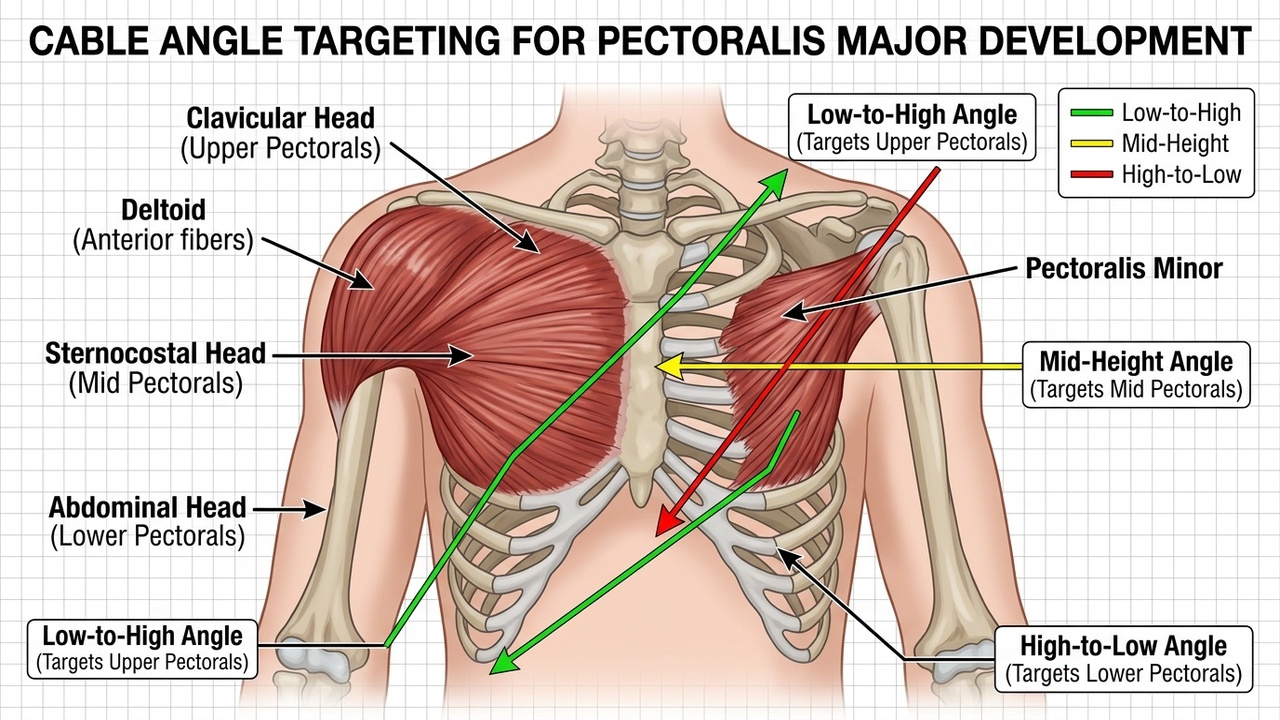
Upper chest (clavicular head). These fibers run from the collarbone downward to the upper arm. They are activated most when you bring your arms up and across your body. Low-to-high cable flyes and incline cable presses target this area. If your upper chest looks flat, these movements are the fix.
Mid chest (sternal head). The largest portion of the pec. These fibers run horizontally from the sternum to the upper arm. Standard cable flyes and cable crossovers at shoulder height hit this region hardest. This is where the bulk of your chest mass comes from.
Lower chest (costal head). These fibers run from the lower ribs and angle upward to the arm. High-to-low cable movements emphasize this area, creating that defined lower chest line that separates the pec from the ribcage.
The practical takeaway: changing the pulley height changes which chest fibers do the most work. A complete cable chest workout should include at least one exercise from each angle. The eight exercises below cover all three regions, so nothing gets left behind.
8 Best Cable Chest Exercises
1. Cable Fly (Mid)
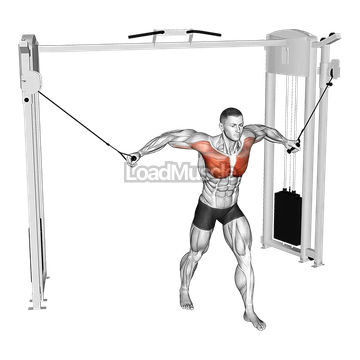
Primary muscles: Mid chest, front delts
Why it matters: The Cable Standing Fly is the bread and butter of cable chest training. It isolates the pecs by removing the triceps from the equation, and the constant cable tension means your chest is working from the first inch of the rep to the last. If you only add one cable movement to your chest day, this is the one.
Setup and execution:
- Set both pulleys to shoulder height. Stand in the center of the cable station with a split stance for balance.
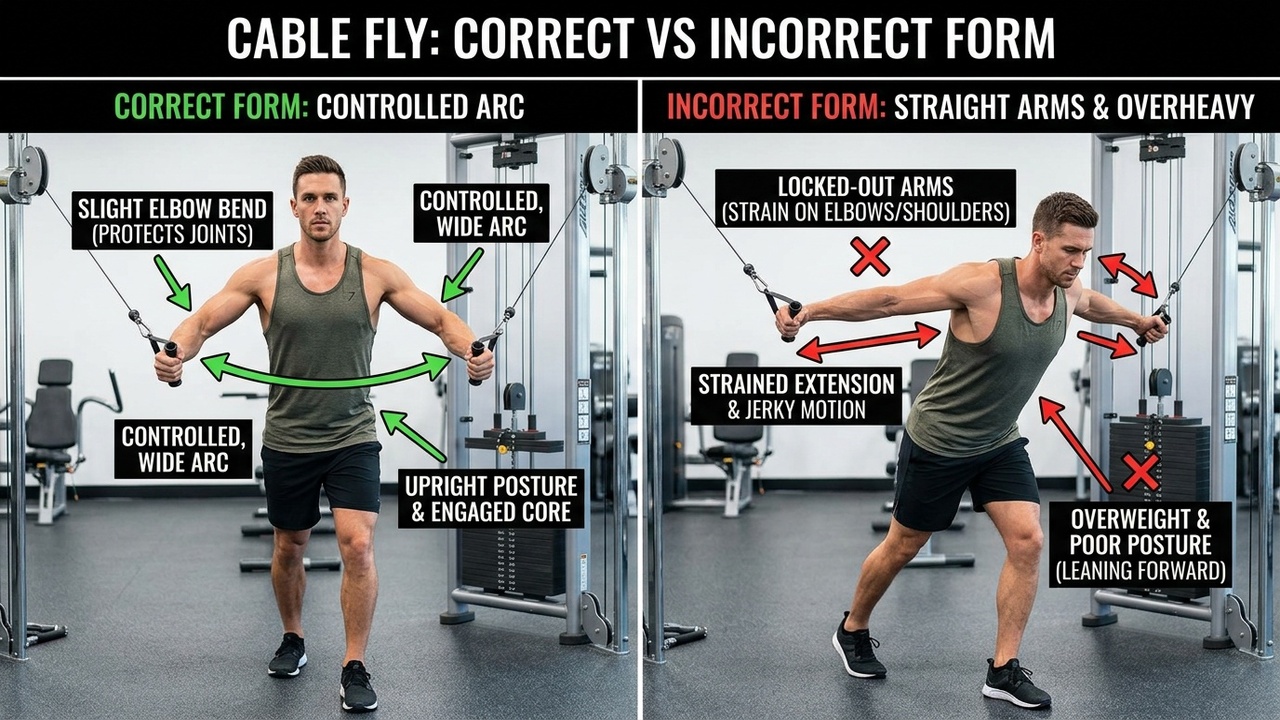
- Grab the handles with a slight bend in your elbows. Step forward so you feel a stretch across your chest with your arms out to the sides.
- Bring your hands together in a wide arc, squeezing your pecs hard at the midpoint. Think about hugging a large tree trunk.
- Return slowly to the starting position, letting your chest stretch under control. Do not let the weight stack slam.
- Keep a slight elbow bend throughout. This is a fly, not a press. Bending your elbows too much turns it into a pressing motion and reduces chest isolation.
2. Low-to-High Cable Fly
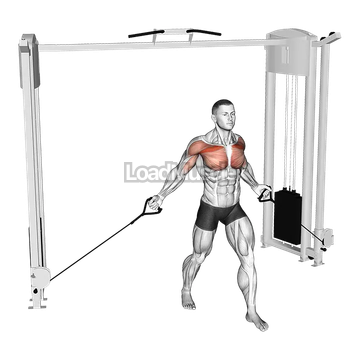
Primary muscles: Upper chest, front delts
Why it matters: The Cable Low Fly is one of the most effective ways to target the upper chest without needing an incline bench. By pulling from a low position to a high finish point, you follow the exact fiber direction of the clavicular head. Most lifters neglect their upper chest, and this exercise fills that gap perfectly.
Setup and execution:
- Set both pulleys to the lowest position. Grab the handles and stand in the center with a slight forward lean.
- Start with your arms down at your sides, palms facing forward, with a slight bend in your elbows.
- Sweep your arms upward and inward, finishing with your hands meeting at about eye level or slightly above.
- Squeeze the upper chest hard at the top for a full second before lowering with control.
- Keep your torso stable. If you are rocking back and forth, the weight is too heavy. Drop it down and focus on the contraction.
3. High-to-Low Cable Fly
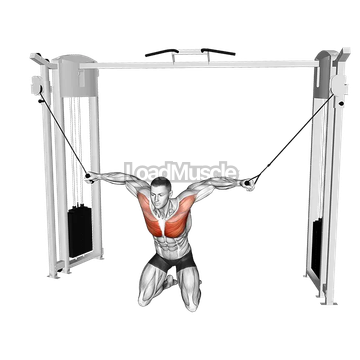
Primary muscles: Lower chest, mid chest
Why it matters: The Cable Kneeling High-to-Low Fly emphasizes the lower pec fibers that create the defined chest line along your ribcage. This movement is also excellent for developing the inner chest because you can cross your hands slightly at the bottom of the rep for an even harder contraction.
Setup and execution:
- Set both pulleys to the highest position. Stand in the center or kneel on a pad for added stability.
- Grab the handles and lean slightly forward from the hips, keeping your chest up and shoulders back.
- Pull your hands downward and together in a sweeping arc, finishing with your hands meeting in front of your lower chest or belly button.
- Squeeze at the bottom, then let the cables pull your arms back up slowly. Control the eccentric.
- For an extra contraction, cross one hand slightly over the other at the bottom of each rep, alternating which hand goes on top.
For more ways to structure your cable and free weight chest training, see our dumbbell chest workout guide for exercises that pair well with these cable movements.
4. Cable Crossover
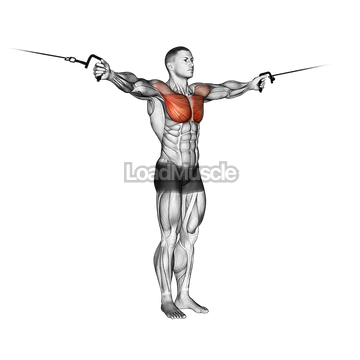
Primary muscles: Mid chest, inner chest
Why it matters: The Cable Crossover Variation is similar to the standard cable fly but with a deeper cross at the midline. By bringing your hands past each other, you get a stronger contraction in the inner chest fibers that are hard to reach with pressing movements alone. This is the exercise that builds that visible line down the center of your chest.
Setup and execution:
- Set the pulleys to just above shoulder height. Stand centered with one foot slightly forward.
- With a slight elbow bend, sweep your arms downward and across your body until your hands cross over each other.
- Alternate which hand crosses on top each rep or each set.
- Focus on squeezing the inner chest as your hands pass the midline. The crossover point is where the magic happens.
- Return under control. The negative portion of this exercise is just as important as the positive.
5. Standing Cable Press
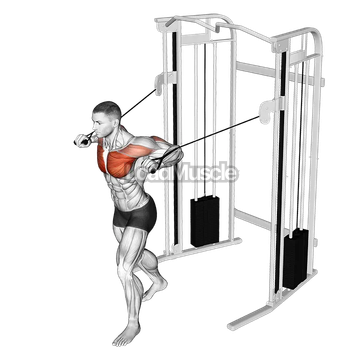
Primary muscles: Mid chest, front delts, triceps
Why it matters: The Cable Standing Chest Press gives you the benefits of a bench press with the constant tension of cables. Because you are standing, your core works hard to stabilize your body, and you cannot use leg drive or an arched back to cheat the weight up. It is an honest pressing movement that keeps your chest under load through the entire rep.
Setup and execution:
- Set both pulleys to chest height. Grab the handles and step forward until you feel tension with your arms back.
- Stagger your stance with one foot ahead for balance. Keep your torso upright or lean very slightly forward.
- Press both handles forward and slightly inward, extending your arms until they are nearly straight.
- Squeeze your chest at the end of the press, then let the handles return slowly to the starting position.
- Keep your elbows at roughly 45 degrees from your body. Flaring them out to 90 degrees shifts stress to your shoulders.
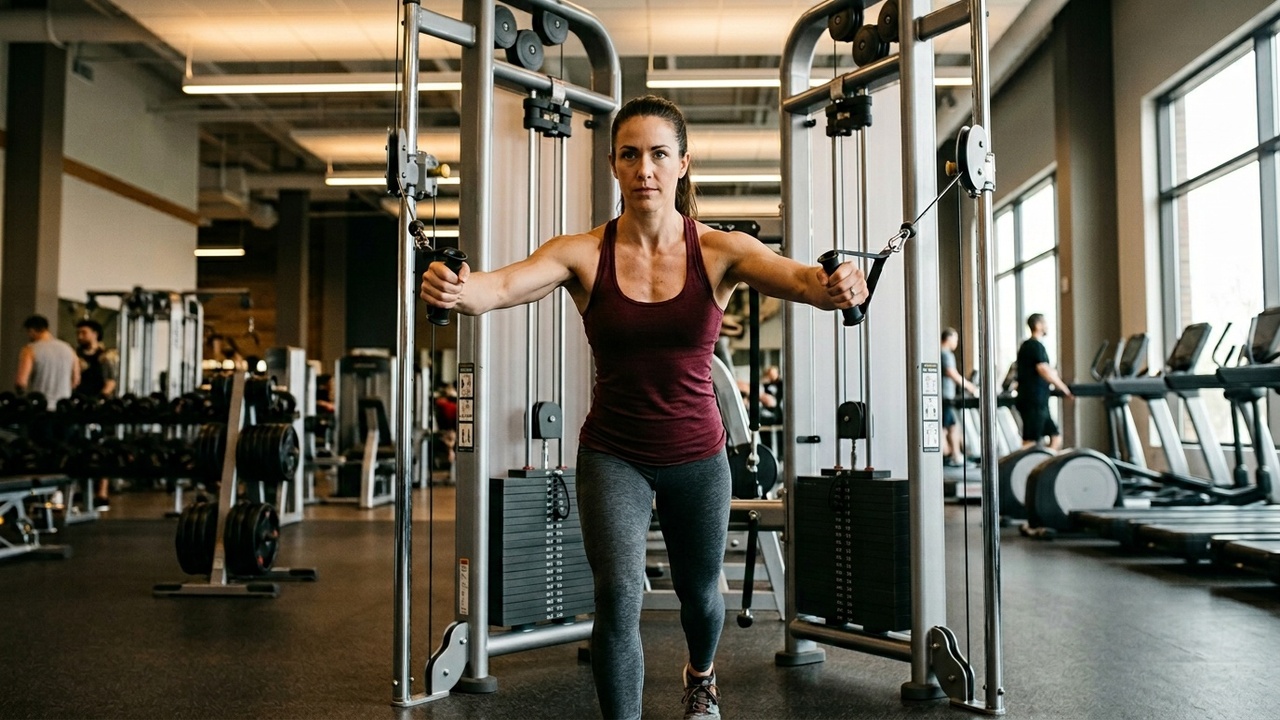
6. Single-Arm Cable Press
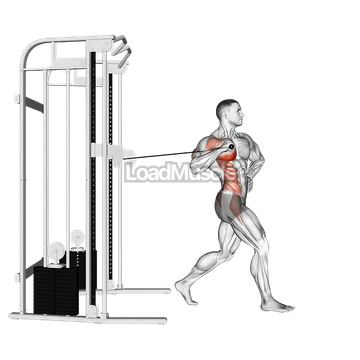
Primary muscles: Mid chest, front delts, triceps, core
Why it matters: The Cable Twisting Standing One-Arm Chest Press takes the standing cable press and makes it unilateral. Working one side at a time lets you focus entirely on the mind-muscle connection with that pec, and it exposes any strength imbalance between your left and right side. The rotational component also hits the serratus anterior, which helps with shoulder health and that athletic look.
Setup and execution:
- Set one pulley to chest height. Stand with your side to the machine, holding the handle in the hand closest to the cable.
- Step away from the machine until you feel tension with your arm pulled back.
- Press the handle forward and across your body, rotating your torso slightly as you extend.
- Squeeze your chest at full extension before slowly reversing the movement.
- Keep your hips square and avoid over-rotating. The twist should come from your upper body, not your hips swinging around.
- Complete all reps on one side before switching. Start with your weaker side first.
7. Cable Pullover
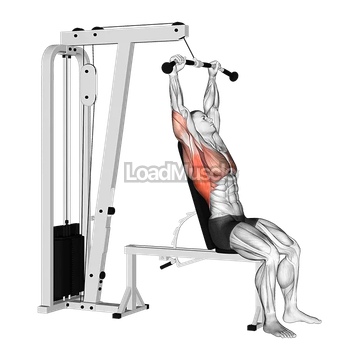
Primary muscles: Chest (sternal head), lats, serratus anterior
Why it matters: The Cable Seated Pullover stretches the chest fibers from a completely different angle than any fly or press. It puts the pecs under a deep stretch at the top of the movement and forces them to contract through a long range of motion. This exercise also recruits the serratus anterior, which supports shoulder stability and creates that serrated look along your ribcage. It is an underrated chest builder that most people skip.
Setup and execution:
- Attach a straight bar or rope to a high pulley. Sit on a bench facing away from the machine, or stand with a slight hip hinge.
- Start with your arms extended overhead, feeling a stretch through your chest and lats.
- Pull the bar downward in an arc, keeping your arms mostly straight, until your hands reach about hip level.
- Squeeze your chest at the bottom, then slowly let the weight pull your arms back overhead.
- Do not bend your elbows too much. This is a pullover, not a pulldown. The straighter your arms, the more your chest works relative to your lats.
Browse our full exercise library to find detailed instructions and muscle activation info for every cable movement mentioned above.
8. Cable Iron Cross
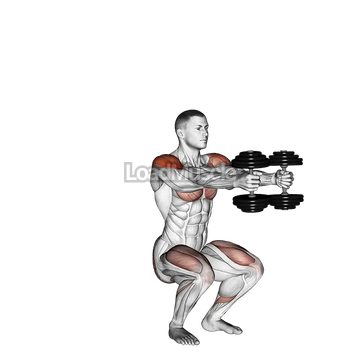
Primary muscles: Upper chest, mid chest, front delts
Why it matters: The Cable Iron Cross is an advanced isolation exercise that demands serious pec strength and shoulder stability. You hold both arms out to the sides against the pull of the cables, creating a massive isometric and concentric challenge for your chest. It is a finishing move that pushes your pecs to total failure when the other exercises have already done the heavy lifting.
Setup and execution:
- Set both pulleys to a low or mid-height position. Grab the handles and stand in the center.
- Raise your arms out to the sides until they are parallel to the floor, palms facing forward.
- From this starting position, bring your hands together in front of your chest with straight arms, like a wide fly with no elbow bend.
- Hold the squeeze at the center for a full two seconds, then open your arms back out slowly.
- This exercise is brutally hard with straight arms. Use a lighter weight than you would for standard flyes. If you cannot maintain straight arms, the load is too heavy.
Cable Chest Workout for Mass
This routine is designed to build overall chest size using cables. It prioritizes heavier compound movements first, then moves to isolation work. Rest periods are longer to allow for heavier loads.
Perform this workout once or twice per week. If you are doing it twice, space the sessions at least 72 hours apart.
| Exercise | Sets | Reps | Rest |
|---|---|---|---|
| Standing Cable Press | 4 | 6-8 | 90 sec |
| Low-to-High Cable Fly | 3 | 8-10 | 75 sec |
| Cable Crossover | 3 | 8-10 | 75 sec |
| High-to-Low Cable Fly | 3 | 10-12 | 60 sec |
| Cable Pullover | 3 | 10-12 | 60 sec |
Programming notes:
- Progressive overload is the priority. Add weight or reps each week. If you hit the top of the rep range on all sets, increase the weight by the smallest increment available next session.
- Start with the standing cable press because it allows the heaviest load and benefits most from fresh muscles.
- The fly variations in the middle hit upper and lower chest from different angles while you still have energy.
- Finish with the pullover for a deep stretch under load. This promotes muscle growth through both mechanical tension and muscle damage.
If you want to learn more about structuring your training for growth, our hypertrophy training guide covers the science behind rep ranges, volume, and progression.
Cable Chest Workout for Definition
This routine focuses on higher reps, shorter rest periods, and peak contractions to improve chest shape and muscle detail. It works well during a cutting phase or for anyone who wants a more sculpted look.
| Exercise | Sets | Reps | Rest |
|---|---|---|---|
| Cable Fly (Mid) | 4 | 12-15 | 45 sec |
| Low-to-High Cable Fly | 3 | 12-15 | 45 sec |
| High-to-Low Cable Fly | 3 | 12-15 | 45 sec |
| Single-Arm Cable Press | 3 | 12-15 each | 45 sec |
| Cable Iron Cross | 2 | 15-20 | 30 sec |
Programming notes:
- Squeeze every rep. Hold the peak contraction for a full second on every rep. This maximizes time under tension and recruits more muscle fibers.
- Keep the rest periods strict. The shorter rest creates a metabolic stress effect that complements the mechanical tension from the mass workout.
- The single-arm press at the end lets you focus on each side individually, cleaning up any imbalances.
- Finish with the iron cross to push your chest to complete failure. Two sets of high reps is plenty for a finisher.
Both routines can be generated and customized in seconds using the Free Workout Planner, which adjusts sets, reps, and exercise selection based on your experience level and available equipment.
How to Combine Cables with Free Weights
Cables are excellent on their own, but they reach their full potential when paired with free weights. The best approach is to use barbell or dumbbell presses as your primary heavy movements, then follow up with cable isolation work for constant-tension volume.
Here is a practical way to structure a combined chest day:
Heavy compound first. Start with a barbell or dumbbell bench press variation for 3 to 4 sets of 6 to 8 reps. This is your strength and overload stimulus.
Cable isolation second. Follow with 2 to 3 cable fly variations (one from each angle) for 3 sets of 10 to 15 reps. This adds volume with constant tension and less joint stress.
Cable finisher last. End with a cable crossover or iron cross for 2 sets to failure. This pushes the pecs past the point where free weights alone could take them.
This combination works because free weights are superior for generating raw force and overloading with heavy loads, while cables are superior for isolating the chest with continuous tension. Together, they cover both the mechanical tension and metabolic stress pathways that drive muscle growth.
A sample combined session might look like this:
- Barbell Bench Press: 4 x 6-8
- Dumbbell Incline Press: 3 x 8-10
- Cable Standing Fly: 3 x 12-15
- Low-to-High Cable Fly: 3 x 12-15
- Cable Crossover: 2 x 15-20
This gives you the best of both worlds. You can also explore our workout routines library for pre-built programs that blend cable and free weight training, including strength-focused routines that pair heavy pressing with cable isolation work.
Common Mistakes with Cable Chest Exercises
Cable exercises look simple, but small technique errors can shift the work away from your chest and onto your shoulders or arms. Here are the most common mistakes and how to fix them.
Using too much weight. This is the number one mistake with cables. When the load is too heavy, you compensate with body momentum, shoulder rotation, and shortened range of motion. All of these reduce chest activation. Drop the weight, slow down your reps, and focus on feeling your chest work. Cable exercises are about quality contractions, not ego lifting.
Bending the elbows too much on flyes. A cable fly should have a slight, fixed bend in your elbows throughout the movement. If your elbows bend significantly as you open and close your arms, you have turned the fly into a pressing motion. This shifts work from the chest to the triceps. Lock that elbow angle and keep it consistent.
Standing too far forward or back. Your position relative to the cable station matters. Standing too close reduces the range of motion. Standing too far back changes the resistance angle and can put unnecessary stress on your shoulders. Find the spot where you feel a full stretch at the open position and a strong squeeze at the close.
Rushing the eccentric. The lowering phase of a cable rep is where a huge portion of muscle damage occurs. If you let the weight stack snap back on every rep, you are throwing away half the growth stimulus. Take at least 2 seconds on every eccentric. Your chest will feel the difference immediately.
Ignoring the upper and lower chest. Many lifters only do cable flyes at shoulder height. This hits the mid chest but neglects the upper and lower fibers. Use all three pulley heights in your workout to develop a complete, balanced chest. The progressive overload guide explains how to apply these principles across all your training.
FAQ
Are cable chest exercises good for building muscle?
Yes, cable chest exercises are excellent for building muscle. The constant tension they provide keeps your pecs under load through the entire range of motion, which is a key driver of hypertrophy. Research shows that exercises with a strong peak contraction and continuous resistance produce comparable or even superior muscle activation to free weight alternatives for isolation work.
Can I build a full chest with only cables?
You can build a well-developed chest using only cable exercises, especially if you include pressing movements like the standing cable press alongside fly variations. That said, most experienced lifters get the best results by combining cables with heavy free weight presses. Cables handle the isolation and constant-tension work brilliantly, while barbells and dumbbells handle the heavy overload component.
How many cable chest exercises should I do per workout?
Three to five cable chest exercises per workout is the sweet spot for most lifters. If cables are your only equipment, aim for four to five exercises covering all three chest regions (upper, mid, lower). If you are combining cables with free weight presses, two to three cable isolation movements after your heavy pressing is enough to fill in the gaps.
What pulley height should I use for cable flyes?
The pulley height determines which part of your chest gets the most work. Shoulder height targets the mid chest. Low pulleys with an upward sweeping motion target the upper chest. High pulleys with a downward sweep target the lower chest. A complete cable chest workout should include at least two different pulley heights to develop the full pec from top to bottom.
Should I do cable exercises before or after bench press?
Do your heavy bench press first, then follow with cable exercises. Compound pressing movements require the most energy, stability, and nervous system activation, so they perform best when you are fresh. Cable flyes and crossovers work best as follow-up isolation movements that add targeted volume and constant-tension work after the heavy lifting is done. The exception is pre-exhaust training, where you deliberately fatigue the chest with cables before pressing, but this is an advanced technique and not ideal for most lifters.
Building a bigger chest with cables comes down to using the right exercises, the right angles, and the right technique. The eight exercises and two routines in this guide give you everything you need to get started. If you want a fully personalized plan that factors in your equipment, schedule, and training history, download the LoadMuscle app and let it handle the programming for you.