Why Use Cables?
The cable machine (functional trainer) is often the busiest piece of equipment in the gym, and for good reason. Unlike free weights, where resistance is dependent on gravity (pulling straight down), cables provide constant tension in any direction.
This allows you to:
- Maintain tension through the entire range of motion.
- Work muscles from unique angles that dumbbells and barbells can't reach.
- Reduce joint stress with a smoother resistance curve.
Here are the 15 best cable exercises to build a complete, aesthetic physique, pulled directly from the LoadMuscle database.
Upper Body Cable Exercises
1. Cable Standing Up Straight Crossovers
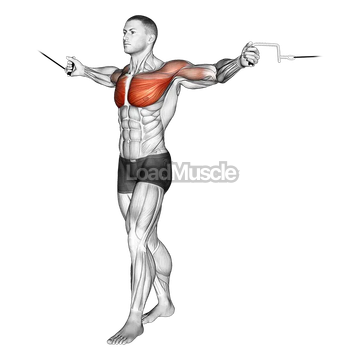
Primary focus: Chest (Pectoralis Major) Why it matters: This is the ultimate chest isolation movement. Unlike dumbbell flys where tension is lost at the top, cables keep your pecs firing the whole time, especially in the shortened position. For a complete chest cable routine, see our cable chest workout. Pair cable flys with the pressing movements in our chest exercises guide for a complete pec workout.
Coaching cues
- Stand tall with a slight stagger in your feet for balance.
- Keep a slight bend in your elbows and maintain it; don't turn this into a press.
- Bring your hands together in front of your chest and squeeze hard for a full second.
Progression idea: Pause for 2 seconds at the peak contraction or perform a drop set by lowering the weight stack.
2. Cable Seated Row (Bent bar)
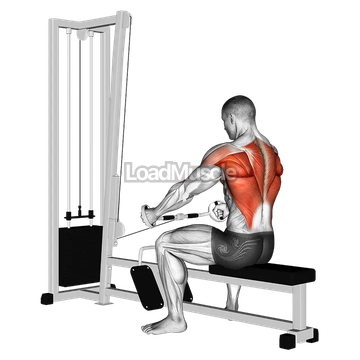
Primary focus: Back (Lats, Rhomboids)
Why it matters: A staple for building a thick back. The constant pull forces you to control the eccentric (lowering) phase, which is key for growth. The bent bar allows for a slightly wider grip than the V-handle. For more rowing and pulldown variations, check out our ultimate back workout guide.
Coaching cues
- Sit with your knees slightly bent and back straight.
- Pull the bar towards your lower ribs, driving your elbows back.
- Avoid swinging your torso back and forth to move the weight.
Progression idea: Slow down the release (eccentric) to 3-4 seconds to really fry the lats.
3. Cable Standing Face Pull (with rope)
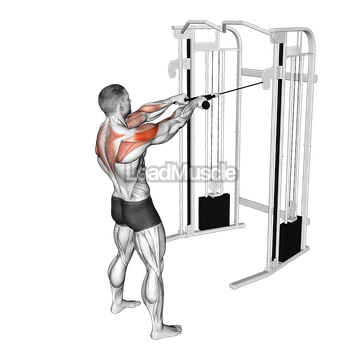
Primary focus: Rear Delts, Rotator Cuff
Why it matters: Non-negotiable for shoulder health and posture. It counters all the pressing work by strengthening the rear delts and external rotators. Our ultimate shoulder workout guide explains how to program face pulls alongside presses and raises for balanced delts.
Coaching cues
- Set the pulley to face height.
- Pull the rope towards your eyes, separating your hands as you pull back.
- Think about "double bicep posing" at the end of the movement.
Progression idea: Add a 2-second hold at the back of the movement to ensure your rear delts are doing the work, not your traps.
4. Cable Leaning Lateral Raise
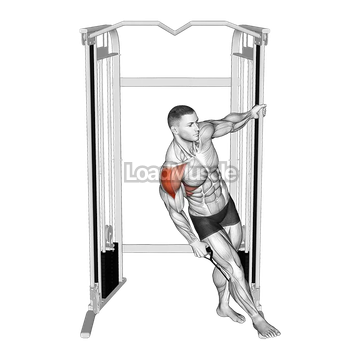
Primary focus: Side Delts
Why it matters: Leaning away from the machine increases the range of motion and puts the side delt under tension for longer. It builds that "capped" shoulder look.
Coaching cues
- Hold the machine frame with one hand and lean away.
- Raise the cable with your other arm until it's parallel to the floor.
- Lead with your elbow, not your hand.
Progression idea: Perform "1.5 reps" – go halfway up, back down, then all the way up.
5. Cable Standing One Arm Tricep Pushdown (Overhand Grip)
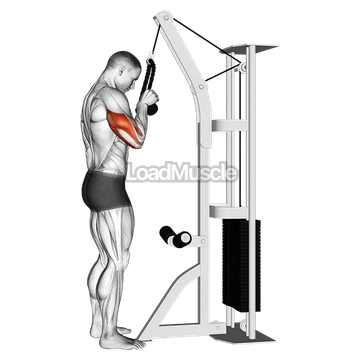
Primary focus: Triceps
Why it matters: Isolating one arm at a time fixes imbalances and allows you to focus purely on the tricep contraction without your dominant side taking over. Combine pushdowns and curls from this list with our bigger arms workout for a complete arm-building plan.
Coaching cues
- Pin your elbow to your side. It should be a hinge, not a lever.
- Fully extend the arm and squeeze the tricep at the bottom.
- Control the weight on the way up, stopping when your forearm is parallel to the floor.
Progression idea: Do a mechanical drop set: start with reverse grip, then switch to overhand grip when you hit failure.
6. Cable One Arm Inner Biceps Curl
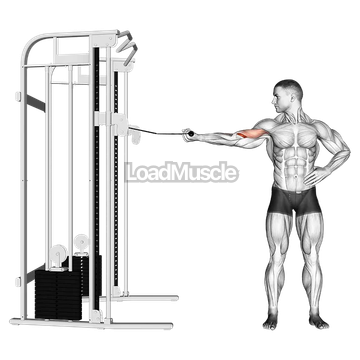
Primary focus: Biceps
Why it matters: Cables provide smooth, continuous resistance that free weights can't match. Curling across the body targets the short head of the bicep for thickness.
Coaching cues
- Stand sideways to the machine.
- Curl the handle across your body towards your opposite shoulder.
- Squeeze the bicep hard at the top.
Progression idea: Use a "21s" style set: 7 bottom half reps, 7 top half reps, 7 full reps.
7. Cable Twist
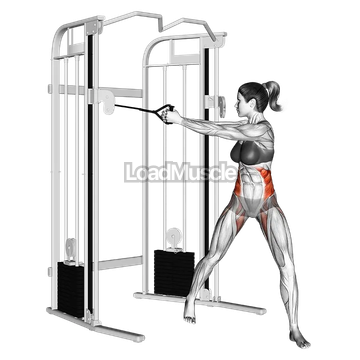
Primary focus: Core (Obliques)
Why it matters: A functional rotational movement that builds core power and defines the obliques. It teaches you to generate force from your trunk.
Coaching cues
- Stand with feet shoulder-width apart, knees soft.
- Rotate from your torso, keeping your arms relatively straight.
- Don't just pull with your arms; your shoulders and hips should rotate together.
Progression idea: Move explosively on the concentric (twist) and slowly on the eccentric (return).
8. Cable Straight Arm Pulldown
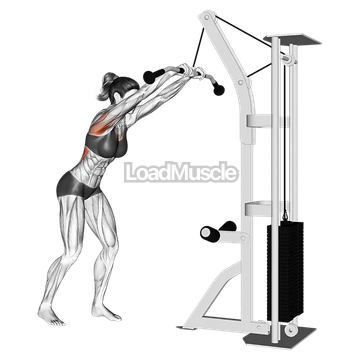
Primary focus: Lats
Why it matters: An isolation movement that pre-exhausts the lats without using the biceps. Great for learning how to engage your back if you struggle to feel it in rows.
Coaching cues
- Stand with a slight forward lean.
- Keep arms straight (slight bend is okay) and drive your hands down to your hips.
- Focus on closing the angle between your arm and your torso.
Progression idea: Use a rope attachment to get a longer range of motion by pulling past your hips.
9. Cable Kneeling Crunch
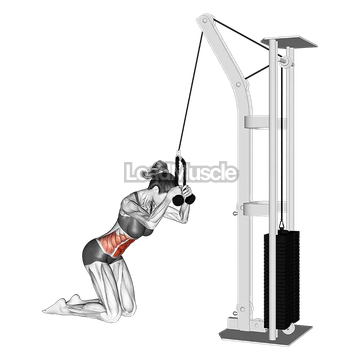
Primary focus: Abs (Rectus Abdominis)
Why it matters: One of the few ab exercises that allows for progressive overload with heavy weight. It thickens the abdominal wall for that "blocky" abs look.
Coaching cues
- Kneel facing the machine holding the rope behind your head.
- Round your back and curl your chest towards your pelvis.
- Do not pull with your arms; they are just hooks.
Progression idea: Perform heavy sets of 8-10 reps, treating your abs like any other muscle group.
Lower Body Cable Exercises
10. Cable Pull Through
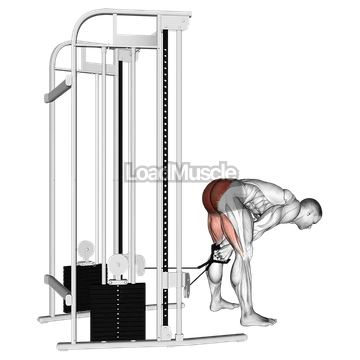
Primary focus: Glutes, Hamstrings
Why it matters: A hip hinge movement similar to a kettlebell swing but with constant tension. Excellent for glute development without heavy spinal loading.
Coaching cues
- Face away from the machine with the rope between your legs.
- Hinge at the hips, pushing your butt back towards the machine.
- Squeeze your glutes to stand back up tall.
Progression idea: Pause at the bottom of the stretch for 2 seconds before exploding up.
11. Cable Donkey Kickback
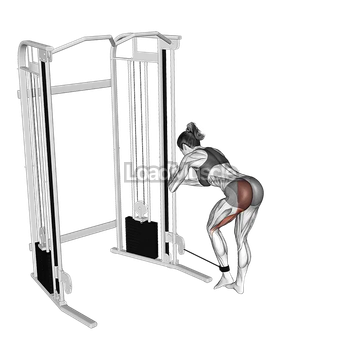
Primary focus: Glutes (Maximus)
Why it matters: Isolates the glutes effectively. The cable allows for a natural arc of motion that matches the hip extension function.
Coaching cues
- Attach the ankle strap and lean forward, holding the machine for support.
- Kick your leg back and slightly up, squeezing the glute at the top.
- Keep your lower back neutral; don't arch to get the leg higher.
Progression idea: Perform high reps (15-20) with a short rest period (30s) for a metabolic burn.
12. Cable Standing Hip Thrust
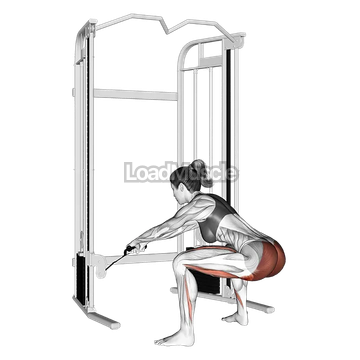
Primary focus: Glutes
Why it matters: A great alternative if you don't have a barbell or bench setup. It mimics the hip thrust pattern in a standing position, focusing on the lock-out.
Coaching cues
- Face away from the machine with the cable attached to a belt or holding a rope at your hips.
- Hinge back and then drive your hips forward against the resistance.
- Squeeze your glutes hard at the standing position.
Progression idea: Use a heavy weight and focus on the explosive concentric phase.
13. Cable Lunge
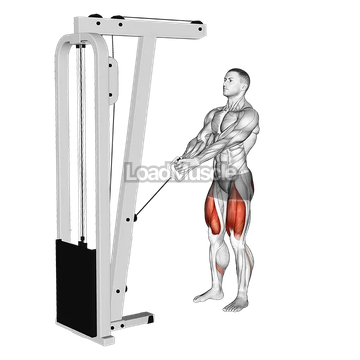
Primary focus: Quads, Glutes
Why it matters: Adding cable resistance to a lunge challenges your stability and keeps tension on the legs throughout the movement.
Coaching cues
- Hold the cable in the opposite hand of the working leg (contralateral loading) to increase core demand.
- Step back into a lunge, keeping your chest up.
- Drive through the front heel to return to standing.
Progression idea: Perform a "deficit" lunge by standing on a small plate or step for deeper range of motion.
14. Cable Front Squat
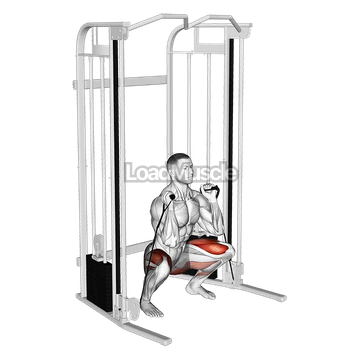
Primary focus: Quads, Glutes
Why it matters: The cable pulls you forward, which forces you to stay upright and engage your core. It allows for a deep squat without as much back strain as a barbell.
Coaching cues
- Hold a straight bar or rope at chest height.
- Squat down deep, keeping your weight on your heels/mid-foot.
- Keep your elbows up and chest proud.
Progression idea: Add a pulse at the bottom of the squat (go down, come up halfway, go down again, come up fully).
15. Cable Stiff Leg Deadlift from Stepbox
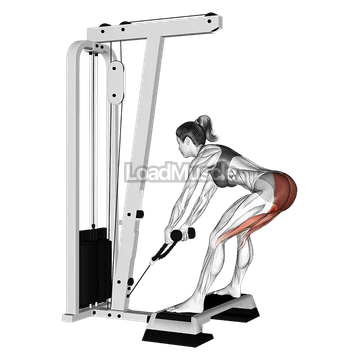
Primary focus: Hamstrings, Glutes
Why it matters: Standing on a stepbox allows for a greater range of motion (ROM) than standing on the floor, letting you get a massive stretch in the hamstrings.
Coaching cues
- Stand on a box or step with the cable handle in your hands.
- Keep legs relatively straight (soft knees) and hinge at the hips.
- Lower the weight as far as your flexibility allows, feeling the stretch.
Progression idea: Focus purely on the stretch. Hold the bottom position for 3 seconds on every rep.
How to Program Cable Exercises
Cables are versatile. You can use them for:
- Warm-ups: Light face pulls or rotations.
- Main Lifts: Heavy rows or pulldowns.
- Finishers: High-rep curls, pushdowns, or lateral raises.
A full-body cable workout might look like this:
- Cable Front Squat: 3 sets of 10-12
- Cable Seated Row: 3 sets of 10-12
- Cable Standing Up Straight Crossovers: 3 sets of 12-15
- Cable Standing One Arm Tricep Pushdown: 3 sets of 12-15
- Cable Kneeling Crunch: 3 sets of 15-20
FAQ
Are cable exercises good for building muscle?
Yes. Cables provide constant tension throughout the range of motion, which is excellent for hypertrophy. They complement free weight training well.
Can I do a full workout with just cables?
Yes. Cable machines can target every major muscle group. A cable-only workout is effective for hypertrophy, especially when combined with progressive overload.
Are cables better than free weights?
Neither is objectively better. Cables offer constant tension and safety advantages. Free weights offer more stabilizer activation. Using both is ideal. If you want to explore free-weight options, see our barbell guide and dumbbell only workout.
How heavy should I go on cable exercises?
Use a weight that allows you to complete your target reps with good form. Cable exercises typically work best in the 8-15 rep range with controlled tempo.
Need a Plan?
Don't guess which exercises to do. Use the LoadMuscle Workout Planner to generate a routine that incorporates these cable movements based on your goals. Whether you have a full gym or just a cable machine, we can build a plan for you.
Download LoadMuscle to log your cable workouts on the go and track your progress set by set.
Want these movements inside a full program? Browse our strength workout routines for ready-made plans built around cable and free-weight training.