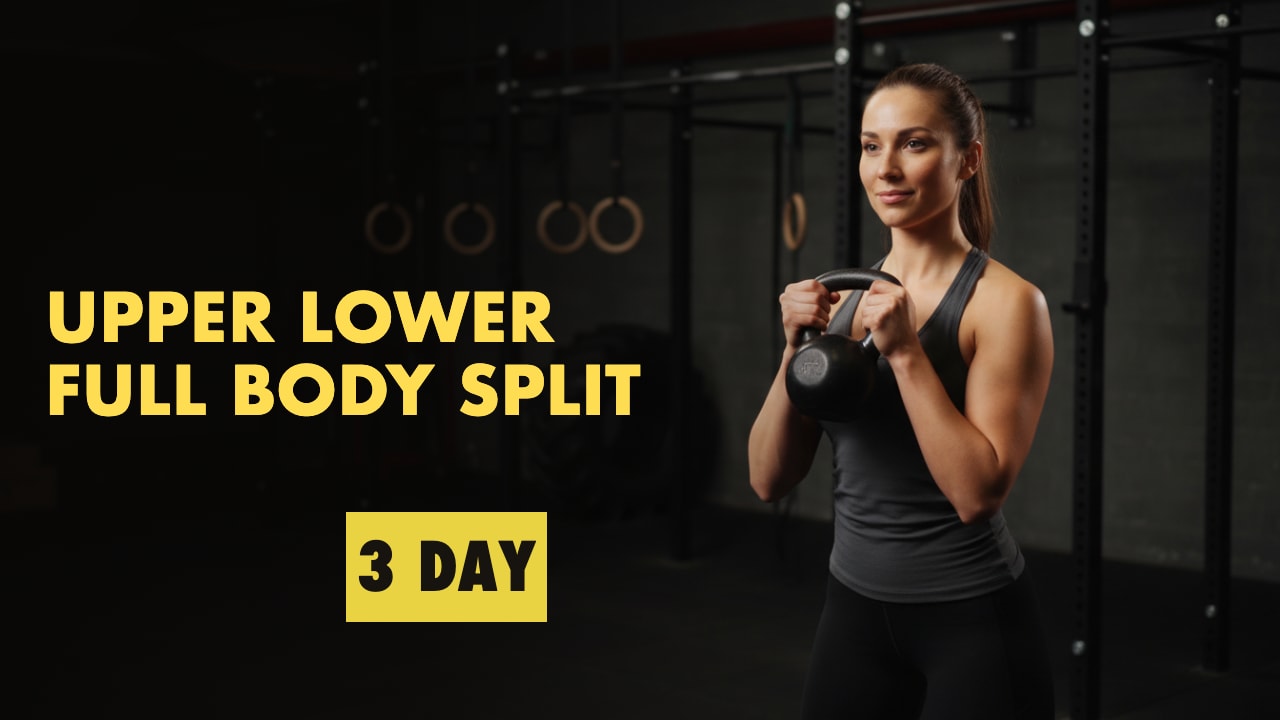
Why Train with Dumbbells?
You don't need a barbell or fancy machines to build a great physique. Dumbbells are arguably the most versatile tool in your arsenal.
They allow for:
- Unilateral Training: Fixing muscle imbalances by working one side at a time.
- Greater Range of Motion: You can go deeper in a press or row than with a bar.
- Stability: Your stabilizer muscles have to work overtime to control the weights.
This guide outlines a complete full-body routine using only dumbbells. If you want a more comprehensive dumbbell program with multiple workout days and progression, check out our Full Body Dumbbell Workout. For bodyweight alternatives you can mix in, see our Home Workout Guide.
The Full-Body Dumbbell Routine
Perform this workout 3 times per week with at least one rest day in between.
1. Dumbbell Goblet Squat
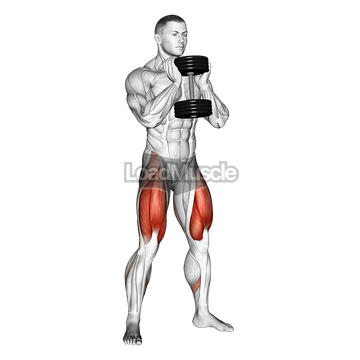
Primary Focus: Quads, Glutes, Core
Why it matters: The best way to learn to squat. Holding the weight in front acts as a counterbalance, allowing you to stay upright and hit depth easily.
Coaching Cues:
- Hold the dumbbell vertically against your chest, cupping the top end.
- Squat down, pushing your knees out.
- Keep your chest up and elbows tucked.
- Drive up through your heels.
2. Dumbbell Deadlift
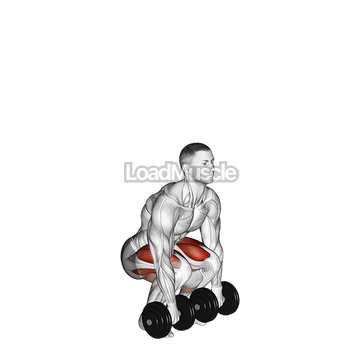
Primary Focus: Hamstrings, Glutes, Lower Back
Why it matters: Builds the entire posterior chain. Using dumbbells allows you to keep the weight closer to your center of gravity than a barbell.
Coaching Cues:
- Place dumbbells on the floor outside your feet.
- Hinge at the hips and bend knees to grab them.
- Keep your back flat and chest up.
- Stand up tall, squeezing your glutes.
3. Dumbbell Bench Press
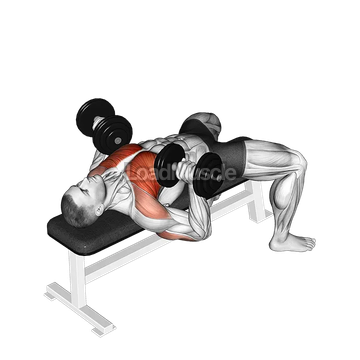
Primary Focus: Chest, Triceps, Front Delts
Why it matters: A staple for chest development. It allows for a better stretch at the bottom and a stronger contraction at the top than a barbell press.
Coaching Cues:
- Lie on a bench (or floor) with dumbbells at chest level.
- Press up and slightly inward, but don't touch the weights together.
- Lower slowly until you feel a stretch in your pecs.
- Keep your elbows at a 45-degree angle.
4. Dumbbell Bent Over Row
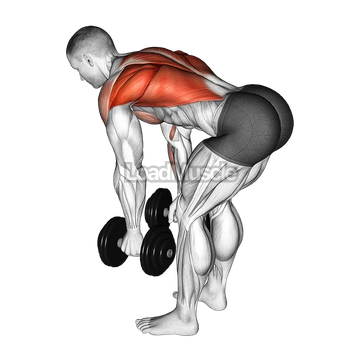
Primary Focus: Lats, Rhomboids, Rear Delts
Why it matters: Essential for a thick back and healthy shoulders. It balances out all the pressing work.
Coaching Cues:
- Hinge forward until your torso is nearly parallel to the floor.
- Keep your back flat.
- Pull the dumbbells towards your hips, driving elbows back.
- Squeeze your shoulder blades together at the top.
5. Dumbbell Seated Shoulder Press
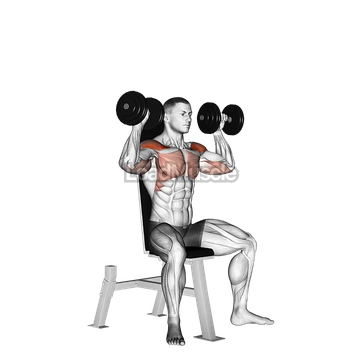
Primary Focus: Shoulders (Anterior/Lateral) Why it matters: Builds broad, strong shoulders. Doing it seated removes body momentum, forcing the delts to do the work. For focused shoulder training, check our dumbbell shoulder workout.
Coaching Cues:
- Sit with back support if possible.
- Press the weights overhead until arms are extended.
- Lower until elbows are at ear level.
- Don't arch your lower back excessively.
6. Dumbbell Walking Lunges
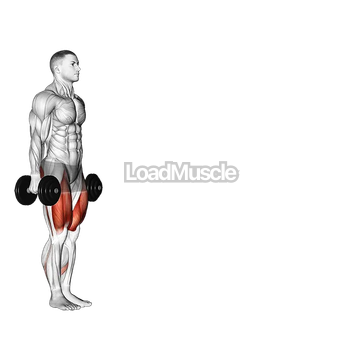
Primary Focus: Quads, Glutes, Stability Why it matters: A dynamic movement that builds athletic legs and torches calories. For more lower body exercises, see our dumbbell leg workout.
Coaching Cues:
- Hold dumbbells at your sides.
- Take a long step forward and lower your back knee.
- Drive through the front heel to step into the next rep.
- Keep your torso upright.
7. Dumbbell Lateral Raise
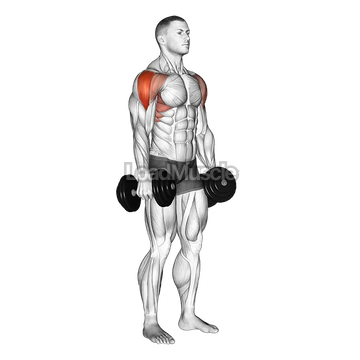
Primary Focus: Side Delts
Why it matters: The key to the "V-taper" look. It targets the side head of the shoulder which pressing doesn't fully hit.
Coaching Cues:
- Stand with a slight forward lean.
- Raise arms to the side, leading with elbows.
- Stop at shoulder height.
- Control the descent.
8. Dumbbell Seated Hammer Curl
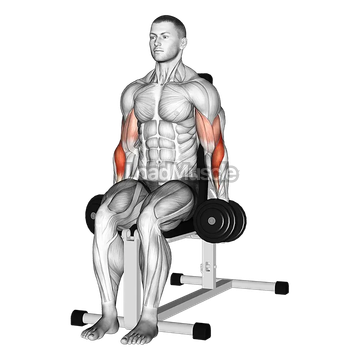
Primary Focus: Biceps, Brachialis, Forearms Why it matters: Hits the biceps and the brachialis (muscle under the bicep) to add thickness to the arm. For a dedicated arm session, try our dumbbell arm workout.
Coaching Cues:
- Hold dumbbells with a neutral grip (palms facing each other).
- Curl up towards your shoulder.
- Squeeze at the top and lower slowly.
- Keep elbows pinned to your sides.
9. Dumbbell Standing Triceps Extension
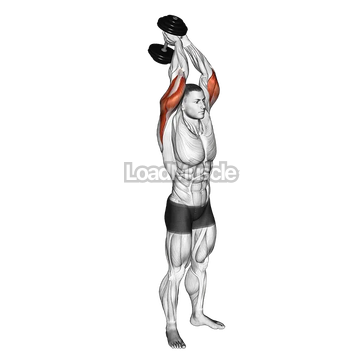
Primary Focus: Triceps (Long Head)
Why it matters: Overhead work targets the long head of the tricep, which makes up the bulk of the arm's mass.
Coaching Cues:
- Hold one dumbbell with both hands overhead.
- Lower the weight behind your head by bending at the elbows.
- Keep elbows pointing forward/up, not flaring out too much.
- Extend arms fully at the top.
Warm-Up (5 Minutes)
Don't skip this. Cold muscles don't perform well and you risk pulling something unnecessarily.
- 2 minutes: Light movement to raise your heart rate. March in place, do arm circles, or jog on the spot.
- 1 minute: 10 slow bodyweight squats to open up your hips and knees.
- 1 minute: 10 light dumbbell goblet squats (use the lightest weight you have).
- 1 minute: 5-8 light dumbbell presses to warm up your shoulders and chest.
The goal is to break a light sweat and feel loose, not to tire yourself out.
Weekly Schedule
Perform this workout 3 times per week with at least one rest day between sessions. Here is a simple schedule:
| Day | Activity |
|---|---|
| Monday | Dumbbell Full Body |
| Tuesday | Rest or light walking |
| Wednesday | Dumbbell Full Body |
| Thursday | Rest or light walking |
| Friday | Dumbbell Full Body |
| Saturday | Rest or light activity |
| Sunday | Rest |
If you can only manage 2 days, that still works. Do the routine twice per week and add a third session when your schedule allows. Consistency beats perfection.
Workout Structure
| # | Demo | Exercise | Sets × Reps | Rest |
|---|---|---|---|---|
| 1 | Goblet SquatRest 90s | 3 × 10-12 | 90s | |
| 2 | Dumbbell DeadliftRest 90s | 3 × 10-12 | 90s | |
| 3 | Dumbbell Bench PressRest 90s | 3 × 10-12 | 90s | |
| 4 | Dumbbell RowRest 90s | 3 × 10-12 | 90s | |
| 5 | Shoulder PressRest 90s | 3 × 10-12 | 90s | |
| 6 | Walking LungesRest 60s | 2 × 12/leg | 60s | |
| 7 | Lateral RaiseRest 60s | 2 × 15 | 60s | |
| 8 | Hammer CurlRest 60s | 2 × 12-15 | 60s | |
| 9 | Tricep ExtensionRest 60s | 2 × 12-15 | 60s |


Tips for Dumbbell Training at Home
Training at home removes excuses, but it comes with a few challenges. Here's how to handle them.
Create a dedicated space. You don't need a home gym. A 6x6 foot area with a mat is enough. Having a consistent spot makes it easier to show up. If you have to rearrange furniture every time, you'll skip sessions.
Invest in adjustable dumbbells. A single pair of adjustable dumbbells replaces an entire rack. They cost more upfront but save space and money long-term. If budget is tight, start with two fixed pairs (one lighter for upper body isolation, one heavier for legs and compound lifts).
Control the eccentric. Without heavy weights, the best way to make exercises harder is to slow down the lowering phase. A 3-second controlled descent on each rep dramatically increases the challenge without adding weight. This is especially useful for exercises like bench press, rows, and curls.
Minimize distractions. Put your phone on Do Not Disturb, set a timer, and treat the session like a gym visit. Home training only works if you treat it seriously.
Track everything. Write down the weight, sets, and reps for every exercise. Without tracking, you'll forget what you did last time and stall. The LoadMuscle app makes this easy with built-in logging and previous session data right on your screen.
How to Progress with Dumbbells
The biggest challenge with dumbbell training is progression. Dumbbells usually jump in 5lb increments, which is a larger percentage increase for smaller exercises like lateral raises.
Here's how to handle it:
Use double progression. Start at the low end of the rep range. Once you can complete all sets at the top of the range with good form, increase the weight and drop back to the low end.
Example: You're doing Goblet Squats with 30lbs for 3x10. Each week, aim to add 1 rep per set. When you hit 3x12 with clean form, move to 35lbs and start back at 3x10.
For small exercises (lateral raises, curls, extensions), the 5lb jump can be too big. Instead, add reps beyond the target range (go to 15-18 reps) before increasing weight, or slow down the tempo to increase difficulty without changing the load.
When to change exercises: If you've been running this routine for 8-12 weeks and you're still progressing, keep going. If progress stalls on multiple exercises, it's time for a new stimulus. Read our Progressive Overload Guide for more strategies.
Advanced Progression Techniques for Limited Dumbbells
When you only have a few pairs of dumbbells (or a single adjustable set with large weight jumps), you need techniques beyond simply adding weight. These methods increase the difficulty of any exercise without changing the load, allowing you to squeeze months of extra progress out of your current equipment.
Tempo Manipulation
Slowing down the lowering (eccentric) phase of each rep dramatically increases time under tension. Instead of lowering the weight in 1 second, take 3-4 seconds. This makes the same weight significantly harder and forces your muscles to control the load through the entire range of motion.
How to apply it: Use a 3-1-1 tempo (3 seconds down, 1 second pause, 1 second up). When you can complete all prescribed reps at the slow tempo, return to normal tempo and you will likely be ready for the next weight up.
Example: You can do Dumbbell Bench Press with 40lbs for 3x12 at normal speed but 45lbs is too heavy. Switch to 40lbs with a 3-1-1 tempo. You will probably drop to 3x8 at first. Work back up to 3x12 at the slow tempo, then switch to normal tempo with 45lbs.
Pause Reps
Adding a 2-3 second pause at the hardest point of the movement (usually the bottom) eliminates the stretch reflex and forces your muscles to generate force from a dead stop. This builds strength at your weakest point and improves control.
How to apply it: Pause at the bottom of squats, the bottom of bench presses, or the stretched position of rows. Hold for a full 2-3 seconds, then drive up explosively.
Example: Goblet Squat with 40lbs for 3x10 with a 2-second pause in the hole. Your quads will be burning by rep 8. When you can hit 3x12 with the pause, regular goblet squats at 45lbs will feel manageable.
1.5 Reps
A 1.5 rep means you go through the full range of motion, come halfway back, return to the bottom (or top), and then complete the full rep. This doubles the work in the hardest part of the movement and creates a massive stimulus without needing heavier weight.
How to apply it: Works best on squats, lunges, bench press, and rows. Lower all the way down, come halfway up, go back down, then drive all the way up. That is one rep.
Example: Dumbbell Walking Lunges with 25lb dumbbells for 2x8 per leg using 1.5 reps. You will feel this in your quads and glutes far more than regular lunges with the same weight.
Drop Sets
Perform a set to near failure with your heavy dumbbells, then immediately grab a lighter pair and continue repping until near failure again. This extends the set beyond what you could do with one weight and creates massive metabolic stress.
How to apply it: Best for isolation exercises like curls, lateral raises, and extensions. Do your heavy set, drop to a lighter weight (30-50% less), and grind out 6-10 more reps. One drop set at the end of your last set is enough. Do not overuse this technique as it creates a lot of fatigue.
Example: Dumbbell Seated Hammer Curl with 30lbs for 12 reps, immediately drop to 20lbs for 8-10 more reps. Your biceps will be fully fatigued without needing access to heavier dumbbells.
Myo-Reps
Myo-reps are a rest-pause technique designed for high efficiency. Perform an activation set of 12-20 reps close to failure, rest 5-10 seconds (just long enough to take 3-5 deep breaths), then do 3-5 more reps. Rest another 5-10 seconds and repeat for 3-5 mini-sets. Stop when you can no longer match 3 reps in a mini-set.
How to apply it: This technique is ideal for lighter exercises where you would otherwise need to do high reps to reach failure. It condenses what would normally take 4-5 full sets into one extended set that takes about 2 minutes.
Example: Dumbbell Lateral Raise with 15lbs for 15 reps (activation set), rest 10 seconds, 5 reps, rest 10 seconds, 4 reps, rest 10 seconds, 3 reps. You just accumulated 27 high-quality reps in under 2 minutes.
When to Increase Weight
With these techniques in your toolbox, here is a simple decision tree for progressing:
- Can you complete all sets and reps at normal tempo with good form? Add reps (double progression) until you hit the top of the rep range.
- Hit the top of the rep range? Try the next weight up. If it is too heavy, go back to the current weight and apply tempo manipulation or pause reps.
- Mastered slow tempo and pause reps at this weight? You are ready for the heavier dumbbell. Make the jump.
- Still stuck? Use 1.5 reps, drop sets, or myo-reps to push past the plateau. Then retest with the heavier weight.
Additional Weekly Templates
The 3-day full-body schedule above is the default, but your training can be adapted for different schedules. Here are templates for 4-day and 5-day options, all using only dumbbells.
4-Day Upper/Lower Split
This split lets you train each muscle group twice per week with more volume per session. It works well for intermediate lifters who have outgrown the 3-day full-body approach.
Day 1 - Upper Body A
| # | Demo | Exercise | Sets × Reps | Rest |
|---|---|---|---|---|
| 1 | Dumbbell Bench PressRest 90s | 4 × 8-10 | 90s | |
| 2 | Dumbbell Bent Over RowRest 90s | 4 × 8-10 | 90s | |
| 3 | Dumbbell Seated Shoulder PressRest 90s | 3 × 10-12 | 90s | |
| 4 | Dumbbell Lateral RaiseRest 60s | 3 × 12-15 | 60s | |
| 5 | Dumbbell Seated Hammer CurlRest 60s | 2 × 10-12 | 60s | |
| 6 | Dumbbell Standing Triceps ExtensionRest 60s | 2 × 10-12 | 60s |
Day 2 - Lower Body A
| # | Demo | Exercise | Sets × Reps | Rest |
|---|---|---|---|---|
| 1 | Dumbbell Goblet SquatRest 90s | 4 × 8-10 | 90s | |
| 2 | Dumbbell DeadliftRest 90s | 4 × 8-10 | 90s | |
| 3 | Dumbbell Walking LungesRest 90s | 3 × 10/leg | 90s | |
| 4 | Dumbbell Calf RaiseRest 60s | 3 × 15-20 | 60s |

Day 3 - Upper Body B
| # | Demo | Exercise | Sets × Reps | Rest |
|---|---|---|---|---|
| 1 | Dumbbell Floor PressRest 90s | 4 × 10-12 | 90s | |
| 2 | Dumbbell Single Arm RowRest 90s | 4 × 10-12/arm | 90s | |
| 3 | Dumbbell Arnold PressRest 90s | 3 × 10-12 | 90s | |
| 4 | Dumbbell Rear Delt FlyRest 60s | 3 × 12-15 | 60s | |
| 5 | Dumbbell Incline CurlRest 60s | 2 × 10-12 | 60s | |
| 6 | Dumbbell KickbackRest 60s | 2 × 12-15 | 60s |


Day 4 - Lower Body B
| # | Demo | Exercise | Sets × Reps | Rest |
|---|---|---|---|---|
| 1 | Bulgarian Split SquatRest 90s | 4 × 8-10/leg | 90s | |
| 2 | Dumbbell Romanian DeadliftRest 90s | 4 × 10-12 | 90s | |
| 3 | Dumbbell Step UpRest 90s | 3 × 10/leg | 90s | |
| 4 | Dumbbell Calf RaiseRest 60s | 3 × 15-20 | 60s |


Sample weekly schedule: Monday (Upper A), Tuesday (Lower A), Thursday (Upper B), Friday (Lower B). Wednesday, Saturday, and Sunday are rest days.
5-Day Push/Pull/Legs Split
For advanced lifters who want maximum training frequency and volume. This split hits each muscle group at least twice per week across five sessions.
Day 1 - Push
| # | Demo | Exercise | Sets × Reps | Rest |
|---|---|---|---|---|
| 1 | Dumbbell Bench PressRest 90s | 4 × 8-10 | 90s | |
| 2 | Dumbbell Incline PressRest 90s | 3 × 10-12 | 90s | |
| 3 | Dumbbell Seated Shoulder PressRest 90s | 3 × 10-12 | 90s | |
| 4 | Dumbbell Lateral RaiseRest 60s | 3 × 12-15 | 60s | |
| 5 | Dumbbell Standing Triceps ExtensionRest 60s | 3 × 10-12 | 60s |

Day 2 - Pull
| # | Demo | Exercise | Sets × Reps | Rest |
|---|---|---|---|---|
| 1 | Dumbbell Bent Over RowRest 90s | 4 × 8-10 | 90s | |
| 2 | Dumbbell Single Arm RowRest 90s | 3 × 10-12/arm | 90s | |
| 3 | Dumbbell Rear Delt FlyRest 60s | 3 × 12-15 | 60s | |
| 4 | Dumbbell ShrugRest 60s | 3 × 12-15 | 60s | |
| 5 | Dumbbell Seated Hammer CurlRest 60s | 3 × 10-12 | 60s |

Day 3 - Legs
| # | Demo | Exercise | Sets × Reps | Rest |
|---|---|---|---|---|
| 1 | Dumbbell Goblet SquatRest 90s | 4 × 8-10 | 90s | |
| 2 | Dumbbell DeadliftRest 90s | 4 × 8-10 | 90s | |
| 3 | Dumbbell Walking LungesRest 90s | 3 × 10/leg | 90s | |
| 4 | Dumbbell Calf RaiseRest 60s | 3 × 15-20 | 60s |
Day 4 - Upper (Push + Pull combined)
| # | Demo | Exercise | Sets × Reps | Rest |
|---|---|---|---|---|
| 1 | Dumbbell Floor PressRest 90s | 3 × 10-12 | 90s | |
| 2 | Dumbbell Single Arm RowRest 90s | 3 × 10-12/arm | 90s | |
| 3 | Dumbbell Arnold PressRest 90s | 3 × 10-12 | 90s | |
| 4 | Dumbbell Lateral RaiseRest 60s | 2 × 15 | 60s | |
| 5 | Dumbbell Incline CurlRest 60s | 2 × 10-12 | 60s | |
| 6 | Dumbbell KickbackRest 60s | 2 × 12-15 | 60s |
Day 5 - Legs
| # | Demo | Exercise | Sets × Reps | Rest |
|---|---|---|---|---|
| 1 | Bulgarian Split SquatRest 90s | 4 × 8-10/leg | 90s | |
| 2 | Dumbbell Romanian DeadliftRest 90s | 4 × 10-12 | 90s | |
| 3 | Dumbbell Step UpRest 90s | 3 × 10/leg | 90s | |
| 4 | Dumbbell Calf RaiseRest 60s | 3 × 15-20 | 60s |
Sample weekly schedule: Monday (Push), Tuesday (Pull), Wednesday (Legs), Thursday (rest), Friday (Upper), Saturday (Legs), Sunday (rest).
Essential Home Gym Equipment
You do not need much to train effectively at home, but a few key pieces of equipment make a significant difference. Here is the essential trio that covers 95% of your dumbbell training needs.
1. Adjustable Dumbbells
This is the single most important investment. A pair of adjustable dumbbells that go from 5lbs to 50lbs (or higher) replaces an entire dumbbell rack and costs a fraction of the price. They allow you to use the right weight for every exercise, from light lateral raises to heavy goblet squats.
What to look for:
- Weight range of at least 5-50lbs per dumbbell. If you are already intermediate or advanced, look for sets that go up to 70-90lbs.
- Quick-change mechanism. Dial or pin-select systems let you change weight in seconds. Spin-lock systems are cheaper but slower to adjust between exercises.
- Durability. Read reviews about the locking mechanism. Cheap adjustable dumbbells can feel wobbly or rattle, which is distracting and potentially unsafe.
Budget option: If adjustable dumbbells are too expensive, buy 3-4 pairs of fixed dumbbells in strategic increments. For example: 15lbs, 25lbs, 35lbs, and 50lbs. This covers most exercises for a beginner-to-intermediate lifter.
2. Flat/Incline Bench
A bench unlocks exercises you cannot do on the floor: incline press, incline curls, dumbbell flyes, and supported rows. It also gives you a deeper range of motion on bench press compared to floor press.
What to look for:
- Adjustable incline (flat to at least 45 degrees). This lets you hit different angles on presses and curls.
- Weight capacity of at least 300lbs (your body weight plus the dumbbells).
- Compact and foldable if space is limited. Many home benches fold vertically for storage.
Budget option: A flat bench without incline adjustment is cheaper and still useful for bench press, rows, and step-ups. You can prop the flat bench against a wall at an angle for a makeshift incline, though a proper adjustable bench is far more stable.
3. Pull-Up Bar
A pull-up bar fills the biggest gap in a dumbbell-only program: heavy vertical pulling. Pull-ups and chin-ups build the lats, biceps, and grip in a way that dumbbell rows alone cannot replicate. A doorframe pull-up bar costs under $30 and takes 30 seconds to install.
What to look for:
- Doorframe-mounted bars are the easiest to install and remove. Make sure your door frame is sturdy enough (solid wood trim, not hollow).
- Wall-mounted bars are more permanent but sturdier and allow for wider grips.
- Weight capacity of at least 250lbs.
How to use it in your routine: Add 3 sets of pull-ups or chin-ups before your dumbbell rows on any workout day. If you cannot do a full pull-up yet, use a chair for assisted reps or do slow negatives (jump up and lower yourself as slowly as possible for 3-5 seconds).
The complete home gym setup: Adjustable dumbbells + adjustable bench + pull-up bar. Total cost is typically $300-500 depending on brands. This setup lets you train every muscle group effectively and will last you years before you outgrow it.
FAQ
How heavy do my dumbbells need to be?
For most beginners, a pair of adjustable dumbbells that go up to 50lbs is enough for 6-12 months of progress. As you get stronger, you may need heavier weights for legs (goblet squat, deadlift) before you need them for arms. If budget is tight, start with 15-25lb fixed dumbbells and progress through reps and tempo first.
Can I really build muscle with just dumbbells?
Yes. Dumbbells provide the same mechanical tension as barbells. The limiting factor is usually leg exercises, since your legs are stronger than what you can hold in your hands. When goblet squats get too easy, switch to Bulgarian split squats or single-leg work to keep challenging your legs with less weight.
Should I do the same routine every session or alternate exercises?
For the first 8 weeks, keep the same routine. Repeating the same exercises lets you track progress and get better at the movements. After that, you can rotate variations (incline press instead of flat, single-arm rows instead of bent-over rows) to keep things fresh.
What if I don't have a bench?
Do floor presses instead of bench presses. The range of motion is slightly shorter, but the exercise still builds chest and triceps effectively. For shoulder presses, sit on a sturdy chair with back support or do them standing.
How long should each session take?
With the warm-up and 60-90 second rest periods, expect each session to take 40-50 minutes. If you are short on time, reduce rest periods to 45-60 seconds. The workout will be harder but shorter.
When should I switch to a gym or barbell program?
There's no requirement to switch. You can build an impressive physique with dumbbells alone. But if your dumbbells max out and you can't progress further, or you want to try heavier compound movements like barbell squats and deadlifts, transitioning to a gym program makes sense. Check our Full Body Workout Plan or Best Workout Split Guide for gym-based options.
How do I train legs hard enough with only dumbbells?
Legs are the biggest challenge in a dumbbell-only program because your legs are much stronger than what your hands can hold. The key is using unilateral (single-leg) exercises. Bulgarian split squats, single-leg Romanian deadlifts, and pistol squats all cut the load requirement roughly in half because one leg does all the work. Combine these with the advanced progression techniques above (tempo manipulation, pause reps, 1.5 reps) and you can build impressive leg strength and size with just 40-50lb dumbbells.
Can I do cardio on rest days with a dumbbell program?
Yes. Low-to-moderate intensity cardio like walking, cycling, or swimming on rest days supports recovery by increasing blood flow without taxing your muscles. Avoid high-intensity interval training (HIIT) on rest days, as it competes for the same recovery resources as your strength training. If you want to add conditioning, try a 20-30 minute walk or light bike ride.
Should I switch from 3-day full body to a split as I get stronger?
The 3-day full-body routine works well for beginners and early intermediates. Once you can no longer recover between full-body sessions (you feel consistently sore or your performance drops on the third session), it is time to consider the 4-day upper/lower split. This allows more volume per muscle group while giving each area more recovery time. The 5-day push/pull/legs split is for advanced lifters who need even more volume and frequency to keep progressing.
Build Your Dumbbell Plan
This routine covers the basics, but if you want a program tailored to your specific dumbbells, goals, and schedule, use the Free Workout Planner to generate a custom dumbbell plan in minutes. You can also browse our home workouts collection for more dumbbell-friendly routines you can follow at home.
For a more advanced 3-day dumbbell program with varied training days, read our Full Body Dumbbell Workout guide. Or download the LoadMuscle app to track your workouts and see your progress over time.