Shoulders make or break your physique. Wide, round delts create the V-taper that makes your waist look narrower and your upper body more powerful — and dumbbells are the single best tool for building them. Unlike barbells or machines, dumbbells let each arm work independently through a natural range of motion, which means better muscle activation, fewer imbalances, and more exercise variety.
This guide covers the 10 best dumbbell shoulder exercises that target all three heads of the deltoid, plus two complete workout routines — one for hypertrophy and one for when you only have 20 minutes. Whether you train at a commercial gym or at home, these movements and programs will help you build the shoulders you are after.
TL;DR
- Dumbbells allow unilateral training, natural joint paths, and angle variety — all ideal for shoulder development.
- The deltoid has three heads: anterior (front), lateral (side), and posterior (rear). You need exercises for all three.
- 10 best exercises: Overhead press, Arnold press, lateral raise, front raise, reverse fly, upright row, Lu raise, shrug, bus driver, and prone incline Y-raise.
- Two complete routines included: Hypertrophy (45 min) and Quick (20 min).
- Shoulder health depends on balanced training across all three heads and proper warm-up.
- Build a complete shoulder program with the free workout planner.
Why Dumbbells Are Ideal for Shoulder Training
The shoulder joint is the most mobile joint in the human body. It can flex, extend, abduct, adduct, rotate internally and externally, and circumduct. This mobility is what makes shoulders so versatile — and so vulnerable. Dumbbells respect this complexity in ways that barbells and machines cannot.
Natural joint path. A barbell locks both arms into a fixed path. This forces the shoulder joint to conform to the bar, which can create impingement issues over time, especially during pressing movements. Dumbbells let each shoulder find its own natural arc of motion, reducing joint stress and allowing for a deeper range of motion.
Unilateral balance. Most people have a dominant shoulder that does more work during barbell pressing. Dumbbells force each side to handle its own load, which prevents asymmetries from developing and corrects existing ones. If your left shoulder is weaker, it cannot hide behind the right.
Angle variety. With a pair of dumbbells and a bench, you can hit the shoulders from dozens of angles — standing, seated, incline, prone, and every grip rotation in between. Each angle shifts the resistance curve and changes which portion of the deltoid bears the most load. This variety is critical for full shoulder development because the deltoid has three distinct heads that respond to different movement patterns.
For a complete dumbbell training approach beyond shoulders, check out our dumbbell-only workout guide. If you want to train your full body with dumbbells, our full body dumbbell workout covers every muscle group.
Shoulder Anatomy: Three Deltoid Heads
Understanding deltoid anatomy helps you select exercises that build complete, balanced shoulders rather than just the front.
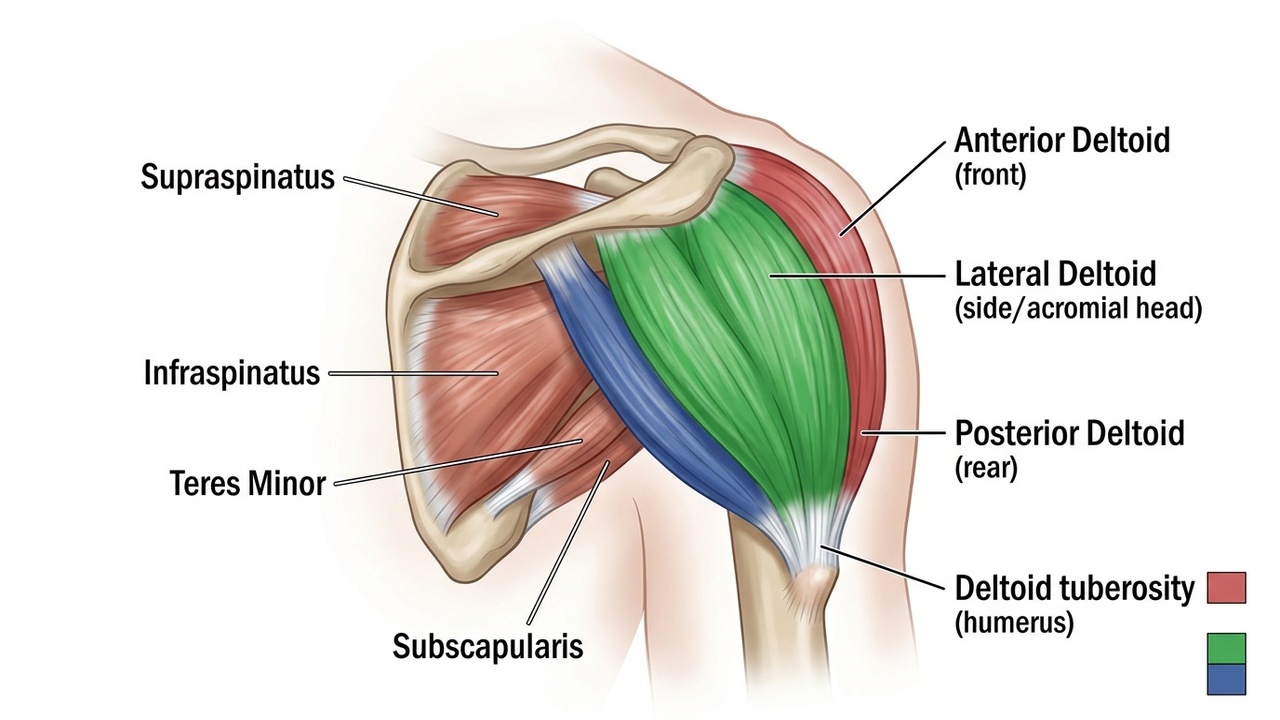
Anterior deltoid (front). The front head flexes the shoulder (raises your arm in front of you) and assists in pressing movements. It is the most commonly overtrained head because it works during every chest press, push-up, and overhead press. Most lifters do not need extra front delt isolation — they need less.
Lateral deltoid (side). The lateral head abducts the shoulder (raises your arm out to the side). This is the head responsible for shoulder width — the "capped" look that creates a V-taper. It receives minimal stimulus from compound pressing and requires dedicated isolation work like lateral raises to grow.
Posterior deltoid (rear). The rear head extends and externally rotates the shoulder. It is the most neglected head in most training programs, which leads to rounded posture and shoulder instability. Training the rear delts is as much about shoulder health as it is about aesthetics.
A complete dumbbell shoulder workout must include exercises for all three heads. The routines in this guide are programmed with this balance in mind. For a broader look at shoulder training that includes barbell and cable work, read our ultimate shoulder workout guide.
10 Best Dumbbell Shoulder Exercises
1. Dumbbell Overhead Press
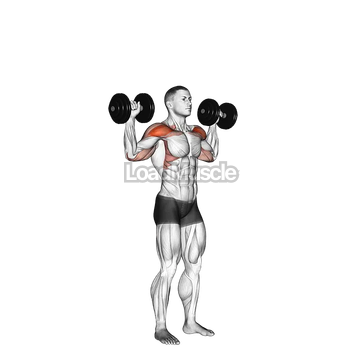
Targets: Anterior deltoid, lateral deltoid, triceps
The overhead press is the foundational shoulder exercise and the best compound movement for building overall shoulder mass. Sit on a bench with back support (or stand for a greater core challenge), hold dumbbells at shoulder height with palms facing forward, and press them straight overhead until your arms are fully extended. Lower under control to the starting position.
Keep your core braced and avoid excessive arching in your lower back. The seated version isolates the shoulders more by removing the lower body from the equation. The standing version builds more total body stability. View the dumbbell overhead press.
Sets/Reps: 4 x 8-10
2. Arnold Press
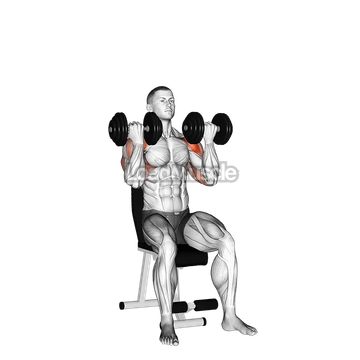
Targets: All three deltoid heads (emphasis on anterior and lateral)
Named after Arnold Schwarzenegger, this press variation adds a rotation component that increases time under tension and recruits the lateral delt more than a standard press. Start with dumbbells at chin height, palms facing you. As you press up, rotate your hands so that your palms face forward at the top. Reverse the rotation on the way down.
The rotation through the movement creates a unique stimulus that a standard press misses — you get front delt activation at the bottom, lateral delt activation through the middle, and pressing power at the top. This makes it one of the most complete single exercises for shoulders. View the Arnold press.
Sets/Reps: 3 x 10-12
3. Lateral Raise
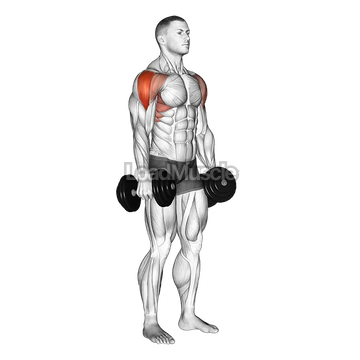
Targets: Lateral deltoid
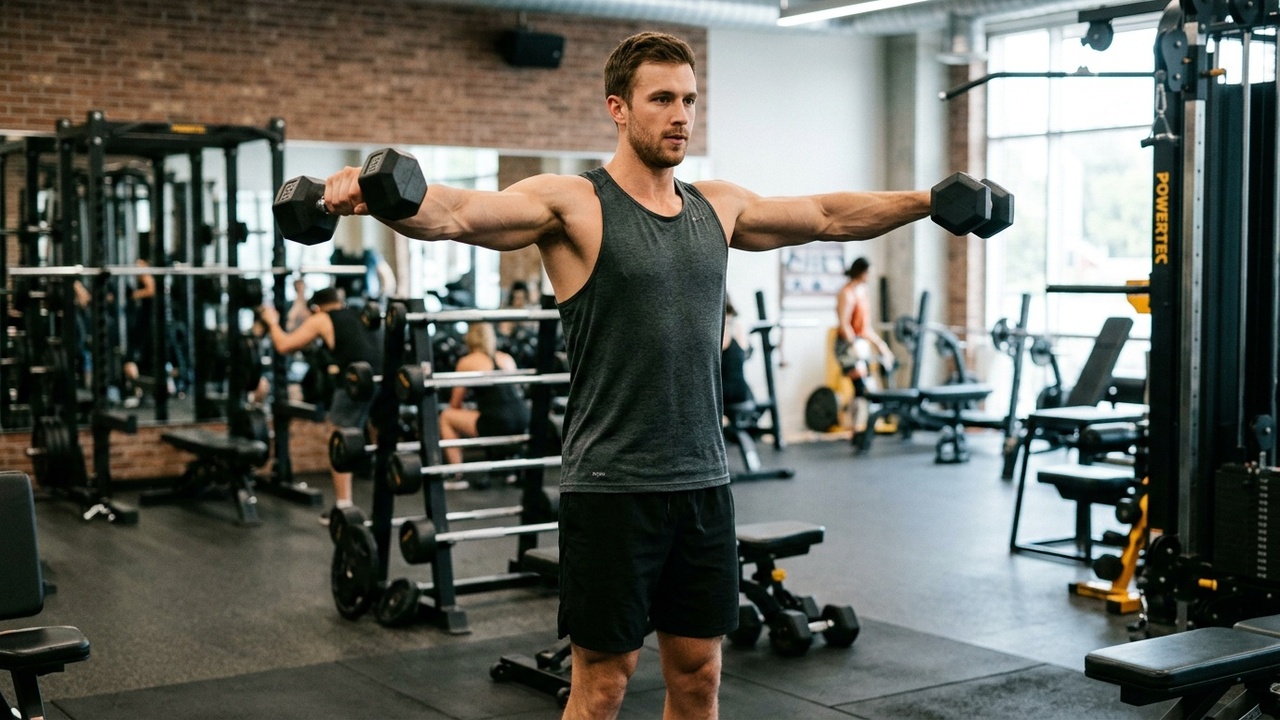
The lateral raise is the single most important exercise for shoulder width. Stand with dumbbells at your sides, palms facing inward. Raise the dumbbells out to the sides until your arms are parallel to the floor, leading with your elbows rather than your hands. Lower slowly and repeat.
The most common mistake is going too heavy, which turns lateral raises into a trap exercise with momentum. Use a weight you can control for 12-15 reps with a slight pause at the top. A slight forward lean (10-15 degrees) keeps tension on the lateral delt and off the traps. View the lateral raise.
Sets/Reps: 3 x 12-15
4. Front Raise
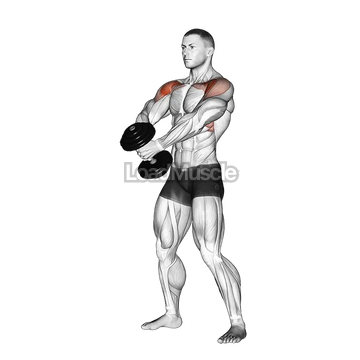
Targets: Anterior deltoid
Stand with dumbbells in front of your thighs, palms facing your body. Raise one or both dumbbells in front of you to shoulder height, keeping your arms straight or with a slight bend at the elbow. Lower under control.
Most lifters get plenty of anterior delt work from pressing movements, so front raises are optional unless your front delts are a weak point. If you include them, place them later in the workout and keep the volume moderate. Alternating arms (one at a time) helps maintain strict form. View the front raise.
Sets/Reps: 3 x 12-15
5. Reverse Fly (Rear Delt)
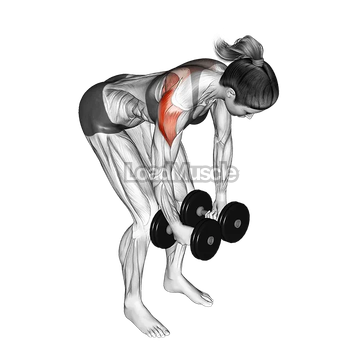
Targets: Posterior deltoid, rhomboids, mid-traps
The reverse fly is the best dumbbell exercise for rear delts. Bend over at the hips until your torso is nearly parallel to the floor (or lie face-down on an incline bench for support). Hold dumbbells below your chest with palms facing each other, then raise them out to the sides by squeezing your shoulder blades together.
Focus on the squeeze at the top rather than the weight. Rear delts respond well to higher reps and controlled tempos. If you struggle with lower back fatigue in the bent-over position, use the incline bench variation instead. View the reverse fly.
Sets/Reps: 3 x 15-20
6. Dumbbell Upright Row
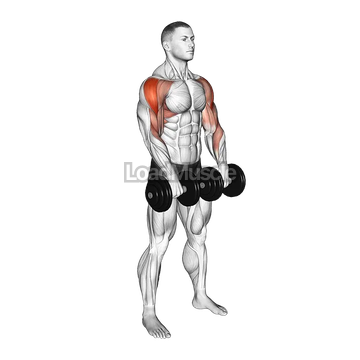
Targets: Lateral deltoid, upper traps
Hold dumbbells in front of your thighs with palms facing your body. Pull the dumbbells straight up along your body until your elbows reach shoulder height, then lower slowly. The dumbbell version is significantly safer than the barbell variation because each arm can find its natural path, reducing the impingement risk that barbell upright rows are notorious for.
Keep the dumbbells close to your body and lead with your elbows. Stop at shoulder height — going higher increases impingement risk without adding meaningful delt activation. If you have a history of shoulder impingement, skip this exercise and add more lateral raise volume instead. View the upright row.
Sets/Reps: 3 x 10-12
7. Lu Raise
Targets: Lateral deltoid, anterior deltoid
The Lu raise (named after Chinese weightlifter Lu Xiaojun) combines a front raise with a lateral raise in one fluid motion. Start with dumbbells at your sides. Raise them in front of you to shoulder height (front raise), then sweep them out to the sides (lateral raise position), and lower them back down to your sides. That is one rep.
This exercise is excellent for building shoulder endurance and creating metabolic stress in the delts. The continuous motion keeps the muscles under tension for longer than either a front raise or lateral raise alone. Use light weight — this movement is deceptively difficult and form breaks down quickly with heavy dumbbells.
Sets/Reps: 3 x 8-10
8. Dumbbell Shrug
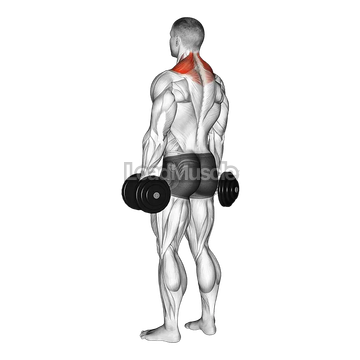
Targets: Upper trapezius
While the traps are technically a back muscle, they sit on top of the shoulders and contribute to the overall appearance of the shoulder girdle. Stand with heavy dumbbells at your sides and shrug your shoulders straight up toward your ears. Hold the top position for 1-2 seconds, then lower slowly.
Do not roll your shoulders forward or backward — shrug straight up and down. The trap fibers run vertically, so vertical movement is what loads them best. Dumbbells are better than barbells for shrugs because they sit at your sides rather than in front of you, which allows a more natural shrug path. For more trap-building exercises, read our best trap exercises guide. View the dumbbell shrug.
Sets/Reps: 3 x 12-15
9. Bus Driver
Targets: Anterior deltoid, lateral deltoid, rotator cuff
Hold a single dumbbell at arm's length in front of you at shoulder height, gripping each end with one hand (as if holding a steering wheel). Rotate the dumbbell clockwise and counterclockwise, like turning a steering wheel — hence the name. Each full rotation (right and left) counts as one rep.
The bus driver is an excellent shoulder finisher and rotator cuff strengthener. The isometric hold at shoulder height burns the deltoids while the rotation challenges the rotator cuff through its full range. Use a light dumbbell (5-10 kg is plenty for most lifters) and focus on controlled rotations.
Sets/Reps: 3 x 10 rotations each direction
10. Prone Incline Y-Raise
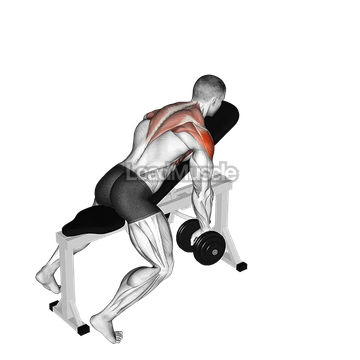
Targets: Lower trapezius, posterior deltoid, rotator cuff
Lie face-down on an incline bench set to 30-45 degrees. Hold light dumbbells with arms hanging straight down, thumbs pointing forward. Raise your arms up and out at a 45-degree angle (forming a Y shape with your body), squeezing your lower traps at the top. Lower slowly and repeat.
This exercise is as much about shoulder health as it is about muscle building. The Y-raise strengthens the lower traps and posterior deltoid, which are the muscles that stabilize the shoulder blade and prevent the rounded-shoulder posture that comes from too much pressing. Include it in every shoulder session for long-term joint health. View the Y-raise.
Sets/Reps: 3 x 12-15
Browse all shoulder exercises with video demonstrations in the exercise library.
Complete Dumbbell Shoulder Workout (Hypertrophy)
This is a full-length shoulder session designed for maximum growth. It takes approximately 45 minutes and covers all three deltoid heads with appropriate volume.
| Exercise | Sets x Reps | Rest |
|---|---|---|
| Dumbbell Overhead Press | 4 x 8-10 | 90 sec |
| Arnold Press | 3 x 10-12 | 90 sec |
| Lateral Raise | 4 x 12-15 | 60 sec |
| Reverse Fly | 3 x 15-20 | 60 sec |
| Dumbbell Upright Row | 3 x 10-12 | 60 sec |
| Prone Incline Y-Raise | 3 x 12-15 | 60 sec |
| Dumbbell Shrug | 3 x 12-15 | 60 sec |
Total: 23 sets. Volume is distributed as follows: 7 sets for anterior delt (presses), 7 sets for lateral delt (lateral raise + upright row), 6 sets for posterior delt (reverse fly + Y-raise), and 3 sets for upper traps.
Progression: When you can complete all prescribed reps across all sets with good form, increase the weight by 1-2 kg (2-5 lbs) the following session. For lateral raises and rear delt work, increase by the smallest increment available — these are small muscles that do not need big jumps.
Quick Dumbbell Shoulder Workout (20 Minutes)
When time is limited, this workout hits all three deltoid heads in just four exercises. It uses supersets to keep rest times short and density high.
| Exercise | Sets x Reps | Rest |
|---|---|---|
| Dumbbell Overhead Press | 3 x 10-12 | 90 sec |
| Lateral Raise + Reverse Fly (superset) | 3 x 12-15 each | 60 sec |
| Lu Raise | 2 x 8-10 | 60 sec |
Total: 11 sets in approximately 20 minutes. The overhead press covers anterior delts and overall mass. The lateral raise + reverse fly superset hits side and rear delts back-to-back. The Lu raise finishes with a metabolic burn across the entire shoulder.
How to superset: Perform a set of lateral raises, then immediately perform a set of reverse flies without rest. Rest 60 seconds after the reverse fly, then repeat. This cuts total workout time nearly in half while maintaining effective volume.
Generate a personalized shoulder workout tailored to your experience level and equipment with the free workout planner. Download Load Muscle to track your shoulder workouts and access 4,000+ exercises with video demonstrations.
How to Avoid Shoulder Injuries
The shoulder joint sacrifices stability for mobility, which makes it prone to injury if you train recklessly. These guidelines will keep your shoulders healthy for years of heavy training.
Warm up before pressing. Never jump straight into heavy overhead presses. Start with 2-3 minutes of band pull-aparts, arm circles, and external rotations. Then perform 2-3 warm-up sets of your first pressing exercise with progressively heavier weights before your working sets. Cold shoulders and heavy loads are a recipe for impingement and rotator cuff strain.
Balance your pressing and pulling. For every set of overhead pressing you do, match it with a set of rear delt or upper back work. Most shoulder injuries stem from anterior dominance — the front of the shoulder becomes much stronger than the back, pulling the joint forward and compressing the rotator cuff space. Reverse flies and Y-raises are not glamorous, but they are the best insurance policy for your shoulders.
Control the eccentric. Dropping the dumbbells quickly during lateral raises or letting them fall during presses puts sudden stress on the joint. Lower the weight for at least 2 seconds on every rep. The controlled eccentric also produces more muscle growth, so this is a win-win.
Avoid pain, not discomfort. Muscle burn during a set is normal. Sharp, stabbing, or pinching pain in the shoulder joint is not. If an exercise causes joint pain, stop immediately and substitute a different movement that works the same muscle without pain. There is always an alternative.
Do not neglect external rotation. The rotator cuff muscles (supraspinatus, infraspinatus, teres minor, subscapularis) stabilize the shoulder joint during every pressing and raising movement. Weak rotator cuffs cannot keep the humeral head centered in the socket under load, which leads to impingement. Include external rotation work in your warm-up or at the end of your session.
Programming Shoulders into Your Split
How you program shoulder training depends on your training split. Here are the most common approaches:
Push/Pull/Legs. Shoulders are trained on push day alongside chest and triceps. The overhead press is your primary shoulder movement, followed by 2-3 isolation exercises (lateral raise, reverse fly). This is the most popular split for intermediate lifters and works well because chest pressing pre-fatigues the anterior delt, allowing you to focus isolation work on the lateral and posterior heads. Explore workout routines for complete push/pull/legs templates.
Upper/Lower. Shoulders are trained on upper body days. Include one pressing movement and one lateral raise variation on each upper day. With two upper days per week, you get excellent shoulder frequency without a dedicated shoulder day.
Bro Split (dedicated shoulder day). A full shoulder day allows for higher volume and more exercise variety. This is where the complete hypertrophy workout in this guide fits perfectly. One dedicated shoulder day per week is sufficient if you are also doing chest pressing on another day (which provides indirect anterior delt work). For a deeper look at bro splits, read our bro split guide.
Frequency recommendation. Train shoulders 2 times per week for optimal growth. This can mean two direct shoulder sessions, or one direct session plus indirect work from chest pressing. Most lifters need 12-20 total sets per week for shoulders across all three heads.
Volume distribution. Because the anterior head gets so much indirect work from chest pressing, most of your direct shoulder volume should target the lateral and posterior heads. A typical weekly breakdown might be: 4-6 direct sets for anterior delt (overhead pressing), 8-10 sets for lateral delt (raises and upright rows), and 6-8 sets for posterior delt (reverse flies and face pulls).
FAQ
How many times a week should I train shoulders with dumbbells?
Train shoulders directly 2 times per week for best results, with at least 48 hours between sessions. This could be two dedicated shoulder workouts or shoulder exercises added to upper body or push days. Remember that your anterior delts also work during every chest press, so factor in that indirect volume when planning total weekly sets.
Can I build big shoulders with only dumbbells?
Yes. Dumbbells provide everything you need to develop all three deltoid heads fully. The overhead press builds mass, lateral raises build width, and reverse flies build the rear delts. Many lifters with impressive shoulder development train exclusively with dumbbells. The key factors are progressive overload, sufficient weekly volume (12-20 sets), and hitting all three heads consistently.
What weight should I use for dumbbell lateral raises?
Lighter than you think. Most lifters use far too much weight on lateral raises, which shifts the work to the traps and momentum. Start with a weight you can control for 15 clean reps with a 1-second pause at the top. For most people, this is 5-8 kg (10-17 lbs). If you have to swing the weight or shrug your traps to lift it, go lighter. The lateral delt is a small muscle — it does not need heavy weight to grow.
Should I do seated or standing dumbbell shoulder press?
Both are effective, but they have different advantages. The seated press with back support isolates the shoulders more and allows you to use slightly heavier weight because your core is not a limiting factor. The standing press engages more core and stabilizer muscles, making it a better total-body exercise. If your primary goal is shoulder hypertrophy, go seated. If you want functional strength and core engagement, go standing.
How do I fix uneven shoulders?
Start every shoulder exercise with your weaker side and match that number of reps on your stronger side — never do more reps on the strong side. Use dumbbells instead of barbells for all pressing to prevent the dominant shoulder from compensating. Include unilateral exercises like single-arm lateral raises and single-arm overhead press. Most imbalances correct within 6-8 weeks of consistent unilateral training. If the imbalance is severe or accompanied by pain, consult a physiotherapist before training through it.