You do not need a squat rack or leg press to build strong, muscular legs. A pair of dumbbells gives you everything you need for a complete dumbbell leg workout that hits your quads, hamstrings, glutes, and calves — whether you train at home or in a commercial gym.
Dumbbells let you load single-leg movements that build balance and fix imbalances, hit deep ranges of motion that machines cannot replicate, and progress at your own pace without waiting for equipment. This guide covers the 10 best dumbbell leg exercises with coaching cues, three complete leg day routines for every experience level, and programming advice so you can build a lower body you are proud of.
TL;DR
- Dumbbells are ideal for leg training because they allow deep ranges of motion, unilateral work, and versatile loading positions.
- Best dumbbell leg exercises: Goblet squat, Romanian deadlift, Bulgarian split squat, walking lunge, step-up, sumo squat, stiff-leg deadlift, calf raise, hip thrust, curtsy lunge.
- Three complete workouts included: Beginner (20 min), Intermediate (35 min), Advanced (45 min).
- Train legs 2x per week, progressively adding weight or reps each session.
- Build your own leg program with the free workout planner.
Why Use Dumbbells for Leg Training?
Most people associate leg day with barbells, but dumbbells offer several distinct advantages for lower body work:
Greater range of motion. Holding dumbbells at your sides or in a goblet position does not restrict your torso angle the way a barbell across your back does. You can squat deeper, lunge lower, and hinge further — and that extra range translates to more muscle activation and growth.
Unilateral training made easy. Single-leg exercises like Bulgarian split squats and step-ups are simpler to load with dumbbells than with a barbell. Training one leg at a time exposes and corrects strength imbalances between your left and right sides.
Lower spinal compression. A heavy back squat loads your spine vertically. Dumbbells distribute the weight through your hands and arms, reducing axial loading on the spine. This is valuable if you have a history of lower back discomfort.
Minimal equipment needed. A pair of adjustable dumbbells is enough for a full leg workout at home. Add a bench or sturdy chair and you unlock even more exercises. No squat rack, no leg press, no problem.
If you enjoy dumbbell training, check out our dumbbell-only workout for a complete full-body approach, or see our full body dumbbell workout for a structured multi-day program.
Muscles Targeted in a Dumbbell Leg Workout
A well-designed dumbbell leg workout hits four major muscle groups:
Quadriceps. The four muscles on the front of your thigh responsible for knee extension. Squats, lunges, and step-ups target the quads heavily. Strong quads improve your ability to walk, run, climb stairs, and generate force.
Hamstrings. The three muscles on the back of your thigh that flex the knee and extend the hip. Romanian deadlifts and stiff-leg deadlifts are the primary dumbbell hamstring exercises. For a deeper dive, read our best hamstring exercises guide.
Glutes. The gluteus maximus is the largest muscle in the body and the primary hip extensor. Hip thrusts, deep squats, and lunges all target the glutes. Strong glutes improve posture, athletic performance, and lower back health. Our ultimate glute builder guide covers glute training in detail.
Calves. The gastrocnemius and soleus muscles on the back of your lower leg. Dumbbell calf raises are the simplest and most effective way to train calves at home. Check our best calf exercises guide for more calf training options.
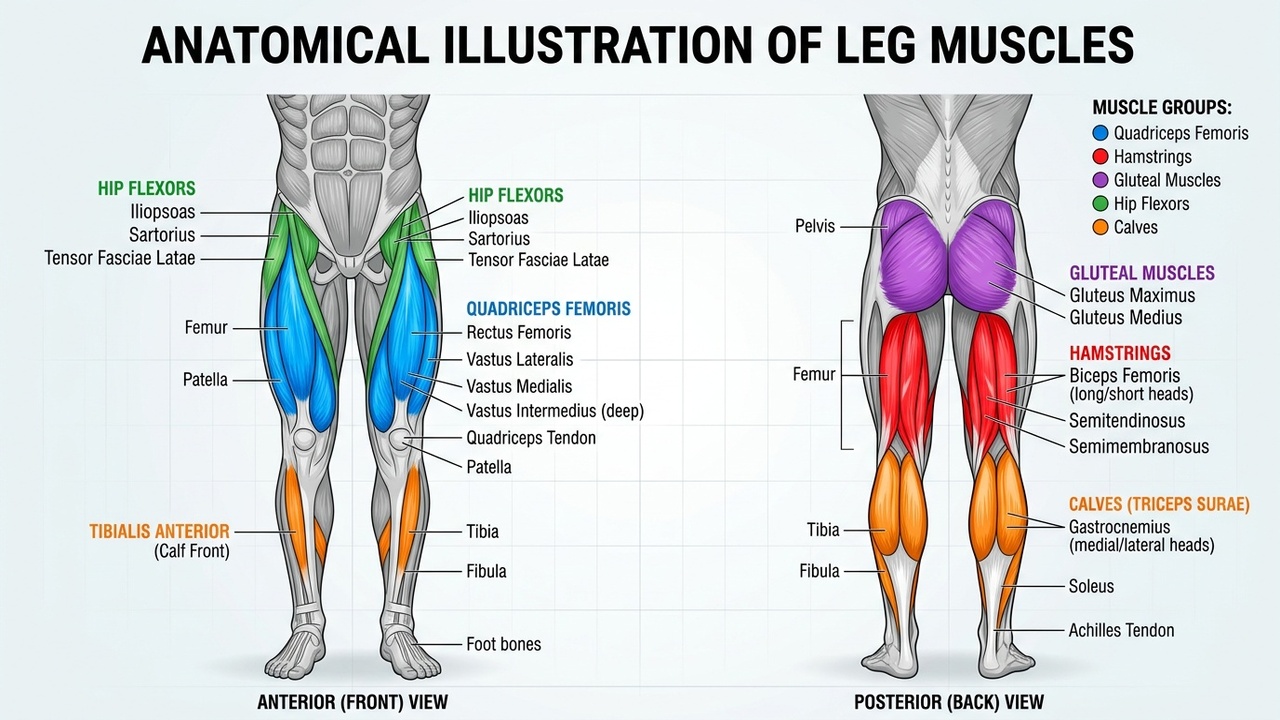
For the complete list of leg exercises beyond dumbbells, see our guide on the 12 best leg exercises for strength and hypertrophy.
10 Best Dumbbell Leg Exercises
1. Dumbbell Goblet Squat
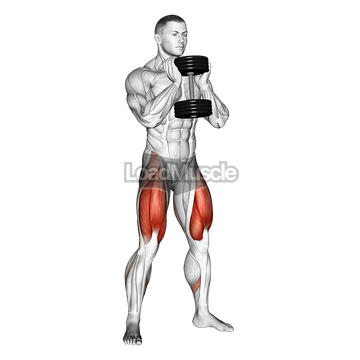
Hold a single dumbbell vertically at chest height, cupping the top end with both hands. Stand with feet slightly wider than shoulder-width, toes turned out 15-30 degrees. Push your hips back and squat down between your knees, keeping your chest tall and elbows inside your thighs. Drive through your heels to stand. View the goblet squat.
Why it works: The front-loaded position acts as a counterbalance that lets you sit deeper into the squat with an upright torso. This is the best squat variation for beginners and an excellent quad and glute builder for all levels.
Sets/Reps: 3 x 10-12
2. Dumbbell Romanian Deadlift
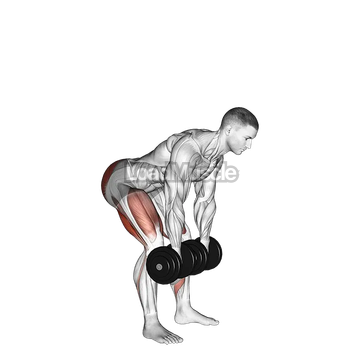
Stand with dumbbells in front of your thighs, palms facing your body. With a slight bend in your knees, hinge at the hips and push your glutes backward. Lower the dumbbells along your shins until you feel a strong stretch in your hamstrings, then drive your hips forward to stand tall. Keep your back flat throughout. View the Romanian deadlift.
Why it works: The RDL is the single best dumbbell exercise for your hamstrings. It loads the hamstrings in their lengthened position, which research shows is highly effective for hypertrophy. It also strengthens the glutes and lower back.
Sets/Reps: 3 x 10-12
3. Dumbbell Bulgarian Split Squat
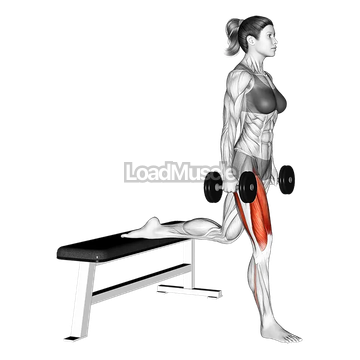
Stand about two feet in front of a bench. Place the top of your rear foot on the bench behind you. Hold a dumbbell in each hand at your sides. Lower your body by bending your front knee until your rear knee nearly touches the ground. Drive through your front foot to stand. View the Bulgarian split squat.
Why it works: This is arguably the most effective single-leg exercise. It builds quad and glute strength, improves balance, and exposes left-right imbalances. The elevated rear foot increases the range of motion compared to a standard lunge.
Sets/Reps: 3 x 8-10 each leg
4. Dumbbell Walking Lunge
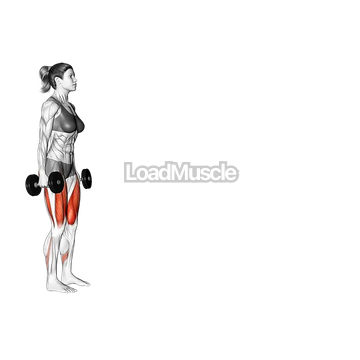
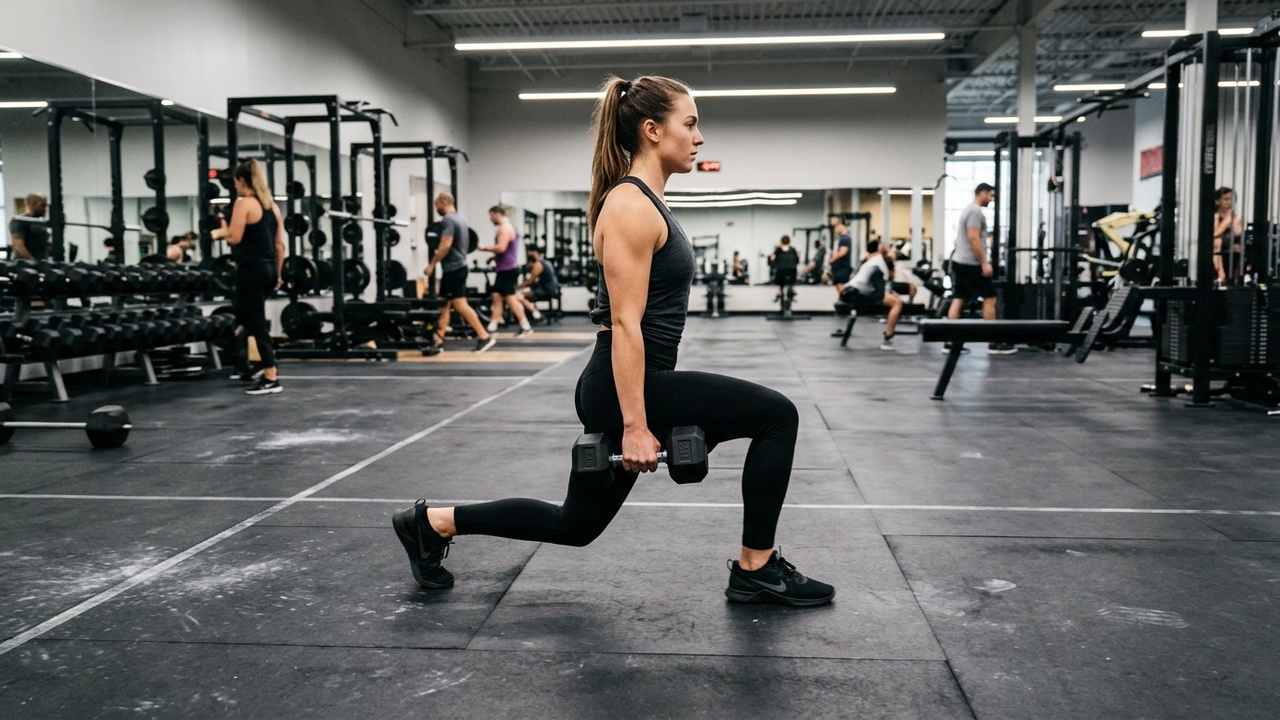
Hold a dumbbell in each hand at your sides. Step forward with one leg and lower your body until both knees are bent at approximately 90 degrees. Push off your front foot and step through with the opposite leg into the next lunge. Continue walking forward, alternating legs with each step. View the walking lunge.
Why it works: Walking lunges combine strength and coordination in a dynamic movement. They train the quads, glutes, and hamstrings while challenging your balance and core stability. The continuous walking pattern also provides a cardiovascular stimulus.
Sets/Reps: 3 x 12 steps each leg
5. Dumbbell Step-Up
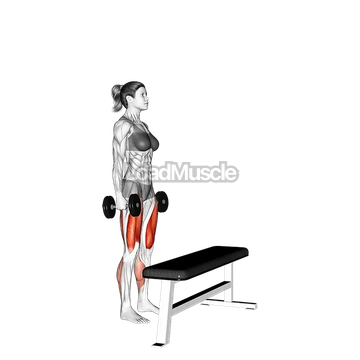
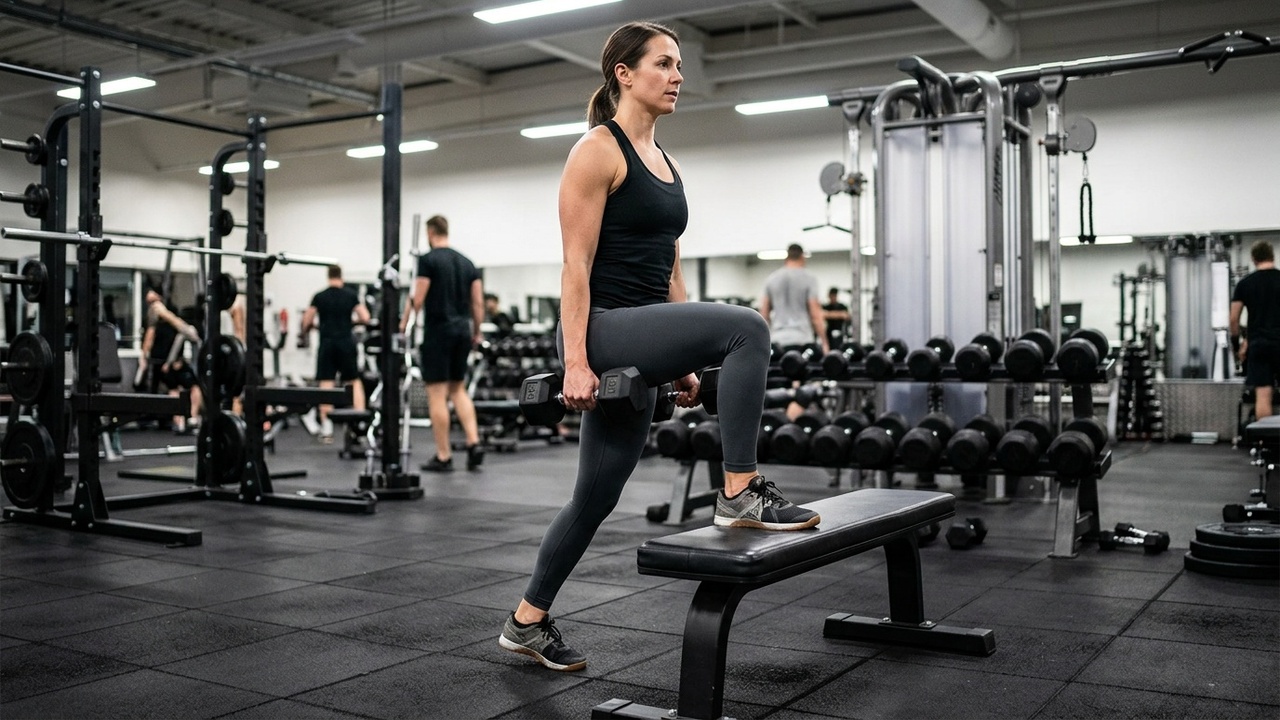
Stand facing a sturdy bench or box at knee height. Hold dumbbells at your sides. Place one foot firmly on the bench. Drive through that foot to step up, fully extending your hip and knee at the top. Lower yourself back down under control. Complete all reps on one side before switching. View the step-up.
Why it works: Step-ups isolate one leg at a time and closely mimic real-world movements like climbing stairs. The higher the bench, the more glute and hamstring activation you get. A lower bench emphasizes the quads.
Sets/Reps: 3 x 10-12 each leg
6. Dumbbell Sumo Squat
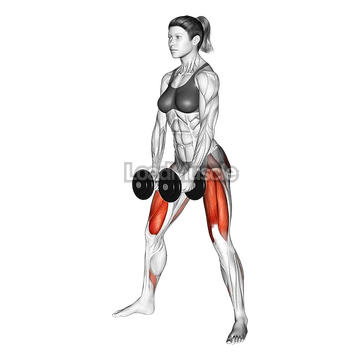
Stand with a wide stance — feet well outside shoulder width — and toes pointed out at about 45 degrees. Hold a single dumbbell with both hands between your legs, arms straight. Squat down until your thighs are parallel to the floor or deeper, then drive back up. View the sumo squat.
Why it works: The wide stance shifts emphasis to the inner thighs (adductors) and glutes while still hitting the quads. It is a great complement to standard squats and an excellent exercise for hip mobility.
Sets/Reps: 3 x 10-12
7. Dumbbell Stiff-Leg Deadlift
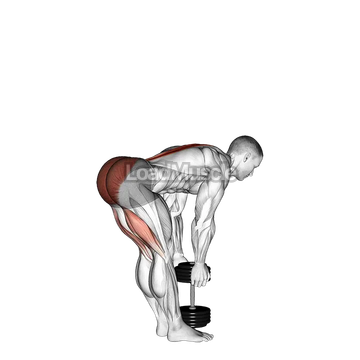
Hold dumbbells in front of your thighs. Keep your legs nearly straight — just a micro-bend in the knees — and hinge at the hips to lower the dumbbells toward the floor. You should feel an intense stretch in your hamstrings. Reverse the movement by driving your hips forward. View the stiff-leg deadlift.
Why it works: The stiff-leg variation targets the hamstrings even more than the Romanian deadlift because the straighter knee position increases hamstring stretch. It also hits the glutes and lower back. Use lighter weight than your RDL and focus on the stretch.
Sets/Reps: 3 x 10-12
8. Dumbbell Calf Raise
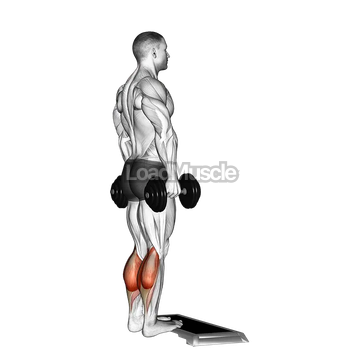
Stand on the edge of a step or weight plate with the balls of your feet on the surface and heels hanging off. Hold a dumbbell in one hand (use the other for balance) or hold dumbbells in both hands. Rise up onto your toes as high as possible, pause and squeeze at the top, then lower your heels below the step for a full stretch. View the calf raise.
Why it works: Full range of motion — from deep stretch at the bottom to peak contraction at the top — is the key to calf growth. Dumbbells make it easy to add progressive overload to this often-neglected muscle group.
Sets/Reps: 3 x 15-20
9. Dumbbell Hip Thrust
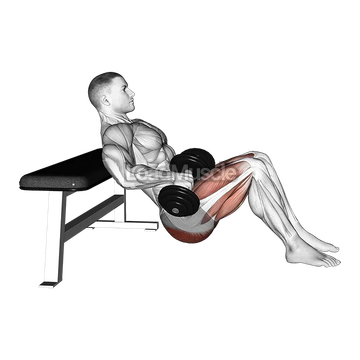
Sit on the floor with your upper back against a bench. Place a dumbbell on your hips and hold it in place with both hands. Plant your feet flat on the floor, hip-width apart. Drive through your heels to thrust your hips upward until your torso is parallel to the floor. Squeeze your glutes hard at the top, then lower under control. View the hip thrust.
Why it works: The hip thrust is the gold standard for glute isolation. Research consistently shows it produces higher glute activation than squats or deadlifts. The dumbbell version is easier to set up than the barbell version, making it ideal for home workouts.
Sets/Reps: 3 x 12-15
10. Dumbbell Curtsy Lunge
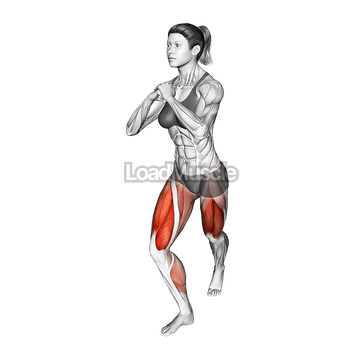
Hold dumbbells at your sides. Step one foot diagonally behind and across your body, as if performing a curtsy. Lower your back knee toward the ground while keeping your front knee tracking over your front toes. Push through your front foot to return to standing. View the curtsy lunge.
Why it works: The crossover step pattern targets the gluteus medius (outer glute) and adductors in a way that standard lunges do not. It improves lateral hip stability and builds the outer glute shelf that creates a rounded appearance.
Sets/Reps: 3 x 10-12 each leg
Browse all lower body exercises with video demonstrations in the exercise library.
Complete Dumbbell Leg Workouts
Below are three ready-to-use routines. Pick the one that matches your experience level, or start with the beginner workout and progress to the intermediate and advanced versions over time. You can also generate a personalized leg workout using the free workout planner.
Beginner Dumbbell Leg Workout (20 min)
This workout uses five exercises with moderate volume. Focus on learning proper movement patterns and controlling each rep. Use a weight that leaves 2-3 reps in reserve on each set.
| Exercise | Sets x Reps | Rest |
|---|---|---|
| Dumbbell Goblet Squat | 3 x 10-12 | 60 sec |
| Dumbbell Romanian Deadlift | 3 x 10-12 | 60 sec |
| Dumbbell Walking Lunge | 2 x 10 each leg | 60 sec |
| Dumbbell Hip Thrust | 2 x 12-15 | 60 sec |
| Dumbbell Standing Calf Raise | 2 x 15-20 | 45 sec |
Total: 12 sets. This covers quads (goblet squat, walking lunge), hamstrings (RDL), glutes (hip thrust, goblet squat), and calves. Prioritize form over weight.
Intermediate Dumbbell Leg Day (35 min)
This workout adds single-leg work and higher volume. You should be comfortable with all movement patterns before attempting this routine.
| Exercise | Sets x Reps | Rest |
|---|---|---|
| Dumbbell Bulgarian Split Squat | 3 x 8-10 each leg | 90 sec |
| Dumbbell Romanian Deadlift | 3 x 10-12 | 90 sec |
| Dumbbell Sumo Squat | 3 x 10-12 | 60 sec |
| Dumbbell Step-Up | 3 x 10 each leg | 60 sec |
| Dumbbell Hip Thrust | 3 x 12-15 | 60 sec |
| Dumbbell Standing Calf Raise | 3 x 15-20 | 45 sec |
Total: 18 sets. The Bulgarian split squat opens the workout when you have the most energy. This routine hits every lower body muscle from multiple angles.
Advanced Dumbbell Leg Blast (45 min)
High volume and intensity. This workout is for experienced lifters who can maintain good form under fatigue. Take each working set within 1-2 reps of failure.
| Exercise | Sets x Reps | Rest |
|---|---|---|
| Dumbbell Bulgarian Split Squat | 4 x 8-10 each leg | 90 sec |
| Dumbbell Stiff-Leg Deadlift | 3 x 10-12 | 90 sec |
| Dumbbell Goblet Squat | 3 x 12-15 | 60 sec |
| Dumbbell Walking Lunge | 3 x 12 each leg | 60 sec |
| Dumbbell Curtsy Lunge | 3 x 10 each leg | 60 sec |
| Dumbbell Hip Thrust | 3 x 12-15 | 60 sec |
| Dumbbell Sumo Squat | 3 x 12-15 | 60 sec |
| Dumbbell Standing Calf Raise | 4 x 15-20 | 45 sec |
Total: 26 sets. This is a demanding session — quad-dominant exercises (split squat, goblet squat, walking lunge), hip-dominant exercises (stiff-leg deadlift, hip thrust), inner thighs (sumo squat), outer glutes (curtsy lunge), and calves.
How Heavy Should Your Dumbbells Be?
The right weight depends on the exercise and your training experience. Here are practical guidelines:
Beginners (0-6 months of training):
- Squats and lunges: 5-10 kg (10-20 lbs) per hand
- Romanian deadlifts: 8-12 kg (15-25 lbs) per hand
- Calf raises: 5-10 kg (10-20 lbs) per hand
- Hip thrusts: 10-15 kg (20-30 lbs) single dumbbell
Intermediate (6-18 months):
- Squats and lunges: 10-17.5 kg (20-40 lbs) per hand
- Romanian deadlifts: 15-22.5 kg (30-50 lbs) per hand
- Calf raises: 10-17.5 kg (20-40 lbs) per hand
- Hip thrusts: 17.5-25 kg (40-55 lbs) single dumbbell
Advanced (18+ months):
- Squats and lunges: 17.5-30 kg (40-65 lbs) per hand
- Romanian deadlifts: 22.5-35 kg (50-75 lbs) per hand
- Calf raises: 17.5-25 kg (40-55 lbs) per hand
- Hip thrusts: 25-40 kg (55-90 lbs) single dumbbell
The most important rule: choose a weight where the last 2-3 reps of each set are genuinely challenging but your form stays solid. If you can easily complete all prescribed reps, increase the weight. If your form breaks down before the target reps, reduce the weight.
Programming Tips
Train legs twice per week. Research consistently shows that hitting a muscle group twice per week produces more growth than once per week at the same total volume. You can use the same workout both days, or split it so one day is quad-focused and the other is hamstring- and glute-focused.
Start with compound movements. Always put your most demanding exercises first — Bulgarian split squats, goblet squats, or Romanian deadlifts. These movements require the most energy and coordination. Save isolation work like calf raises and hip thrusts for the end of the workout.
Progress every session. Add reps first, then weight. If the program calls for 3 x 10 and you can complete 3 x 12 with good form, increase the dumbbell weight at your next session and drop back to 10 reps. This simple progression model works for months.
Control the eccentric. Lower the weight for 2-3 seconds on every rep. The lowering phase is where a significant portion of the muscle damage and growth stimulus occurs. Dropping quickly through the eccentric is leaving gains on the table.
Do not skip single-leg work. Bilateral exercises like goblet squats build overall strength, but single-leg exercises like Bulgarian split squats and step-ups build the stability and balance that protect your knees and ankles. Include at least one single-leg movement in every leg workout.
Use full range of motion. Squat as deep as your mobility allows. Lunge until your rear knee nearly touches the ground. Lower your heels past the step on calf raises. Greater range of motion means more muscle activation at both the stretched and shortened positions.
Download Load Muscle to track your dumbbell leg workouts, log sets and reps, and follow your progression over time with 4,000+ exercises and video demonstrations.
FAQ
Can I build big legs with just dumbbells?
Yes. Dumbbells provide sufficient resistance for significant leg growth, especially with exercises like Bulgarian split squats and Romanian deadlifts that load one leg at a time. Single-leg work means a 20 kg dumbbell in each hand creates a similar challenge to a much heavier barbell. Progressive overload and training close to failure matter more than the specific equipment you use.
How many times per week should I do a dumbbell leg workout?
Two times per week is optimal for most people. This allows enough training volume for growth while giving your muscles at least 48 hours to recover between sessions. If you are a beginner, start with once per week and progress to twice per week after the first month.
What is the best dumbbell exercise for glutes?
The dumbbell hip thrust produces the highest glute activation according to EMG research. For a complete glute workout, combine hip thrusts with deep goblet squats, Bulgarian split squats, and curtsy lunges. Each exercise targets the glutes from a different angle — hip thrusts for peak contraction, squats for stretch under load, and curtsy lunges for the gluteus medius.
Can I do a dumbbell leg workout at home?
Absolutely. A pair of adjustable dumbbells and a sturdy chair or bench are all you need. The goblet squat, Romanian deadlift, walking lunge, calf raise, and hip thrust require no additional equipment beyond dumbbells. Use a chair seat for Bulgarian split squats and step-ups, and a step or thick book for calf raises.
How do I progress when my dumbbells are not heavy enough?
When you max out your dumbbell weight, use intensity techniques to keep progressing. Slow down the eccentric (4-5 seconds per rep), add pauses at the bottom of each rep (2-3 seconds), increase rep ranges, or add extra sets. You can also try 1.5 reps — lower all the way down, come halfway up, go back down, then stand up fully. That counts as one rep and dramatically increases time under tension.
Want the full lower-body picture? Browse our glutes and legs workout routines for complete programs that pair with this workout.