Dumbbells are the most versatile tool for building bigger arms. You do not need cables, machines, or a full gym — a pair of dumbbells and a bench give you everything you need for a complete dumbbell arm workout that targets every head of the biceps and triceps.
This guide covers 12 of the best dumbbell exercises for arms, organized by muscle group, plus three complete workout routines for beginner, intermediate, and advanced lifters. Whether you train at home or at the gym, these workouts build the size and definition that makes arms fill out your sleeves.
TL;DR
- Dumbbells are ideal for arm training because they allow full range of motion, unilateral work, and train from multiple angles.
- Best dumbbell bicep exercises: Dumbbell curl, hammer curl, incline curl, concentration curl, Zottman curl.
- Best dumbbell tricep exercises: Overhead extension, skull crusher, kickback, close-grip press, Tate press.
- Three complete workouts included: Beginner (20 min), Intermediate (30 min), Advanced (45 min).
- Program 6-12 direct arm sets per session, 2x/week for optimal growth.
- Build a complete arm program with the free workout planner.
Why Dumbbells Are Perfect for Arm Training
Dumbbells have three advantages over barbells and cables for arm work:
Full range of motion. Dumbbells do not restrict your wrist rotation or elbow path. This means you can supinate (rotate your wrist) during curls for peak bicep contraction, and you can find the exact pressing angle that feels best for your triceps.
Unilateral training. Each arm works independently. This prevents your stronger arm from compensating for your weaker arm, which is a common problem with barbell curls. Over time, dumbbell training naturally corrects left-right imbalances.
Angle variety. With a single pair of dumbbells and an adjustable bench, you can hit your biceps and triceps from every angle — incline, decline, seated, standing, and prone. Each angle changes the resistance curve and stimulates the muscles differently.
A dumbbell-only workout can build impressive arms without any other equipment. For a complete dumbbell training approach, check out our full body dumbbell workout.
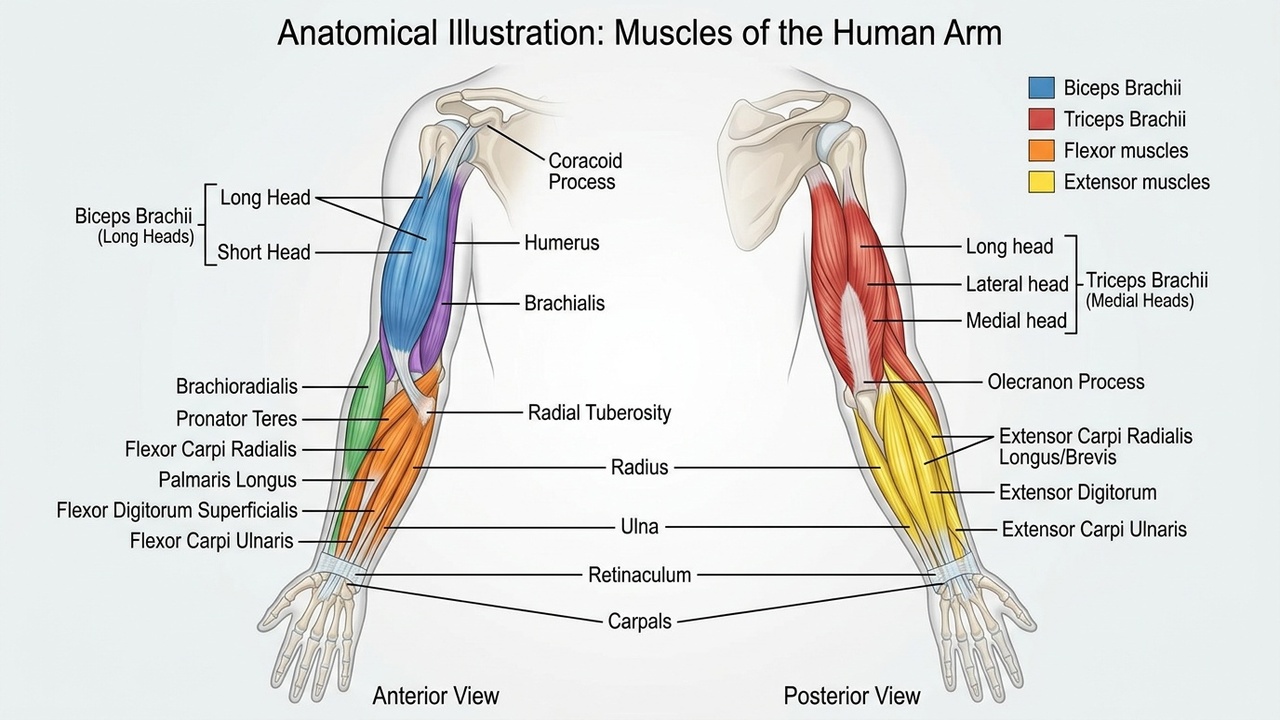
Anatomy of the Arms
Understanding arm anatomy helps you select exercises that target each muscle head effectively.
Biceps Brachii
The biceps has two heads:
- Long head (outer bicep): Creates the peak when flexed. Best targeted with exercises where the arm is behind the body (incline curls) or with a neutral/hammer grip.
- Short head (inner bicep): Creates width when viewed from the front. Best targeted with exercises where the arm is in front of the body (preacher curls) or with a wide grip.
Both heads flex the elbow (curl motion) and supinate the forearm (rotate palm up).
Triceps Brachii
The triceps has three heads:
- Long head: The largest head, runs along the back of the arm and crosses the shoulder joint. Best targeted with overhead exercises (overhead extensions) that stretch it at the shoulder.
- Lateral head: The outer head, visible from the side. Best targeted with pressing and pushdown movements.
- Medial head: The deep head, underneath the other two. Active in all tricep exercises, especially at full extension.
Brachialis and Forearms
The brachialis sits underneath the bicep and contributes to arm thickness when viewed from the side. It is best targeted with neutral-grip (hammer) and reverse-grip exercises. The forearm muscles (wrist flexors and extensors) contribute to grip strength and forearm size.
Best Dumbbell Bicep Exercises
Dumbbell Curl
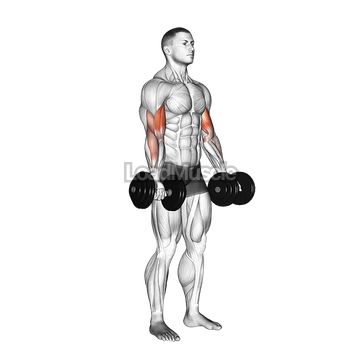
The standard bicep curl is the foundation of arm training. Stand with dumbbells at your sides, palms forward, and curl the weight up by bending your elbows. Keep your upper arms stationary — the only joint moving should be your elbows. Squeeze at the top and lower under control. View the dumbbell curl.
Why it works: Full bicep activation with supinated grip. The standing position allows for heavier loads than most other curl variations.
Sets/Reps: 3 x 10-12
Hammer Curl
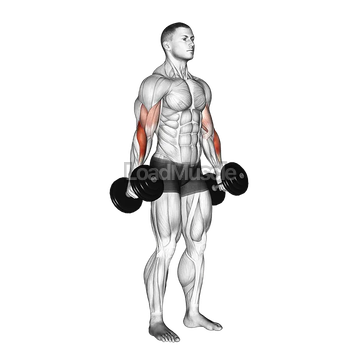
Same as the dumbbell curl but with a neutral grip (palms facing each other throughout). The neutral grip shifts emphasis to the brachialis and brachioradialis, building arm thickness that standard curls miss. View the hammer curl.
Why it works: Targets brachialis for arm width. Generally allows heavier weight than standard curls. Easier on the wrists.
Sets/Reps: 3 x 10-12
Incline Dumbbell Curl
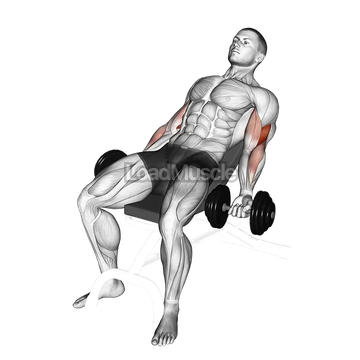
Lie back on an incline bench (30-45 degrees) and curl dumbbells from a fully stretched position. The incline puts your arms behind your body, stretching the long head of the bicep. This stretch at the bottom creates a unique growth stimulus unavailable in standing curls. View the incline curl.
Why it works: Loads the bicep in its lengthened position. Research shows stretch-mediated hypertrophy may be particularly effective for muscle growth.
Sets/Reps: 3 x 10-12
Concentration Curl
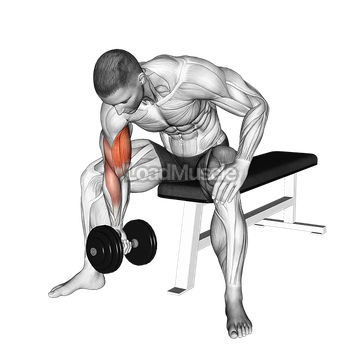
Sit on a bench, lean forward, and brace your upper arm against your inner thigh. Curl one dumbbell at a time with strict form. The bracing eliminates all momentum, forcing pure bicep isolation. View the concentration curl.
Why it works: EMG research shows the concentration curl produces the highest bicep activation of any curl variation. Zero momentum means maximum muscle tension.
Sets/Reps: 3 x 10-12 each arm
Zottman Curl
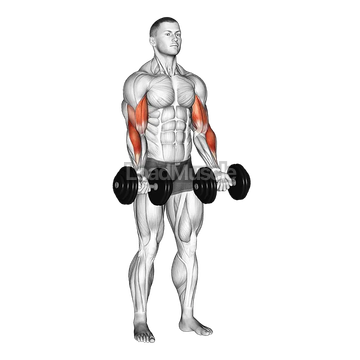
Curl the dumbbells up with a supinated grip (palms up), then rotate to a pronated grip (palms down) at the top and lower slowly. The supinated curl trains biceps concentrically; the pronated lower trains brachialis and forearms eccentrically. You get two exercises in one movement. View the Zottman curl.
Why it works: Trains biceps, brachialis, and forearms simultaneously. The eccentric pronated portion is the key — it overloads the brachialis during the strongest phase of the movement.
Sets/Reps: 3 x 8-10
Best Dumbbell Tricep Exercises
Overhead Tricep Extension
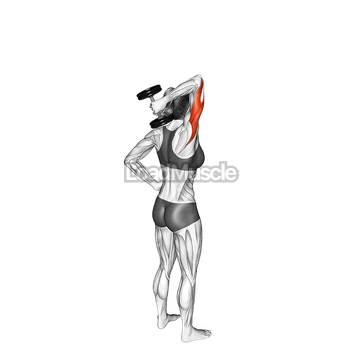
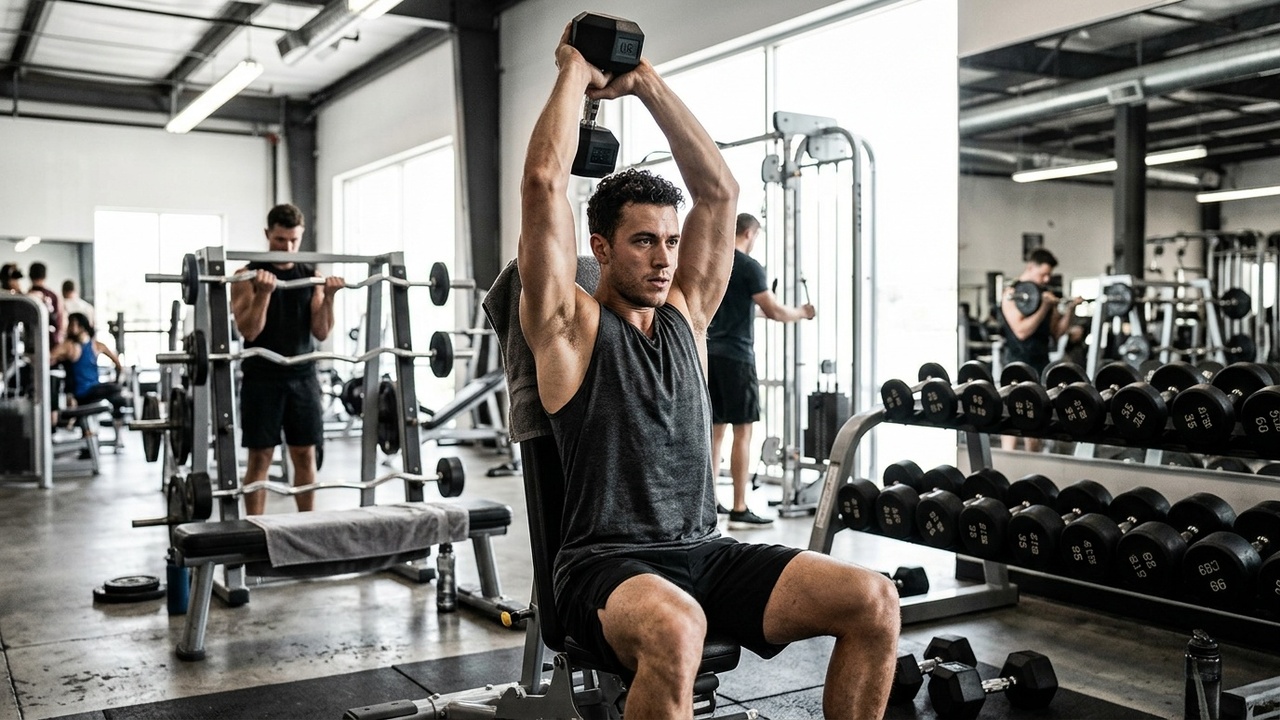
Hold one dumbbell with both hands (or one in each hand) behind your head. Extend your arms straight up by pressing the dumbbell overhead. The overhead position stretches the long head of the tricep, which is the largest of the three heads and the one most responsible for arm size. View the overhead tricep extension.
Why it works: The long head crosses the shoulder joint and is only fully stretched when the arm is overhead. This stretch under load makes overhead extensions the best long head builder available.
Sets/Reps: 3 x 10-12
Dumbbell Skull Crusher
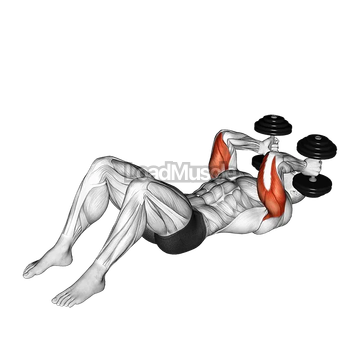
Lie on a bench with dumbbells extended above your chest. Lower the dumbbells toward your temples by bending your elbows, keeping your upper arms vertical. Press back up to extension. The dumbbell version allows natural wrist rotation, which is easier on the elbows than barbell skull crushers. View the dumbbell skull crusher.
Why it works: Heavy tricep loading in the stretched position. The lying position removes the balance demands of standing extensions.
Sets/Reps: 3 x 10-12
Dumbbell Kickback
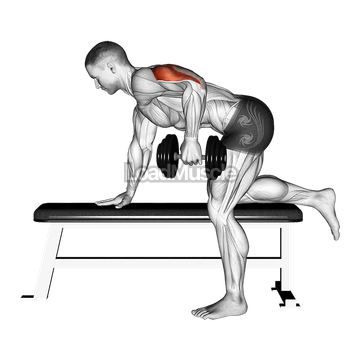
Hinge at the hips, brace one hand on a bench, and extend the dumbbell behind you by straightening your elbow. Lock out fully at the top — the peak contraction at full extension is the entire point of this exercise. View the dumbbell kickback.
Why it works: Produces excellent lateral head activation when performed with full lockout and strict form. Often dismissed but highly effective when done correctly.
Sets/Reps: 3 x 12-15
Close-Grip Dumbbell Press
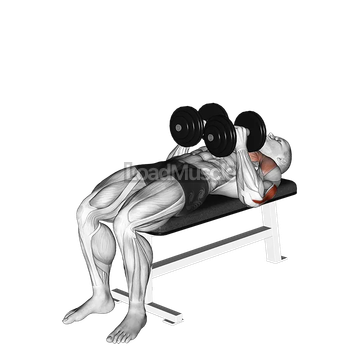
Lie on a bench and press two dumbbells with a neutral grip (palms facing each other), keeping the dumbbells close together above your chest. This shifts the pressing load from chest to triceps while still allowing heavy weight. View the close-grip dumbbell press.
Why it works: Allows heavier loading than isolation exercises. Trains all three tricep heads in a pressing pattern. Doubles as chest work.
Sets/Reps: 3 x 8-10
Tate Press
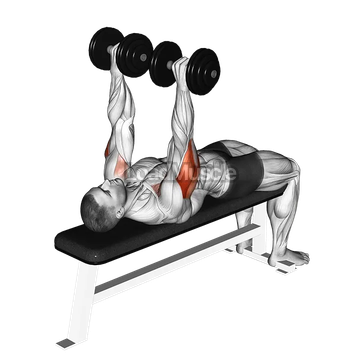
Lie on a bench with dumbbells extended above your chest. Lower the dumbbells inward toward your chest by bending your elbows out to the sides, then press back up. It looks unusual but creates strong tricep tension in the inner range of motion. View the Tate press.
Why it works: Targets the medial and lateral heads with a unique resistance curve. Excellent finisher exercise.
Sets/Reps: 3 x 12-15
Best Dumbbell Forearm Exercises
Wrist Curl
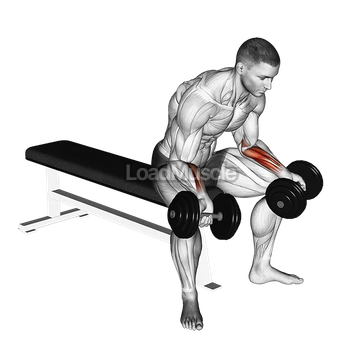
Sit on a bench with your forearms resting on your thighs, palms up, wrists hanging over the edge of your knees. Curl the dumbbells up by flexing your wrists. This targets the wrist flexors on the inner forearm. View the wrist curl. For more forearm exercises, read our best forearm exercises guide.
Sets/Reps: 3 x 15-20
Reverse Wrist Curl
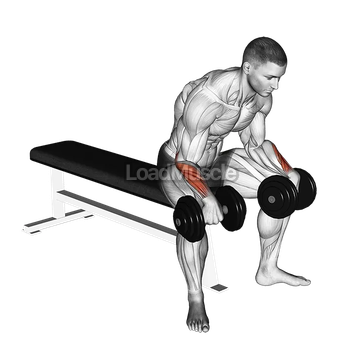
Same position as wrist curls but with palms facing down. Extend your wrists upward against the weight. This targets the wrist extensors on the outer forearm, building grip strength and forearm definition. View the reverse wrist curl.
Sets/Reps: 3 x 15-20
Three Complete Dumbbell Arm Workouts
Beginner Arm Workout (20 Minutes)
| Exercise | Sets x Reps | Rest |
|---|---|---|
| Dumbbell Curl | 3 x 10-12 | 60 sec |
| Overhead Tricep Extension | 3 x 10-12 | 60 sec |
| Hammer Curl | 2 x 10-12 | 60 sec |
| Dumbbell Kickback | 2 x 12-15 | 60 sec |
Total: 10 sets (5 bicep, 5 tricep). Focus on form, not weight. Control the eccentric for 2-3 seconds on every rep.
Intermediate Arm Workout (30 Minutes)
| Exercise | Sets x Reps | Rest |
|---|---|---|
| Close-Grip Dumbbell Press | 3 x 8-10 | 90 sec |
| Incline Dumbbell Curl | 3 x 10-12 | 60 sec |
| Dumbbell Skull Crusher | 3 x 10-12 | 90 sec |
| Concentration Curl | 3 x 10-12 | 60 sec |
| Dumbbell Kickback | 2 x 12-15 | 60 sec |
| Hammer Curl | 2 x 10-12 | 60 sec |
Total: 16 sets (8 bicep, 8 tricep). Alternate bicep and tricep exercises for active recovery between opposing muscles.
Advanced Arm Blast (45 Minutes)
| Exercise | Sets x Reps | Rest |
|---|---|---|
| Close-Grip Dumbbell Press | 4 x 8-10 | 90 sec |
| Incline Dumbbell Curl | 3 x 10-12 | 60 sec |
| Overhead Tricep Extension | 3 x 10-12 | 90 sec |
| Concentration Curl | 3 x 10-12 | 60 sec |
| Dumbbell Skull Crusher | 3 x 10-12 | 90 sec |
| Zottman Curl | 3 x 8-10 | 60 sec |
| Tate Press | 2 x 12-15 | 60 sec |
| Wrist Curl | 2 x 15-20 | 45 sec |
Total: 23 sets (9 bicep, 12 tricep, 2 forearm). The higher tricep volume reflects that the triceps are a larger muscle group and make up two-thirds of upper arm size.
For a complete arm training approach that includes barbell and cable exercises, read our bigger arms workout guide. Browse all arm exercises with video demonstrations in the exercise library.
Programming Tips for Arm Growth
Train arms 2x per week. Research shows that training a muscle twice per week produces greater hypertrophy than once per week at the same total volume. Include direct arm work on two of your training days.
Count indirect volume. Your biceps get worked during rows and pull-ups. Your triceps get worked during bench press and overhead press. Factor this indirect work into your total weekly arm volume. Most lifters need 10-16 total sets per week for biceps and 10-16 for triceps (direct + indirect combined).
Prioritize the long head of the triceps. The long head is the largest tricep muscle and contributes the most to arm size. Include at least one overhead tricep exercise in every arm session to target it.
Use full range of motion. Half-rep curls and partial extensions leave gains on the table. Stretch at the bottom, contract at the top, control the entire range. The stretched portion of each rep is particularly important for muscle growth.
Progress the weight. Arms respond to progressive overload just like every other muscle. If you have been curling the same dumbbells for months, your arms have no reason to grow. Add weight when you can complete all sets at the top of the rep range with good form.
Generate a complete arm training program with the free workout planner. Download Load Muscle to access 4,000+ exercises with video demonstrations for every arm movement.
FAQ
How often should I train arms with dumbbells?
Train arms directly 2 times per week for optimal growth, with at least 48 hours between sessions. This could be two dedicated arm days or arm exercises added to the end of upper body workouts. Remember that your arms also get indirect work during compound pushing and pulling movements.
Can I build big arms with just dumbbells?
Yes. Dumbbells provide everything you need for complete arm development: curls in multiple angles for biceps, overhead extensions and pressing for triceps, and hammer curls for brachialis. Many lifters with impressive arms have built them primarily with dumbbells. The key is progressive overload and sufficient weekly volume.
How heavy should my dumbbells be for arm exercises?
Choose a weight that allows you to complete 10-12 reps with good form while the last 2-3 reps feel genuinely challenging. For most beginners, this means 5-10 kg (10-20 lbs) for bicep exercises and 5-12 kg (10-25 lbs) for tricep exercises. Increase weight when you can complete all prescribed reps without compromising form.
Should I train biceps or triceps first?
Train your weaker muscle group first when you have the most energy. If both are equal, alternate which you start with each session. Another effective approach is supersetting biceps and triceps exercises — performing a bicep exercise immediately followed by a tricep exercise. This saves time and allows each muscle to rest while the other works.
Why are my arms not growing?
The most common reasons: insufficient volume (less than 10 sets per week per muscle), insufficient intensity (not training close to failure), and insufficient progressive overload (using the same weights for months). Other factors include inadequate protein intake, poor sleep, and not counting indirect volume from compound lifts. Track your workouts and aim to improve reps or weight each session.
For a complete weekly structure beyond arms, browse our home workout routines — most need nothing more than a pair of dumbbells.