Your abs are working right now. Whether you are sitting, standing, or walking, the muscles of your core are stabilizing your spine, transferring force between your upper and lower body, and keeping you upright. They do this every second of every day without you thinking about it.
But if you want abs that are strong enough to improve your lifts, protect your back, and actually show through your skin, you need to train them with intention. Not just endless crunches on the floor — real, progressive ab training that challenges all four layers of your abdominal muscles through different movement patterns.
This guide ranks the 15 best ab exercises for building a strong, visible core, whether you train at a commercial gym or at home with no equipment. You will also get two complete ab workout routines, programming guidelines, and the honest truth about what it takes to see your abs. Browse our full exercise library to see video demonstrations for every movement listed below.
TL;DR
- Your abs consist of four muscles: rectus abdominis, external obliques, internal obliques, and transverse abdominis. A complete ab routine trains all of them.
- Top 5 ab exercises: hanging leg raise, cable crunch, ab wheel rollout, Pallof press, and bicycle crunch.
- Spot reduction is a myth. You cannot burn belly fat by doing ab exercises. Visible abs require low body fat through diet and overall training.
- Train abs 2-3 times per week, 3-4 exercises per session, mixing flexion, rotation, and anti-movement patterns.
- Build a complete program including ab work using the free workout planner.
Anatomy of the Abdominals
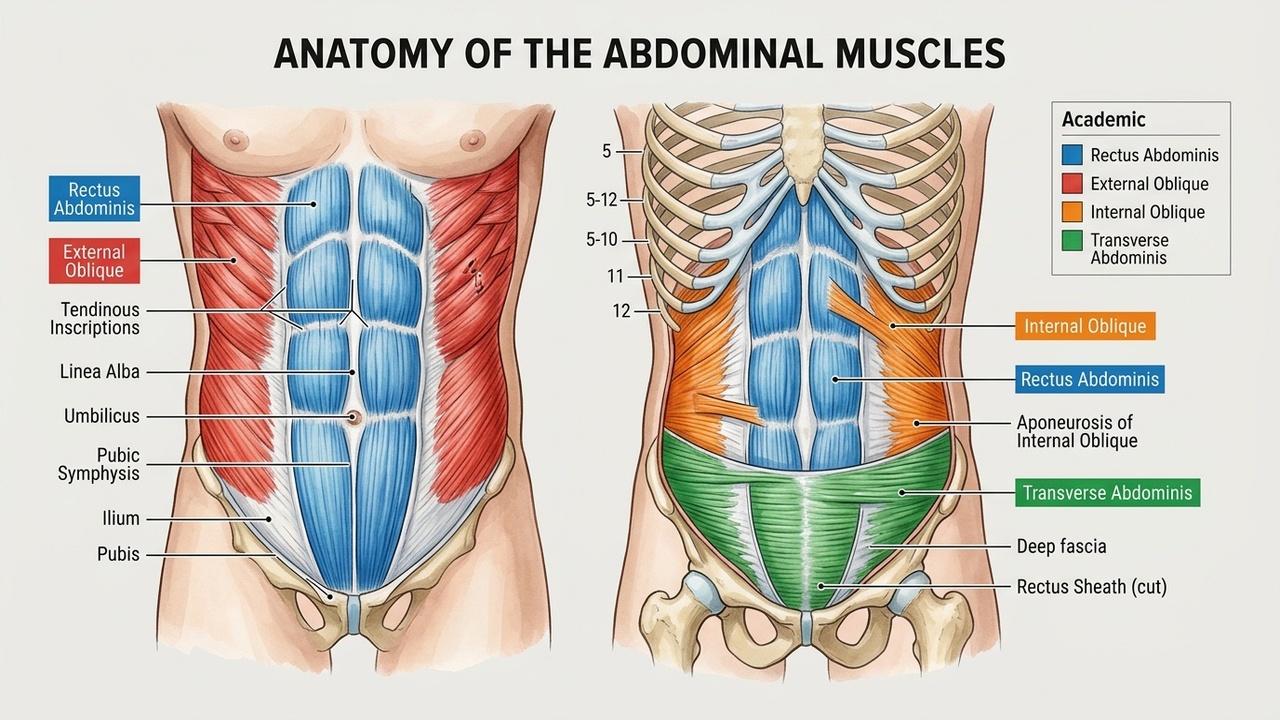
Before picking exercises, you need to understand what you are training. The "abs" are not a single muscle — they are four distinct muscles layered on top of each other, each with a different function. Training all four is the difference between a strong, functional core and one that just looks good in photos but crumbles under a heavy squat.
Rectus Abdominis
This is the muscle people picture when they think of "abs" — the six-pack (or eight-pack, depending on your genetics). The rectus abdominis is a long, flat muscle that runs vertically from your pubic bone to your sternum and lower ribs. Its primary function is spinal flexion — curling your torso toward your hips or your hips toward your torso.
The "blocks" of a six-pack are created by tendinous intersections that divide the muscle into segments. The number of visible blocks is genetic and cannot be changed through training. What training does change is the thickness and size of the muscle itself, which makes those blocks pop when body fat is low enough.
Obliques (Internal and External)
The obliques sit on either side of your rectus abdominis and are responsible for rotation, lateral flexion (side bending), and resisting unwanted rotation. The external obliques are the more superficial layer and run diagonally downward from your ribs to your pelvis. The internal obliques sit beneath them and run in the opposite diagonal direction.
Together, they create a natural corset that stabilizes your torso during heavy lifts like squats, deadlifts, and overhead presses. Underdeveloped obliques are a common weak link that limits performance on compound exercises and increases injury risk.
Transverse Abdominis
The deepest of the four abdominal muscles, the transverse abdominis wraps horizontally around your midsection like a weight belt. Its primary job is compression — pulling your abdominal wall inward and stabilizing your spine under load.
You cannot see this muscle from the outside, but it plays a critical role in core stiffness. When you brace your core before a heavy deadlift, you are primarily engaging your transverse abdominis. Anti-extension and anti-rotation exercises like planks and Pallof presses train this muscle effectively.
The 15 Best Ab Exercises
This list includes flexion movements, rotation movements, and anti-movement (stabilization) exercises. A well-rounded ab routine pulls from all three categories. Every exercise below links to a full demonstration page in our exercise library where you can see the movement in action.
A quick note on spot reduction: doing hundreds of ab exercises will not burn belly fat. Spot reduction is a myth that has been debunked repeatedly in research. Ab exercises build and strengthen the abdominal muscles. Revealing those muscles requires reducing body fat through a caloric deficit and overall training program. We will cover this in detail later in the article. For now, understand that these exercises make your abs stronger and larger — not leaner.
1. Hanging Leg Raise
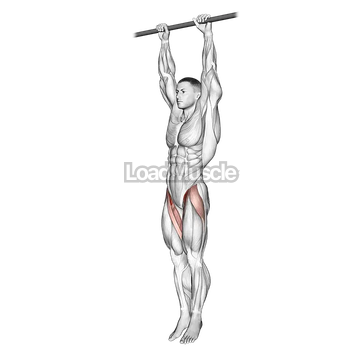
Targets: Lower rectus abdominis, hip flexors, obliques
Hang from a pull-up bar with a shoulder-width grip, arms fully extended. Keeping your legs straight (or knees bent for an easier variation), raise them until your thighs are parallel to the floor or higher. Lower under control without swinging. The key is to tilt your pelvis at the top — think about curling your hips toward your ribcage, not just lifting your legs.
Why it is effective: The hanging position creates a long lever arm that demands serious abdominal strength. The grip and stabilization requirements engage your entire core, not just the rectus abdominis. Progressive overload is straightforward: start with knee raises, progress to straight-leg raises, then add ankle weights or hold a dumbbell between your feet. View the hanging leg raise.
2. Cable Crunch
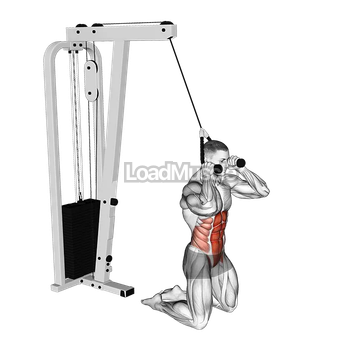
Targets: Rectus abdominis (full length)
Kneel facing a cable machine with a rope attachment set at the top. Hold the rope beside your head and crunch your torso downward, bringing your elbows toward your knees. Focus on curling your spine — your hips should stay stationary. Slowly return to the starting position.
Why it is effective: Unlike bodyweight crunches where resistance is limited to your torso weight, the cable crunch lets you progressively overload the movement by adding weight to the stack. This makes it one of the best exercises for building thick, visible abs. The constant cable tension also eliminates the dead zone at the top of a regular crunch. View the cable crunch.
3. Ab Wheel Rollout
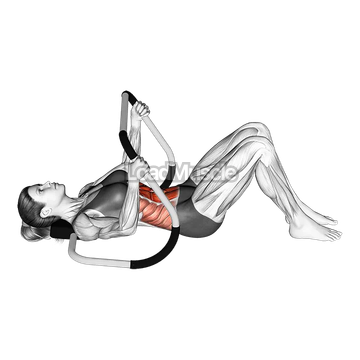
Targets: Rectus abdominis, transverse abdominis, lats, shoulders
Kneel on the floor holding an ab wheel with both hands. Slowly roll the wheel forward, extending your body toward the floor while keeping your core braced and your hips from sagging. Roll out as far as you can maintain a flat back, then pull the wheel back to the starting position using your abs.
Why it is effective: The rollout is an anti-extension exercise that challenges your abs through an enormous range of motion. EMG studies consistently rank it among the highest for rectus abdominis activation. The eccentric (lengthening) phase is particularly brutal and creates significant muscle damage that drives growth. Start from your knees and progress to standing rollouts over months, not weeks. View the ab wheel rollout.
For a broader look at exercises that build a solid midsection, read our core strength guide with 10 exercises for a strong and defined midsection.
4. Pallof Press
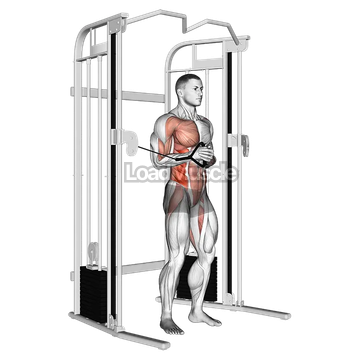
Targets: Transverse abdominis, obliques (anti-rotation)
Stand perpendicular to a cable machine with the handle at chest height. Hold the handle at your chest with both hands, then press it straight out in front of you. The cable will try to rotate your torso — resist it. Hold the extended position for 2-3 seconds, then bring the handle back to your chest. Complete all reps on one side before switching.
Why it is effective: The Pallof press is the gold standard anti-rotation exercise. Instead of creating movement, your abs work to prevent it. This trains the deep stabilizers (transverse abdominis, internal obliques) that protect your spine during heavy lifts and athletic movements. It is also one of the most spine-friendly ab exercises available — zero spinal flexion. View the Pallof press.
5. Bicycle Crunch
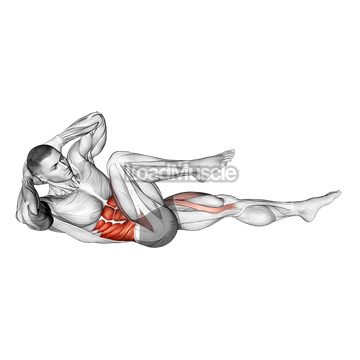
Targets: Rectus abdominis, obliques
Lie on your back with your hands lightly behind your head and your legs lifted off the floor. Bring your right elbow toward your left knee while extending your right leg, then switch sides in a pedaling motion. Move slowly and deliberately — this is not a speed drill.
Why it is effective: The bicycle crunch combines spinal flexion with rotation, hitting both the rectus abdominis and the obliques in a single movement. An ACE-sponsored study ranked it as the top exercise for oblique activation and second overall for rectus abdominis activation. The key is controlled movement — jerky, fast reps shift the work to your hip flexors. View the bicycle crunch.
6. Dragon Flag
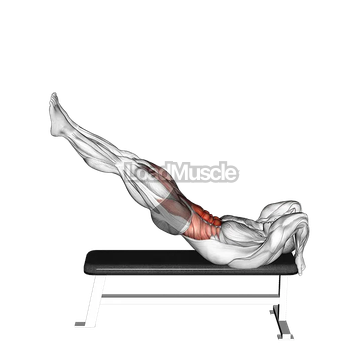
Targets: Rectus abdominis (full length), transverse abdominis
Lie on a bench and grip the edge behind your head. With your body straight and rigid, lift your entire body off the bench until only your upper back and shoulders remain in contact. Lower your body slowly, keeping it straight as a plank, until you are just above the bench surface. The movement is essentially a reverse plank that demands extreme abdominal tension.
Why it is effective: Made famous by Bruce Lee and later by Rocky Balboa, the dragon flag is one of the most challenging bodyweight ab exercises in existence. It loads the rectus abdominis through its full range under enormous leverage, and the slow eccentric lowering phase builds serious strength. This is an advanced exercise — master the hanging leg raise and ab wheel rollout before attempting it. View the dragon flag.
7. Weighted Decline Crunch
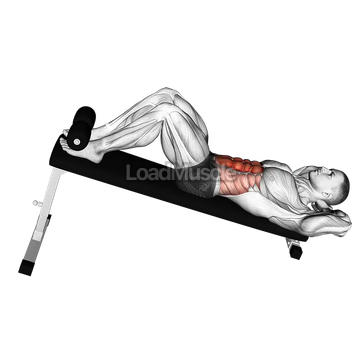
Targets: Rectus abdominis (emphasis on upper portion)
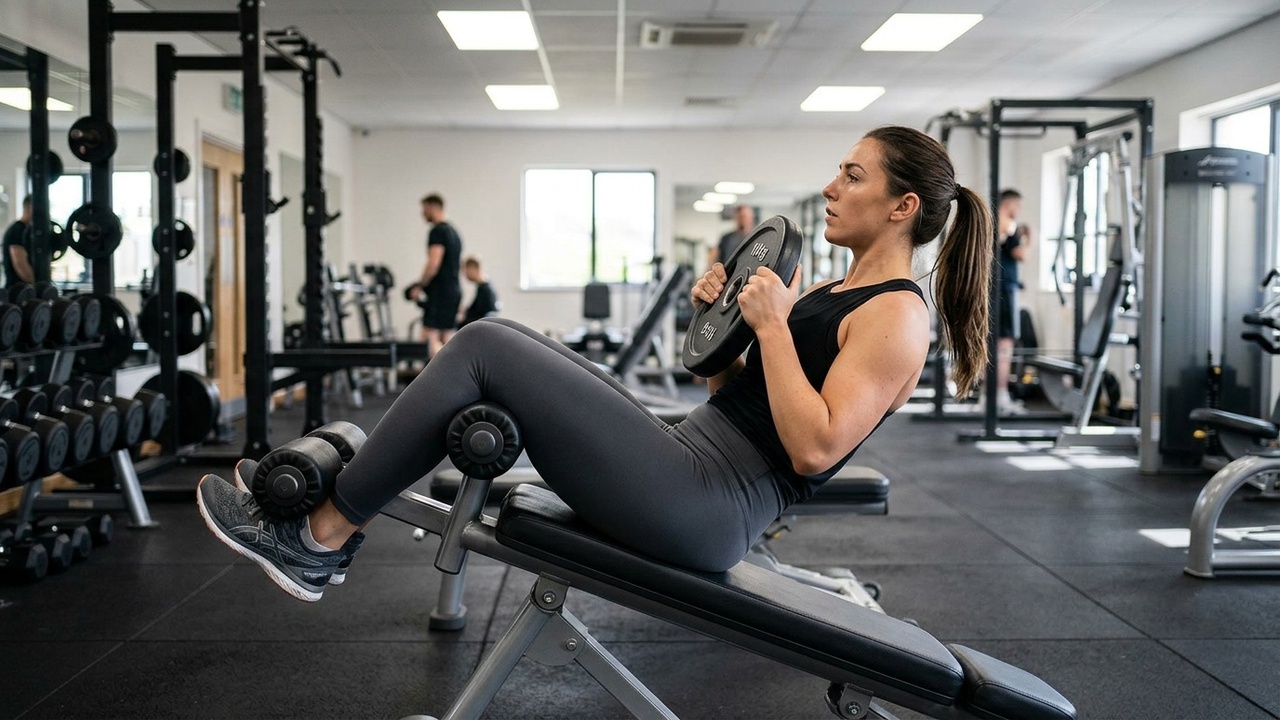
Set a decline bench to 30-45 degrees and hook your feet under the pads. Hold a weight plate or dumbbell against your chest and crunch upward, lifting your shoulder blades off the bench. Squeeze at the top for a count, then lower under control.
Why it is effective: The decline angle increases the range of motion and keeps tension on the abs throughout the movement. Adding external weight makes progressive overload simple and measurable. This is a straightforward, no-nonsense exercise that belongs in any gym-based ab routine. View the decline crunch.
8. Dead Bug
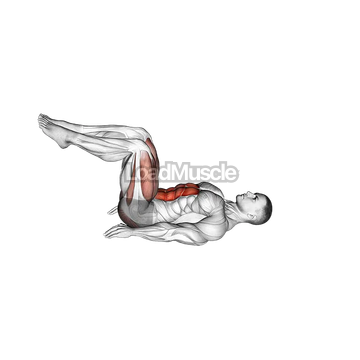
Targets: Transverse abdominis, rectus abdominis (anti-extension)
Lie on your back with your arms extended toward the ceiling and your knees bent at 90 degrees, shins parallel to the floor. Slowly extend your right arm behind your head and your left leg toward the floor simultaneously, keeping your lower back pressed into the ground. Return to the start and repeat on the opposite side.
Why it is effective: The dead bug teaches your core to stabilize against extension forces — the same demand placed on your abs during squats, deadlifts, and overhead presses. It is a foundational exercise for building the bracing ability that carries over to every other lift. Physical therapists use it extensively for lower back rehabilitation because it trains the core without loading the spine. View the dead bug.
9. Plank Variations
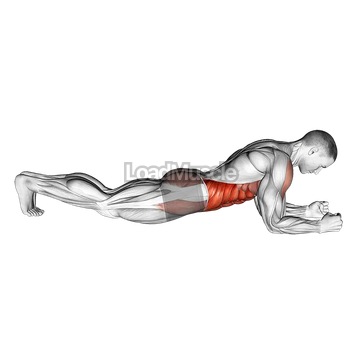
Targets: Transverse abdominis, rectus abdominis, obliques (isometric)
Get into a push-up position but rest on your forearms instead of your hands. Keep your body in a straight line from head to heels. Brace your abs as if someone is about to punch you in the stomach. Hold the position without letting your hips sag or pike upward.
Why it is effective: The plank is the entry point for anti-extension training. Once you can hold a standard plank for 60 seconds with perfect form, progress by adding load (a plate on your back), reducing base of support (lifting one arm or one leg), or moving to more advanced variations like the body saw or long-lever plank. The plank alone is not enough for well-developed abs, but it builds the foundational stability every other exercise relies on. View the front plank.
10. L-Sit
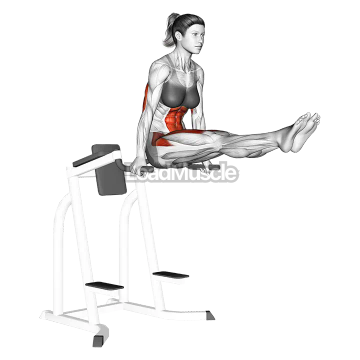
Targets: Rectus abdominis, hip flexors, triceps, shoulders
Sit on the floor between two parallettes, push-up handles, or sturdy objects. Press your hands down, lock your elbows, lift your body off the ground, and extend your legs straight in front of you. Your body should form an "L" shape. Hold the position for time.
Why it is effective: The L-sit demands simultaneous abdominal contraction, hip flexor engagement, and shoulder depression. It is one of the few exercises that challenges your abs isometrically at their shortest (most contracted) position, making it a unique stimulus. Beginners can start with a tucked L-sit (knees bent) and gradually extend the legs. View the L-sit.
For a complete guide to bodyweight training you can do without a gym, check out our home workout guide with 15 bodyweight exercises.
11. Medicine Ball Slam
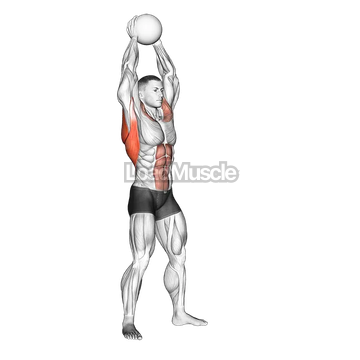
Targets: Rectus abdominis, obliques, shoulders, lats
Stand with feet shoulder-width apart, holding a medicine ball overhead with arms extended. Brace your core and slam the ball into the ground as hard as you can, hinging at the hips and flexing your torso. Catch the ball on the bounce (or pick it up) and repeat.
Why it is effective: The medicine ball slam trains explosive spinal flexion — the fast-twitch, power-generating side of ab training that crunches miss. It also serves as metabolic conditioning, driving your heart rate up while training your core. Athletes benefit significantly from this exercise because it develops the ability to produce force through the trunk at speed. View the medicine ball slam.
12. Woodchop (Cable)
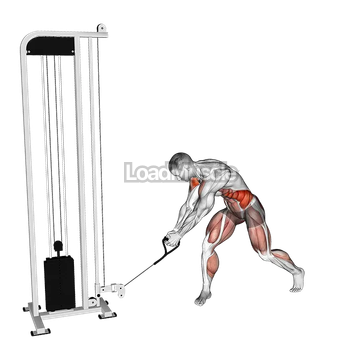
Targets: Obliques, transverse abdominis (rotation)
Set a cable at the highest or lowest position. Stand sideways to the machine, grab the handle with both hands, and pull it diagonally across your body — from high to low or low to high. Your arms stay relatively straight; the rotation comes from your torso, not your arms. Control the return.
Why it is effective: The cable woodchop is the best loaded rotation exercise for the obliques. The cable provides consistent tension throughout the entire range of motion, and the diagonal pattern mimics the rotational demands of real-world movements and sports. It is an essential exercise for athletes in any rotational sport — golf, baseball, tennis, martial arts. View the cable woodchop. For more cable exercises that complement your core training, see our guide to the 15 best cable machine exercises.
13. Reverse Crunch
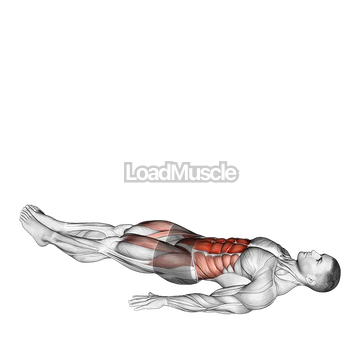
Targets: Lower rectus abdominis
Lie on your back with your arms at your sides and your knees bent at 90 degrees. Curl your hips off the floor, bringing your knees toward your chest. The movement is small and controlled — you are tilting your pelvis posteriorly, not swinging your legs. Lower your hips back to the floor slowly.
Why it is effective: The reverse crunch emphasizes the lower portion of the rectus abdominis by moving the pelvis toward the ribcage (bottom-up flexion) rather than the ribcage toward the pelvis (top-down flexion). It puts minimal stress on the neck and lower back, making it accessible for all experience levels. Add a dumbbell between your knees or move to a decline bench as you progress. View the reverse crunch.
14. Mountain Climber
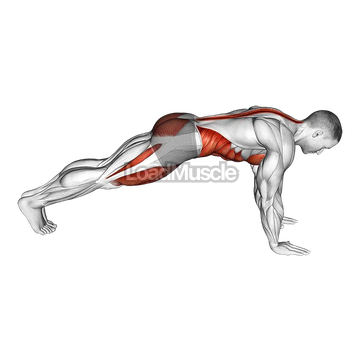
Targets: Rectus abdominis, obliques, hip flexors, shoulders
Start in a push-up position with your hands directly under your shoulders. Drive one knee toward your chest, then quickly switch legs as if running in place. Keep your hips level — do not let them bounce up and down.
Why it is effective: Mountain climbers combine core stabilization with dynamic hip flexion, making them effective for both ab training and cardiovascular conditioning. They challenge your abs to maintain a stable plank position while your legs move rapidly, which builds functional endurance. Use them at the end of an ab workout as a finisher or within a circuit. View the mountain climber.
15. Suitcase Carry
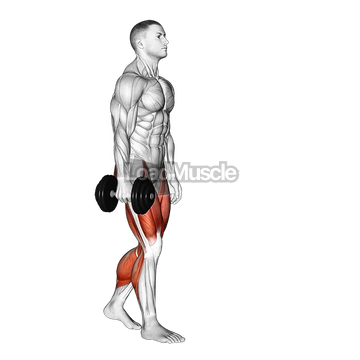
Targets: Obliques, transverse abdominis, grip (anti-lateral flexion)
Pick up a heavy dumbbell or kettlebell in one hand. Stand tall with your shoulders level and walk forward for a set distance or time. The weight will try to pull you to one side — your obliques and core must resist. Switch hands and repeat.
Why it is effective: The suitcase carry trains anti-lateral flexion, a core function that no crunch variation addresses. Your obliques work overtime to keep your torso upright against the asymmetric load. It also builds grip strength, shoulder stability, and teaches your entire core to work as a single unit. Progressively increase the weight as your stabilization improves. View the suitcase carry.
Best Ab Exercises at Home (No Equipment)
You do not need a gym to build strong abs. Several of the exercises above require nothing more than floor space. Here are the best bodyweight ab movements for home training:
- Bicycle crunch — top-tier oblique and rectus abdominis activation with zero equipment.
- Dead bug — the best anti-extension exercise for beginners and advanced lifters alike.
- Reverse crunch — targets the lower abs with no equipment needed.
- Plank variations — front plank, side plank, plank shoulder taps, body saw.
- Mountain climber — combines ab work with conditioning.
- Dragon flag — advanced, but only requires a sturdy bench or even a doorframe to grip.
The key to making bodyweight ab exercises challenging enough for growth is tempo manipulation. Slow down every rep. A 3-second eccentric (lowering) and 1-second pause at the hardest point turns a "too easy" exercise into a brutal one. You can also increase volume — more sets and reps — or reduce rest periods.
For a complete bodyweight training program that includes core work, use the free workout planner and select the "home" equipment option. It will generate a routine that matches your available gear.
Best Ab Exercises with Weights
If you train at a gym, adding external resistance to your ab exercises is the fastest path to visible, well-developed abs. Progressive overload applies to your core the same way it applies to your chest, back, and legs — the muscles need increasing stimulus to grow.
The best weighted ab exercises are:
- Cable crunch — infinitely adjustable load with constant tension.
- Weighted decline crunch — simple and effective progression with plates.
- Hanging leg raise (weighted) — add ankle weights or hold a dumbbell between your feet.
- Cable woodchop — the best loaded rotation exercise available.
- Pallof press — progressive anti-rotation with cable weight stack.
- Ab wheel rollout — bodyweight, but the leverage makes it brutally heavy.
- Suitcase carry — anti-lateral flexion with heavy dumbbells or kettlebells.
Start with a weight that allows 12-15 controlled reps and add load in small increments over weeks. Jerky, momentum-driven reps with heavy weight do nothing for your abs and risk back injury.
Complete Ab Workout Routine (Gym)
This routine uses a mix of weighted and bodyweight exercises across all three movement patterns — flexion, rotation, and anti-movement. Perform it 2-3 times per week at the end of your main training session.
| Exercise | Sets | Reps | Rest |
|---|---|---|---|
| Hanging leg raise | 3 | 10-12 | 60s |
| Cable crunch | 3 | 12-15 | 60s |
| Pallof press | 3 | 10 each side | 45s |
| Cable woodchop | 3 | 12 each side | 45s |
Progression: Add weight to the cable crunch and woodchop each week. For the hanging leg raise, progress from bent-knee to straight-leg, then add ankle weights. For the Pallof press, increase cable weight or extend the hold to 5 seconds per rep.
Total time: 15-20 minutes.
Complete Ab Workout Routine (Home)
This bodyweight routine requires no equipment and can be done in your living room. It hits flexion, rotation, anti-extension, and conditioning.
| Exercise | Sets | Reps | Rest |
|---|---|---|---|
| Dead bug | 3 | 10 each side | 45s |
| Reverse crunch | 3 | 15 | 45s |
| Bicycle crunch | 3 | 15 each side | 45s |
| Front plank | 3 | 45-60 seconds | 45s |
| Mountain climber | 2 | 30 seconds | 30s |
Progression: Increase hold times on planks by 5 seconds each week. Add reps to crunches and dead bugs. Slow down the tempo of each rep — a 3-second eccentric turns every exercise into a significantly harder challenge.
Total time: 15-18 minutes.
If you want a fully customized routine that includes ab work tailored to your equipment and experience level, try the free workout planner. It generates a complete program in seconds.
How Often Should You Train Abs?
Your abs recover faster than larger muscle groups like your back and legs because they are smaller muscles that do not generate the same systemic fatigue. Most people can train abs 2-3 times per week with excellent results.
Here is a simple framework:
- Beginners (0-6 months training): 2 sessions per week, 3 exercises per session, 2-3 sets each. Focus on learning the movements and building baseline strength.
- Intermediate (6-24 months training): 2-3 sessions per week, 3-4 exercises per session, 3 sets each. Start adding external load to cable crunches, decline crunches, and leg raises.
- Advanced (2+ years training): 3 sessions per week, 3-4 exercises per session, 3-4 sets each. Use heavy loads, advanced movements like dragon flags and standing ab wheel rollouts, and periodize your training.
A practical approach is to train abs at the end of your regular training sessions. On upper body days, you can afford a longer ab session since your core is relatively fresh. On heavy squat or deadlift days, your core is already fatigued from bracing, so a shorter session with 2-3 exercises is sufficient.
One important caveat: more is not always better. Your abs get significant indirect work from compound lifts — squats, deadlifts, overhead presses, rows, and carries all demand core stabilization. If you are training compounds hard 3-4 times per week, you do not need 30 minutes of dedicated ab work on top of that. Two focused 15-minute sessions per week will be enough.
The Truth About Visible Abs
This is the part nobody wants to hear but everyone needs to: visible abs are primarily a function of body fat percentage, not ab training volume.
Every human has a rectus abdominis. The reason most people cannot see theirs is not because the muscle is underdeveloped — it is because it is covered by a layer of subcutaneous fat. For most men, abs become visible at roughly 10-15% body fat. For most women, the range is roughly 16-22%. These numbers vary with genetics, muscle size, and fat distribution.
Here is what this means practically:
Ab exercises build the muscle. Hanging leg raises, cable crunches, and rollouts make your rectus abdominis thicker and more defined. When body fat is low enough, well-trained abs look dramatically better than untrained abs — deeper grooves, more prominent blocks, visible oblique lines.
Diet and overall training reveal the muscle. You cannot crunch your way to visible abs. You need a caloric deficit sustained over weeks or months to reduce body fat to a level where your abdominal muscles show through. This requires consistent nutrition, not just training.
Compound lifts contribute significantly. Heavy squats, deadlifts, and overhead presses demand intense core bracing that builds abdominal strength and thickness. Many strong lifters have impressive abs despite never doing direct ab work — their compound lifts provided enough stimulus.
The optimal strategy is a combination of all three: direct ab training for muscle development, compound lifts for overall strength and indirect core work, and a sound nutrition plan for fat loss when the goal is visibility.
Do not fall for "30-day ab challenges" or "this one exercise for six-pack abs" marketing. Building a strong, visible core is a long-term process that requires consistency in the gym and discipline in the kitchen. Track your training with the LoadMuscle app to ensure your ab exercises are progressing over time.
FAQ
How many ab exercises should I do per workout? Three to four exercises per session is the sweet spot for most people. This allows you to cover different movement patterns — one flexion exercise (like cable crunches), one rotation exercise (like woodchops), and one anti-movement exercise (like Pallof press or plank) — without excessive volume. More than five exercises per session typically leads to junk volume where fatigue degrades form.
Can I get abs without going to the gym? Absolutely. Bodyweight exercises like dead bugs, reverse crunches, bicycle crunches, planks, and mountain climbers provide enough stimulus to build strong abs. The limiting factor for visible abs is body fat percentage, not equipment. Many gymnasts and calisthenics athletes have exceptional core development using only bodyweight exercises.
Should I train abs every day? No. Like any other muscle, your abs need recovery time to grow and adapt. Training abs every day leads to overuse, diminished returns, and potential lower back issues. Two to three sessions per week, with at least one rest day between sessions, is optimal for both strength and hypertrophy.
What is the single best ab exercise? If forced to choose one exercise, the hanging leg raise offers the best combination of rectus abdominis activation, progressive overload potential, and functional carryover. It trains your grip, challenges your stabilizers, and can be scaled from beginner (knee raises) to advanced (weighted straight-leg raises). That said, no single exercise trains all four abdominal muscles — a complete routine needs at least two or three movements.
Do planks actually build abs? Planks build isometric core endurance and transverse abdominis strength, but they are limited for building visible ab muscle. Once you can hold a plank for 60 seconds, the exercise becomes an endurance challenge rather than a strength or hypertrophy stimulus. To continue progressing, add load (plate on your back), reduce stability (lift one limb), or switch to more demanding anti-extension exercises like ab wheel rollouts. Planks are a valuable foundation, not a complete ab training program.
Ready to put these exercises into a structured plan? Browse our core and abs workout routines for complete midline programs you can start today.