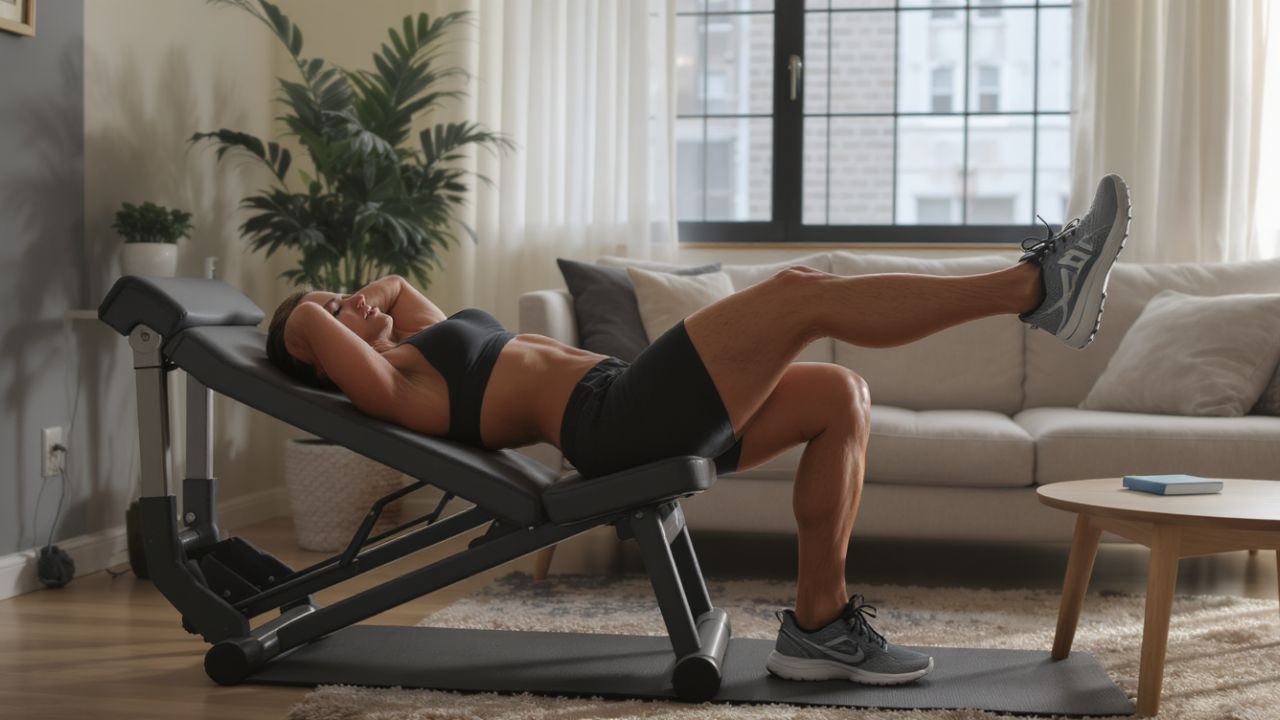
No Jump Home HIIT Workout Plan
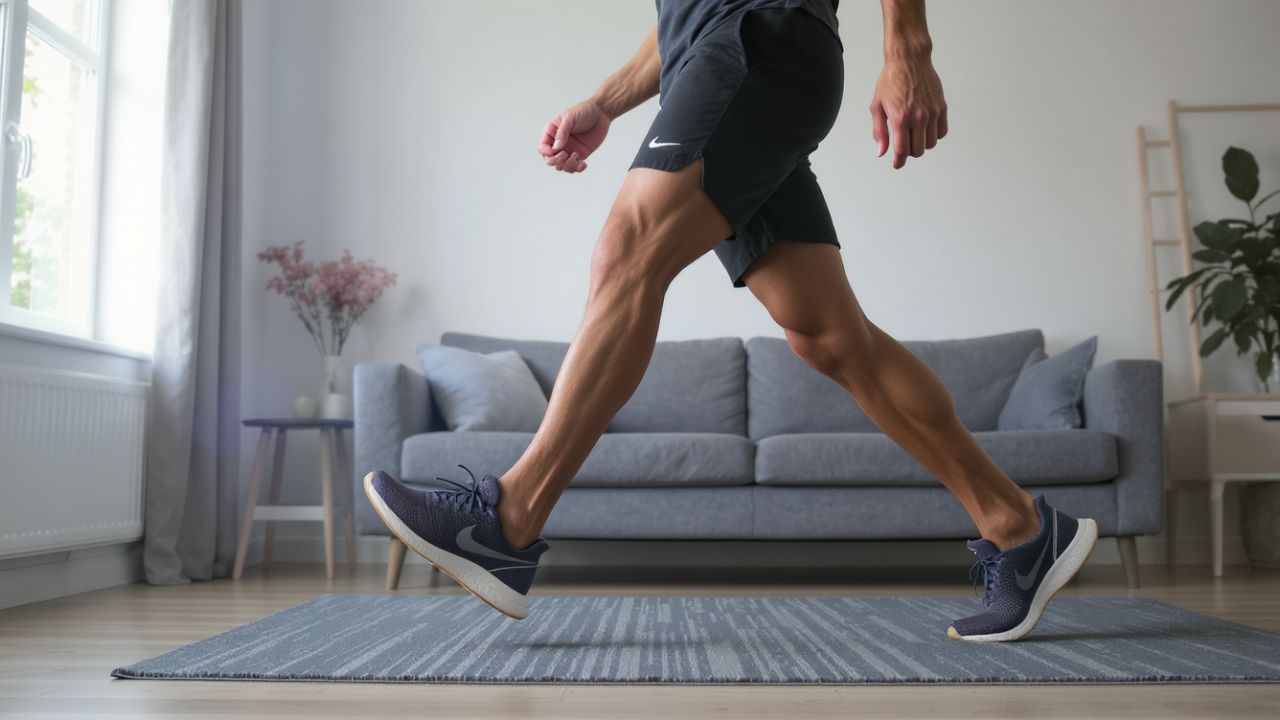
Interval training for home with no jumping: steady cardio steps, strength and core across three sessions a week. Quiet enough for a flat.
- Days per week
- 3
- Session length
- 29–30 min
- Exercises
- 24
- Level
- Beginner
- Equipment
- No equipment
Your week
- MonDay 1 · No-Jump Circuit A
- TueRest
- WedDay 2 · No-Jump Circuit B
- ThuRest
- FriDay 3 · No-Jump Circuit C
- SatRest
- SunRest
Free on iPhone and Android, or adjust it in the web planner
The workouts
Day 1 — No-Jump Circuit A
Steady, low-impact intervals. March, step, and basic strength.
About 30 minutes · 8 exercises| # | Demo | Exercise | Sets × Reps | Rest |
|---|---|---|---|---|
| 1 | Marching On SpotRest 25s | 3 × 30s | 25s | |
| 2 | Jack StepRest 25s | 3 × 30s | 25s | |
| 3 | Sit SquatRest 30s | 3 × 30s | 30s | |
| 4 | Push up (on knees)Rest 30s | 3 × 30s | 30s | |
| 5 | One Arm Towel RowRest 30s | 3 × 30s | 30s | |
| 6 | Standing Side Leg RaiseRest 25s | 3 × 30s | 25s | |
| 7 | Front PlankRest 30s | 3 × 25s | 30s | |
| 8 | Glute Bridge Two Legs on FloorRest 30s | 3 × 30s | 30s |


Day 2 — No-Jump Circuit B
Low-impact steps, posterior chain, push, and core.
About 30 minutes · 8 exercises| # | Demo | Exercise | Sets × Reps | Rest |
|---|---|---|---|---|
| 1 | Ski StepRest 25s | 3 × 30s | 25s | |
| 2 | Bodyweight Good MorningRest 30s | 3 × 30s | 30s | |
| 3 | Low JacksRest 25s | 3 × 30s | 25s | |
| 4 | Wide Hand Push upRest 30s | 3 × 30s | 30s | |
| 5 | Glute Bridge MarchRest 30s | 3 × 30s | 30s | |
| 6 | Standing Calf RaiseRest 25s | 3 × 30s | 25s | |
| 7 | Bird DogRest 25s | 3 × 30s | 25s | |
| 8 | Lateral Side Plank (bent leg)Rest 30s | 3 × 25s | 30s |


Day 3 — No-Jump Circuit C
Balanced steps, lunge variations, gentle boxing, and core holds.
About 29 minutes · 8 exercises| # | Demo | Exercise | Sets × Reps | Rest |
|---|---|---|---|---|
| 1 | Back And Forth StepRest 25s | 3 × 30s | 25s | |
| 2 | Bodyweight Rear LungeRest 30s | 3 × 30s | 30s | |
| 3 | Jab. BoxingRest 20s | 3 × 30s | 20s | |
| 4 | Bodyweight Standing One Arm Row (with towel)Rest 30s | 3 × 30s | 30s | |
| 5 | Dead BugRest 25s | 3 × 30s | 25s | |
| 6 | Front PlankRest 30s | 3 × 25s | 30s | |
| 7 | Standing Single Leg Calf Raise with SupportRest 25s | 3 × 30s | 25s | |
| 8 | Marching On SpotRest 25s | 3 × 30s | 25s |


About this plan
Three sessions a week of thirty-second intervals with no jumping, no equipment beyond a towel, and nothing your downstairs neighbour will notice.
Day one runs marching, jack steps, sit squats, knee push-ups, one-arm towel rows and standing side leg raises. Day two moves to ski steps, bodyweight good mornings, low jacks, wide-hand push-ups, bridge marches and standing work. Day three covers back-and-forth steps, rear lunges, boxing jabs, standing towel rows and dead bugs.
This is a strength circuit as much as a cardio one, which is what separates it from most no-jump plans. Push-ups, rows, good mornings and lunges all appear, so the thirty-second intervals build something beyond fitness. The towel row in particular means the upper back gets trained, which almost no living-room HIIT plan bothers with.
Low jacks are the exercise to learn first: a jumping jack performed in a half squat, with the feet sliding rather than hopping. The arms do the same thing, the legs do the same thing, the floor takes none of the impact. It is the single most useful substitution in quiet home training.
Thirty seconds per exercise with three rounds puts a session around twenty-five minutes. The interval length is short enough that you can genuinely work rather than pace, which is the point of intervals in the first place.
Rest between rounds rather than between exercises. Flowing straight from marching into a squat and then into a push-up keeps the heart rate up, and the rest at the end of the round is where it comes down.
Progress by adding a round before making anything harder.
Train this plan in the app
LoadMuscle carries all 3 routines with a demo for every exercise, and logs your sets as you go, so next session you can see what to beat. Free on iPhone and Android. Want something built around your own schedule and equipment instead? Try the free workout planner.