Push Pull Legs Workout Plan (3 Day)
Push, pull and legs across three sessions a week using machines, cables and dumbbells. Sessions run 45 to 60 minutes with controlled rests.
- Days per week
- 3
- Session length
- 43–50 min
- Exercises
- 23
- Level
- Beginner
- Equipment
- Cable, Leverage machine, Dumbbell +1
Your week
- MonDay 1 · Push Strength
- TueRest
- WedDay 2 · Pull Strength
- ThuRest
- FriDay 3 · Legs Strength
- SatRest
- SunRest
Free on iPhone and Android, or adjust it in the web planner
The workouts
Day 1 — Push Strength
Chest, shoulders, triceps; focus on controlled reps and steady breathing.
About 43 minutes · 7 exercises| # | Demo | Exercise | Sets × Reps | Rest |
|---|---|---|---|---|
| 1 | Lever Parallel Chest PressRest 90s | 4 × 8 | 90s | |
| 2 | Lever Incline Hammer Chest PressRest 75s | 3 × 10 | 75s | |
| 3 | Dumbbell Seated One Arm Shoulder PressRest 75s | 3 × 10 | 75s | |
| 4 | Dumbbell Standing Alternate Vertical Front RaisesRest 60s | 2 × 12 | 60s | |
| 5 | Cable Standing One Arm Tricep Pushdown (Overhand Grip)Rest 60s | 3 × 12 | 60s | |
| 6 | Cable Standing Chest PressRest 60s | 2 × 12 | 60s | |
| 7 | Cable horizontal Pallof PressRest 60s | 3 × 12 | 60s |


Day 2 — Pull Strength
Back, rear delts, biceps; keep a proud chest and controlled scapular movement.
About 49 minutes · 8 exercises| # | Demo | Exercise | Sets × Reps | Rest |
|---|---|---|---|---|
| 1 | Cable Close Grip Front Lat PulldownRest 90s | 4 × 8 | 90s | |
| 2 | Cable Seated Row (Bent bar)Rest 90s | 3 × 10 | 90s | |
| 3 | Dumbbell One Arm Row (rack support)Rest 75s | 3 × 10 | 75s | |
| 4 | Cable Standing Lat Pushdown (rope equipment)Rest 60s | 2 × 12 | 60s | |
| 5 | Cable Rear Delt Row (stirrups)Rest 60s | 3 × 12 | 60s | |
| 6 | Dumbbell Alternate Biceps CurlRest 60s | 3 × 12 | 60s | |
| 7 | Lever Back ExtensionRest 60s | 2 × 12 | 60s | |
| 8 | Cable Seated CrunchRest 45s | 3 × 15 | 45s |


Day 3 — Legs Strength
Quads, glutes, hamstrings, calves, and core; prioritize depth and balance.
About 50 minutes · 8 exercises| # | Demo | Exercise | Sets × Reps | Rest |
|---|---|---|---|---|
| 1 | Lever Seated Leg PressRest 90s | 4 × 10 | 90s | |
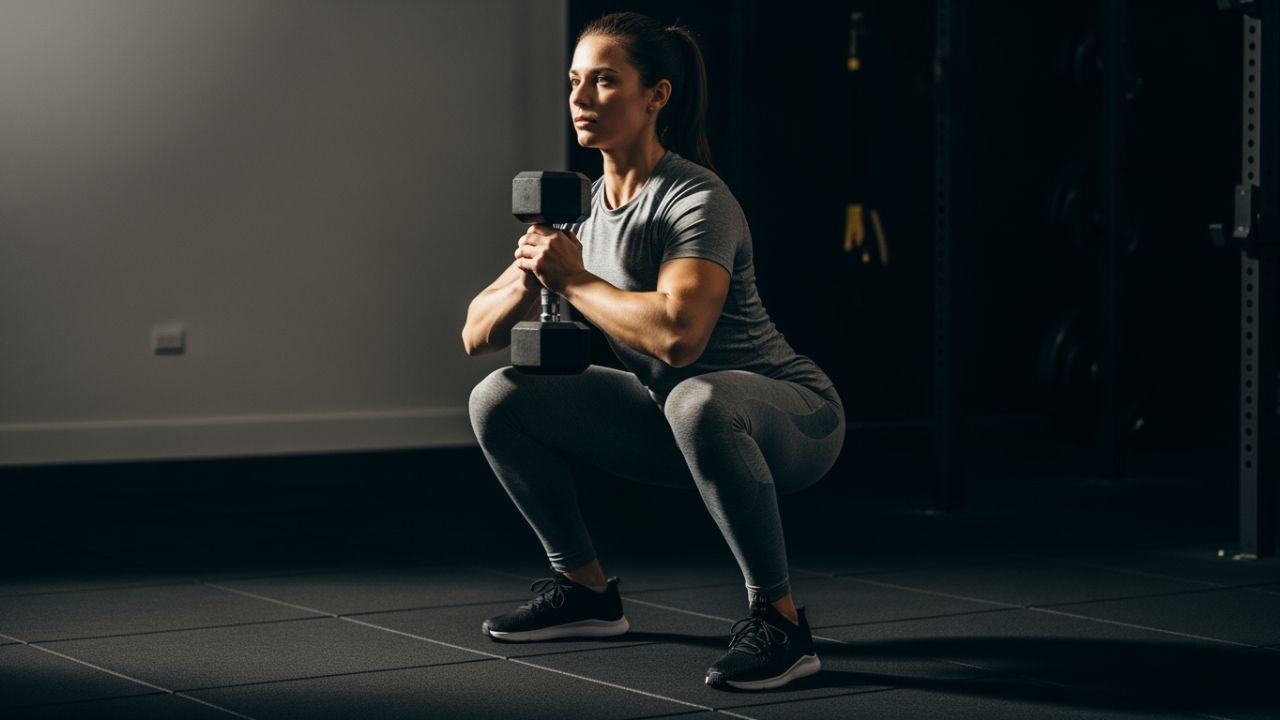
| 2 | Dumbbell Goblet SquatRest 90s | 3 × 10 | 90s | |
| 3 | Lever Seated Leg CurlRest 75s | 3 × 12 | 75s | |
| 4 | Cable pull throughRest 75s | 3 × 12 | 75s | |
| 5 | Dumbbell forward leaning lungeRest 75s | 2 × 10 | 75s | |
| 6 | Lever Standing Calf RaiseRest 60s | 3 × 12 | 60s | |
| 7 | Plate HyperextensionRest 60s | 2 × 12 | 60s | |
| 8 | Cable twistRest 45s | 3 × 12 | 45s |


About this plan
Push, pull, legs is the simplest way to split training once full-body sessions start running long. Everything that pushes goes on one day, everything that pulls on another, and the legs get their own. Nothing overlaps, so each session can be shorter and harder.
Push day runs a parallel chest press, incline hammer press, seated single-arm shoulder press, alternating front raises, triceps pushdown, standing chest press and a Pallof press. Pull day is a close-grip lat pulldown, seated row, single-arm dumbbell row, lat pushdown, rear delt row, alternating curls, back extension and a seated crunch. Leg day covers the leg press, goblet squat, leg curl, cable pull-through, forward-leaning lunge, standing calf raise, hyperextension and a cable twist.
Almost everything is a machine or a cable, which is what makes this a workable first split rather than an intermediate one. The path is fixed, the weight stack moves in known increments, and you can take a set close to failure without needing anyone to un-pin you. The trade-off is that stabiliser work is lighter than it would be with free weights — worth knowing if you plan to move to barbells later.
Sessions run 45 to 60 minutes with controlled rests. Rushing them is the common mistake: cutting rest to 30 seconds turns a strength session into a conditioning session and the weight on the stack stops climbing.
Three days a week means each pattern is trained once every seven days. That is enough to progress as a beginner and it leaves room to add a second rotation later — push, pull, legs, rest, push, pull, legs — once recovery can take six sessions.
Add weight when you finish every set at the top of the rep range with two reps still in you. If a machine's smallest jump is too big, add reps until the top of the range is comfortable, then take the jump and drop back down. Progress is not linear past the first few months, and a week where nothing moves is not a failed week.
Train this plan in the app
LoadMuscle carries all 3 routines with a demo for every exercise, and logs your sets as you go, so next session you can see what to beat. Free on iPhone and Android. Want something built around your own schedule and equipment instead? Try the free workout planner.