Shoulder and Neck Mobility Routine
Shoulder, neck and thoracic mobility across three sessions a week, blending dynamic flows with static holds to cut the stiffness of sitting.
- Days per week
- 3
- Session length
- 24–26 min
- Exercises
- 22
- Level
- Beginner
- Equipment
- No equipment
Your week
- MonDay 1 · Shoulder & T‑Spine Opener
- TueRest
- WedDay 2 · Neck & Scapular Control
- ThuRest
- FriDay 3 · Shoulder Opening & Stability
- SatRest
- SunRest
Free on iPhone and Android, or adjust it in the web planner
The workouts
Day 1 — Shoulder & T‑Spine Opener
Warm, mobilize, and open shoulders and upper back with gentle flows and holds.
About 24 minutes · 7 exercises| # | Demo | Exercise | Sets × Reps | Rest |
|---|---|---|---|---|
| 1 | Cat poseRest 30s | 2 × 8 | 30s | |
| 2 | Cow Yoga Pose BitilasanaRest 30s | 2 × 8 | 30s | |
| 3 | Push Through ReachRest 45s | 2 × 8 | 45s | |
| 4 | Thread the Needle PoseRest 30s | 2 × 30s | 30s | |
| 5 | Puppy PoseRest 45s | 2 × 45s | 45s | |
| 6 | Downward Facing DogRest 45s | 2 × 45s | 45s | |
| 7 | Seated Chest ClamRest 30s | 2 × 30s | 30s |


Day 2 — Neck & Scapular Control
Ease neck tension and improve scapular mechanics with slow, controlled stretches.
About 25 minutes · 8 exercises| # | Demo | Exercise | Sets × Reps | Rest |
|---|---|---|---|---|
| 1 | Seated Neck Side StretchRest 30s | 2 × 30s | 30s | |
| 2 | Seated Sky LookRest 30s | 2 × 30s | 30s | |
| 3 | Kneeling Neck StretchRest 30s | 2 × 30s | 30s | |
| 4 | Armless Prayer StretchRest 45s | 2 × 45s | 45s | |
| 5 | Swaying Palm Tree Yoga PoseRest 45s | 2 × 10 | 45s | |
| 6 | Standing Seal Yoga PoseRest 45s | 2 × 45s | 45s | |
| 7 | Seated Rotation StretchRest 30s | 2 × 30s | 30s | |
| 8 | Child PoseRest 30s | 1 × 60s | 30s |


Day 3 — Shoulder Opening & Stability
Blend gentle stability work with chest and shoulder openers to improve overhead range.
About 26 minutes · 7 exercises| # | Demo | Exercise | Sets × Reps | Rest |
|---|---|---|---|---|
| 1 | Child to Cobra PoseRest 45s | 2 × 8 | 45s | |
| 2 | Worlds Greatest StretchRest 45s | 2 × 30s | 45s | |
| 3 | Dolphin PoseRest 60s | 2 × 40s | 60s | |
| 4 | Downward Facing DogRest 60s | 2 × 60s | 60s | |
| 5 | Seated Forearms StretchRest 30s | 2 × 30s | 30s | |
| 6 | Bridge Pose Setu BandhasanaRest 45s | 2 × 30s | 45s | |
| 7 | Seated Chest ClamRest 30s | 2 × 40s | 30s |


About this plan
Three sessions a week of yoga-based work for the shoulders, neck and upper back. Two rounds of each position.
Day one runs cat and cow at eight reps, push-through reach, thread the needle, puppy pose and downward dog. Day two is neck-focused — seated neck side stretch, seated sky look, kneeling neck stretch, armless prayer stretch and swaying palm tree. Day three covers child-to-cobra, the world's greatest stretch, dolphin pose, downward dog and a seated forearm stretch.
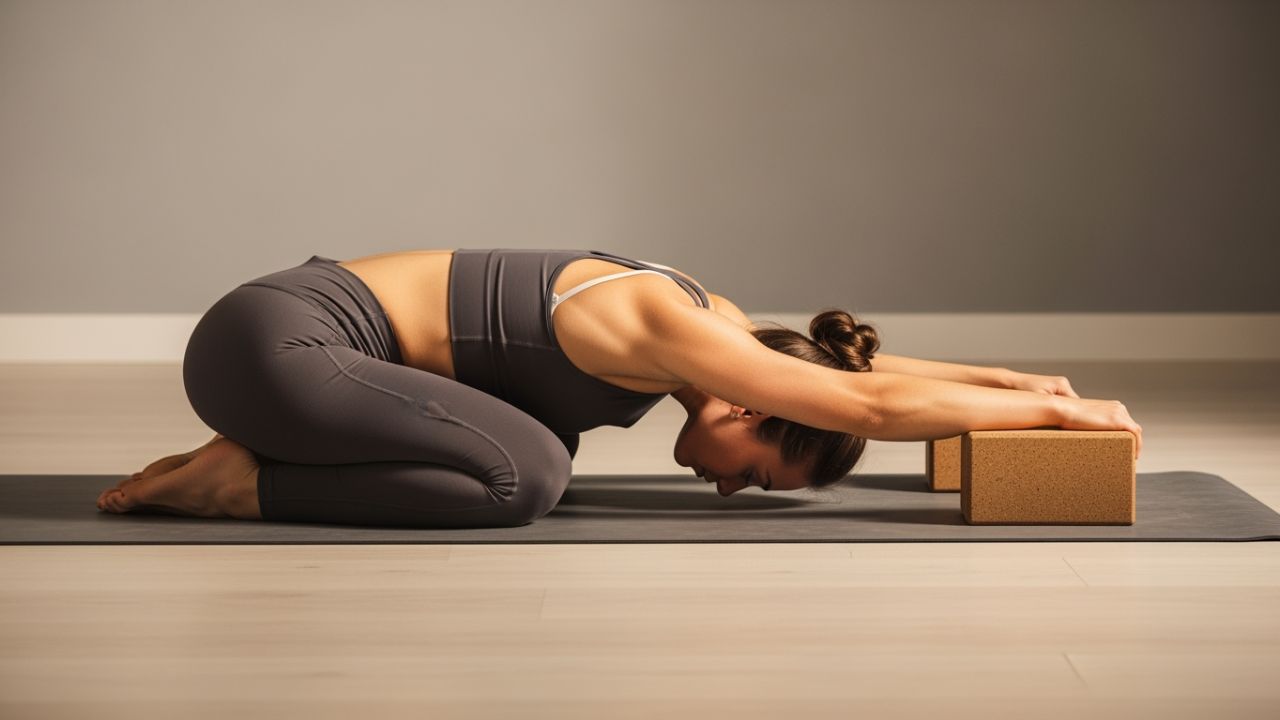
Puppy pose on day one is the position most people have never tried and most need. Kneel, walk your hands forward and let your chest drop toward the floor while keeping your hips over your knees. It opens the shoulders in flexion and the thoracic spine in extension at the same time, which is precisely the range that a day of reaching forward removes.
The neck work on day two is more valuable than it looks. Neck pain from desk work is usually not a neck problem — it is the levator scapulae and upper trapezius holding tension because the shoulder blade is not sitting where it should. Stretching them helps; so does the shoulder blade work on the other two days.
The seated forearm stretch on day three is included because typing and gripping shorten the forearm flexors, and forearm tension travels up. It is thirty seconds and almost nobody does it.
Dolphin pose is a downward dog on the forearms, and it is considerably harder on the shoulders. Use it as the progression when downward dog stops asking anything.
Two rounds rather than one is what separates this from a warm-up. The second round is where range changes.
Train this plan in the app
LoadMuscle carries all 3 routines with a demo for every exercise, and logs your sets as you go, so next session you can see what to beat. Free on iPhone and Android. Want something built around your own schedule and equipment instead? Try the free workout planner.