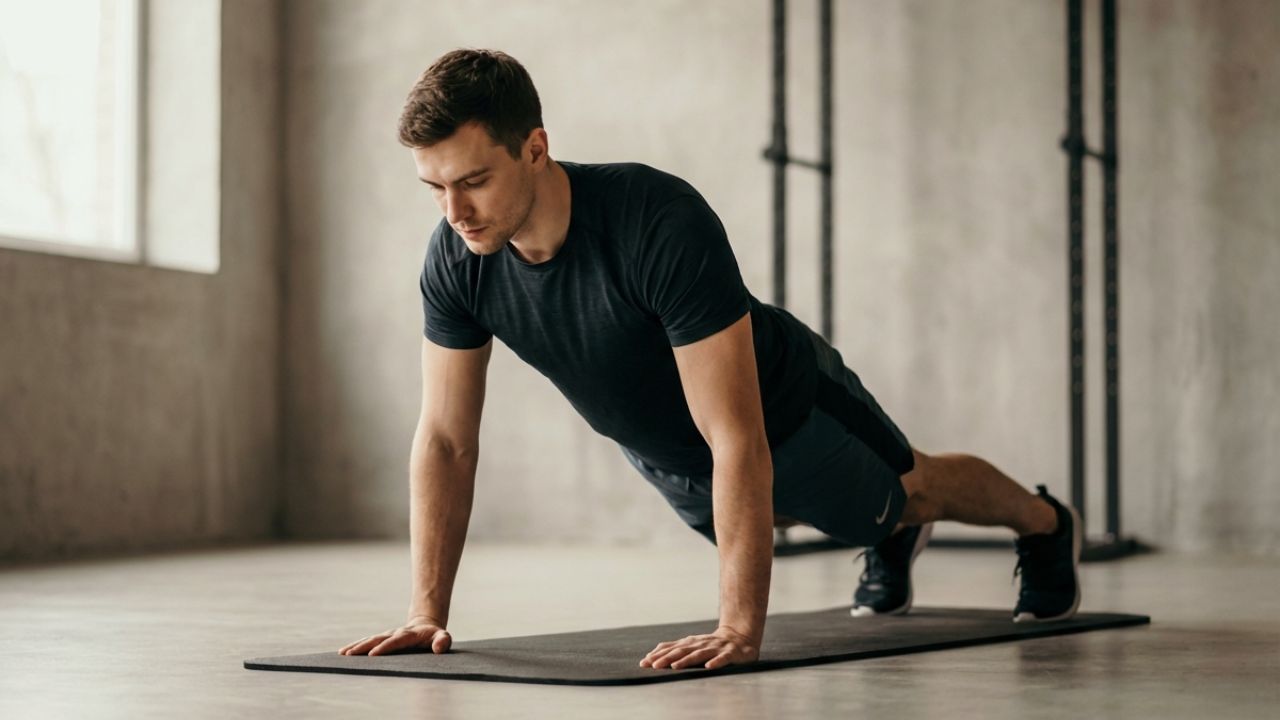
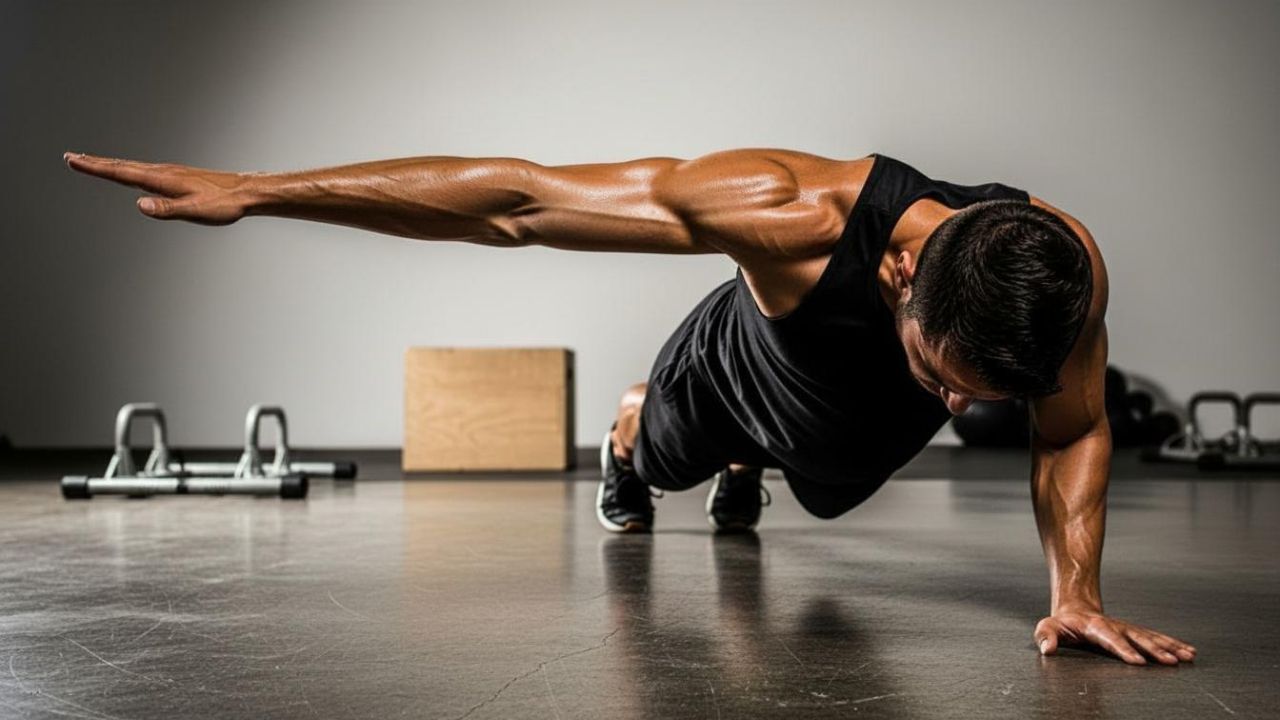
Handstand Workout Plan for Beginners
Handstand foundations for beginners: core tension, scapular strength and wall-supported inversions across three 10-minute sessions a week.
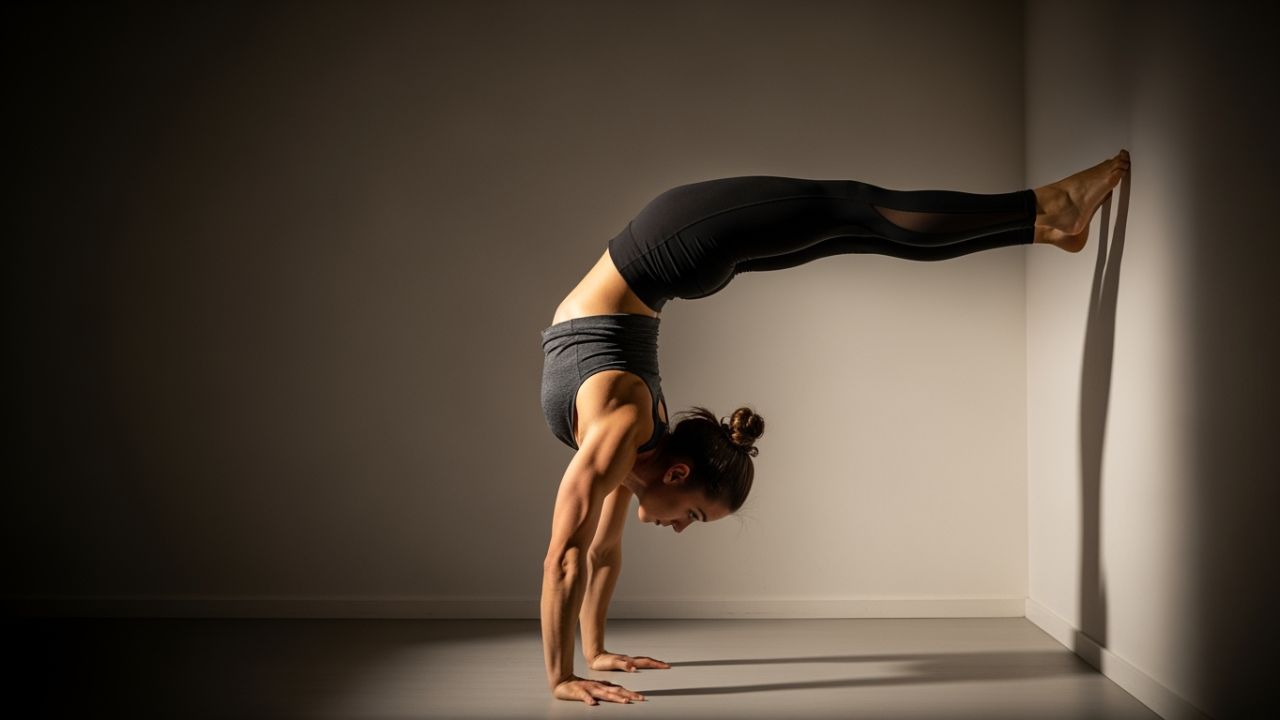
- Days per week
- 3
- Session length
- 17–18 min
- Exercises
- 30
- Level
- Beginner
- Equipment
- No equipment
Your week
- MonDay 1 · Alignment & Core Tension
- TueRest
- WedDay 2 · Scapular Strength & Stability
- ThuRest
- FriDay 3 · Wall-Supported Inversion Practice
- SatRest
- SunRest
Free on iPhone and Android, or adjust it in the web planner
The workouts
Day 1 — Alignment & Core Tension
Core bracing and shoulder positioning with wall-supported drills to build stable shapes.
About 17 minutes · 10 exercises| # | Demo | Exercise | Sets × Reps | Rest |
|---|---|---|---|---|
| 1 | Dead BugRest 15s | 1 × 25s | 15s | |
| 2 | Hollow HoldRest 20s | 1 × 20s | 20s | |
| 3 | Bird DogRest 15s | 1 × 20s | 15s | |
| 4 | Bear PlankRest 20s | 1 × 20s | 20s | |
| 5 | Wall PlankRest 20s | 1 × 20s | 20s | |
| 6 | Forearm Wall SlideRest 20s | 1 × 8 | 20s | |
| 7 | Scapular Slide Back to WallRest 20s | 1 × 8 | 20s | |
| 8 | Serratus Wall SlideRest 20s | 1 × 8 | 20s | |
| 9 | Kneeling plankRest 15s | 1 × 20s | 15s | |
| 10 | Front PlankRest 20s | 1 × 20s | 20s |


Day 2 — Scapular Strength & Stability
Gentle scapular control, shoulder flexion work, and beginner planks to reinforce stacked positions.
About 18 minutes · 10 exercises| # | Demo | Exercise | Sets × Reps | Rest |
|---|---|---|---|---|
| 1 | Kneeling Scapular Push-UpRest 20s | 1 × 8 | 20s | |
| 2 | Scapular Pull UpRest 25s | 1 × 6 | 25s | |
| 3 | Shoulder Flexion Back to WallRest 20s | 1 × 8 | 20s | |
| 4 | Alternate Shoulder Flexion Back to WallRest 20s | 1 × 8 | 20s | |
| 5 | Front PlankRest 20s | 1 × 25s | 20s | |
| 6 | Side Plank (beginner)Rest 15s | 1 × 20s | 15s | |
| 7 | Bent Knee Side PlankRest 15s | 1 × 20s | 15s | |
| 8 | Bird Dog PlankRest 20s | 1 × 20s | 20s | |
| 9 | Scapula Retraction ProtractionRest 20s | 1 × 8 | 20s | |
| 10 | Standing Scapular RotationRest 20s | 1 × 8 | 20s |


Day 3 — Wall-Supported Inversion Practice
Short holds and controlled wall-supported presses to bridge toward handstands.
About 17 minutes · 10 exercises| # | Demo | Exercise | Sets × Reps | Rest |
|---|---|---|---|---|
| 1 | Plank on HandsRest 15s | 1 × 20s | 15s | |
| 2 | Front Plank with Arm LiftRest 20s | 1 × 8 | 20s | |
| 3 | Side PlankRest 15s | 1 × 20s | 15s | |
| 4 | Hollow RockRest 20s | 1 × 20s | 20s | |
| 5 | Handstand Hold on WallRest 20s | 1 × 15s | 20s | |
| 6 | Bodyweight Standing Military Press Wall SupportedRest 20s | 1 × 8 | 20s | |
| 7 | Bodyweight Standing Scapula RowRest 20s | 1 × 8 | 20s | |
| 8 | Single Arm Scapula Push upRest 20s | 1 × 6 | 20s | |
| 9 | Front Plank with TwistRest 20s | 1 × 20s | 20s | |
| 10 | Body Saw PlankRest 20s | 1 × 20s | 20s |


About this plan
Three sessions a week that build a handstand from the ground up, in the correct order: core first, shoulders second, inversion third.
Day one is entirely trunk — dead bugs, hollow holds, bird dogs, bear planks, wall planks, forearm wall slides and scapular slides. Day two moves to the shoulder blades: kneeling scapular push-ups, scapular pull-ups, shoulder flexion against a wall and planks. Day three finally goes upside down, with plank on hands, plank arm lifts, side plank, hollow rocks, a fifteen-second wall handstand hold and a standing press.
The order is the whole plan. A handstand is a hollow body held vertically, and the reason most beginners cannot hold one is not weak arms — it is that the moment they invert, the ribs flare and the lower back arches, and a banana-shaped handstand cannot balance. Day one trains that shape on the floor where falling is not a consideration.
The forearm wall slide and the scapular work exist for the second requirement: overhead range. To stack your shoulders over your hands you need to raise your arms fully overhead without the ribs following, and most people who sit at a desk cannot. Sliding your forearms up a wall with your back flat is a straightforward test of whether you can.
Fifteen seconds against a wall is the target, and chest-to-wall is worth more than back-to-wall. Facing the wall forces the straight line; facing away lets you arch and call it a handstand.
Practise every session, not just day three. Even thirty seconds of wall time on a core day keeps the position fresh, and this is a skill where frequency beats duration.
Train this plan in the app
LoadMuscle carries all 3 routines with a demo for every exercise, and logs your sets as you go, so next session you can see what to beat. Free on iPhone and Android. Want something built around your own schedule and equipment instead? Try the free workout planner.